
When shopping for woodworking calipers, choose tools that offer accuracy, durability, and easy reads. This guide highlights five top options suited for different work styles—from hobbyists to professional woodturners. Digital calipers excel for quick, precise measurements, while outside calipers and divider-style instruments are ideal for transferring dimensions in shaping rounds and curves. Below, compare these picks and learn which caliper best fits common woodworking tasks, plus a practical buying guide and FAQs.
| Product | Best For | Key Benefit |
|---|---|---|
| Jiavarry Digital Caliper | Precision measurements in small projects | Stainless steel, four measurement modes, zero reset |
| LOUISWARE Digital Caliper | General workshop use | Large LCD, easy inch/mm conversion |
| HARDELL Digital Caliper 12 Inch | Longer measurements and versatile tasks | Stainless steel, four modes, auto-off |
| NEIKO 01407A Electronic Digital Caliper | Three-unit conversions in one tool | Splash/dust resistant, quick-change button |
| Big Horn 19052C 8-Inch Outside Caliper | External dimensions and transfer to rulers | Forged steel, hardened tips, durable |
Jiavarry Digital Caliper Measuring Tool
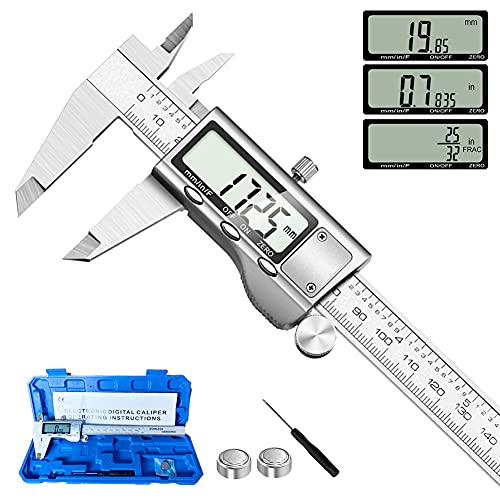
The Jiavarry digital caliper uses stainless steel for durability and water/dirt resistance. It supports measuring ranges from 0 to 6 inches (0-150 mm) with accuracy of ±0.001 inches (0.02 mm) and a resolution of 0.0005 inches (0.01 mm). Four measurement modes cover inside, outside, depth, and step measurements, which helps when turning stock into precise shapes. Best for: hobbyists or small shop tasks requiring reliable, quick measurements with differential capability. Limitation: longer or more intricate projects may benefit from a caliper with a larger jaw spread beyond 6 inches.
Digital Caliper With Stainless Steel, Louisware

The Louisware caliper offers an easy inch/mm conversion with a robust stainless steel body. It features a large LCD screen for clear readings and a smooth thumb roller with a locking screw for precise positioning. Best for: woodworkers who value quick unit conversion and a comfortable grip during long sessions. Caution: ensure the locking mechanism is tightened after taking measurements to prevent drift during handling.
HARDELL Digital Caliper 12 Inch
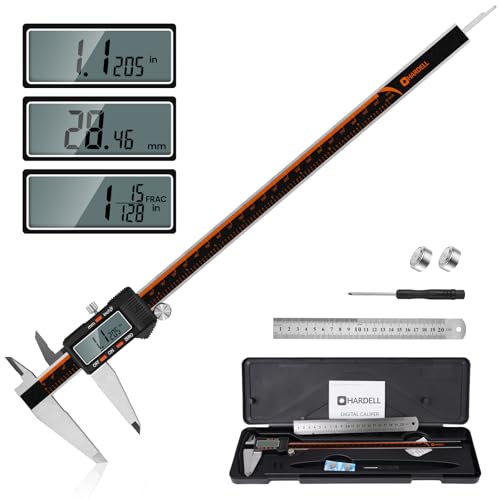
The HARDELL 12-inch digital caliper extends measurement range for larger parts and features a large LCD display with an auto-off function. It includes two jaws and a depth probe to measure external dimensions, internal diameters, depth, and steps. Best for: woodworkers performing cabinet building, furniture making, or projects requiring longer spans. Limitation: heavier tool may be less convenient for precise one-handed use in tight spots.
NEIKO 01407A Electronic Digital Caliper
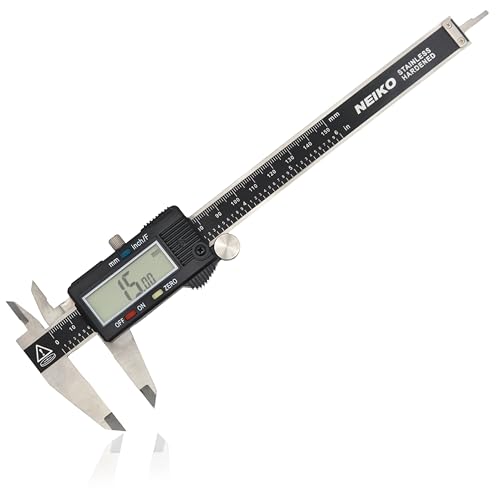
The NEIKO caliper emphasizes three-unit conversion (inch, fraction, millimeter) with a measurement range of 0-6 inches and 0-150 mm. It features a polished stainless steel body, knurled thumb roller, and locking screw for stable positioning. Best for: users who frequently switch between metric and imperial readings. Caution: some users report that the quick-change button can require deliberate presses to avoid accidental mode changes.
Big Horn 19052C 8-Inch Outside Caliper

The Big Horn outside caliper is designed for measuring external dimensions of round stock, tubing, and oddly shaped parts. Forged steel legs with a corrosion-resistant finish offer durability, while hardened points and a self-seating adjustment provide precise marking and transfer to rulers. Best for: metalworking or woodworking where external measurements must be transferred quickly to drawing guides. Limitation: this tool specializes in external dimensions and lacks internal measurement capability.
Buying Guide
- Measurement range: For small parts and detail work, 6 inches (150 mm) is typically sufficient. For larger furniture components, consider 8–12 inch calipers or outside calipers for transfer work.
- Material and durability: Stainless steel bodies resist corrosion and moisture—beneficial in workshop environments or damp lumber spaces.
- Display and readability: A large LCD screen reduces eye strain and minimizes reading errors during detail work.
- Measurement modes: Four-mode calipers (inside, outside, depth, step) cover most woodworking needs. Ensure the model includes a depth probe where needed.
- Unit conversion: Quick inch/mm or fractional conversions save time in mixed-unit projects. Look for a tool with a reliable conversion mechanism.
- Zero setting and calibration: Zero at any point on the scale allows differential measurements; verify the zero resets smoothly.
- Accuracy and resolution: Aim for at least ±0.001″ (0.02 mm) accuracy for cabinet fitments and precise joinery; higher resolution assists in fine-tuning.
- Best use cases: Digital calipers excel in general measurement tasks; outside calipers are ideal for external dimensions and rough shaping transfer; dividers help with contour tracing and scribing.
Frequently Asked Questions
- What caliper is best for woodworking beginners?
– A digital caliper with a clear display and easy zeroing, like the JIavarry or Louisware models, is generally user-friendly for beginners. - Why choose outside calipers over digital?
– Outside calipers are excellent for transferring external dimensions to rulers and for measuring round stock without clamping or moving parts. - Do I need metric and imperial units?
– Yes, most woodworkers benefit from both; a quick inch/mm conversion helps when reading plans or tolerances in different units. - Is a longer caliper always better?
– Longer calipers offer a larger span for bigger parts but can be less maneuverable in tight spaces; balance length with typical project sizes. - What maintenance is needed?
– Wipe with a soft, dry cloth after use, avoid dropped impacts, and store in a protective case to preserve accuracy and metal finish. - Are any calipers prone to measurement drift?
– Any caliper can drift if the locking screw isn’t tightened after measurement; ensure secure positioning before recording readings.