
Yes, budget bench grinders exist that deliver solid performance for sharpening, grinding, and edge work without breaking the bank. This guide highlights five reliable options that balance cost, versatility, and ease of use for DIYers, hobbyists, and small shop setups. Whether you need variable speed control, a belt sander combo, or a sturdy base with good visibility, there is a model here to match common tasks. The following products are ranked for accessibility, practicality, and value for money.
Summary table of chosen products:
- Delta Power Tools 23-196: Best for versatile speed control and polishing.
- WEN BG4260: Best for budget entry with straightforward single-speed operation.
- Greteefor 6-Inch Bench Grinder with Belt Sander: Best for combo tasks and beginner-to-intermediate projects.
- Woodskil Digital Display 8-Inch: Best for precise speed reading and accuracy in finishing tasks.
- WEN BG625V: Best for flexible speed range and integrated work light.
Delta Power Tools 23-196: Variable Speed Bench Grinder
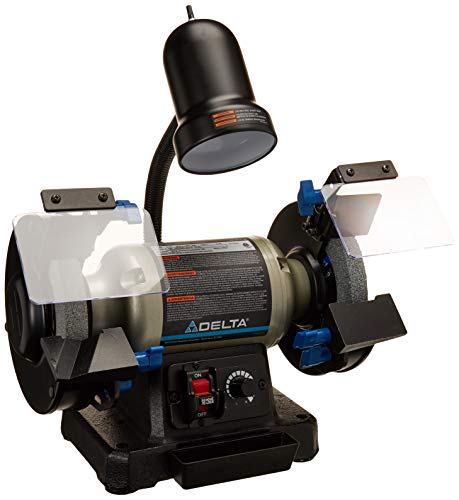
The Delta 23-196 offers variable speed control, enabling operations from 2,000 to 3,400 RPM. This range supports grinding, sharpening, buffing, and polishing with a single machine. The motor is 2 1/2 amps with an induction design for consistent performance. Best for users who need finer control over grinding tasks and a tool that can adapt to different materials and finishes without swapping wheels frequently.
Best for: hobbyists and small shop users who want a single grinder that can perform multiple finishing steps with adjustable speeds. Choose this if you frequently switch between sharpening and buffing or polishing. Limitation: some tasks may benefit from a dedicated belt or wheel for optimal results at extreme angles or heavy stock removal.
WEN BG4260: Simple 6-Inch Bench Grinder
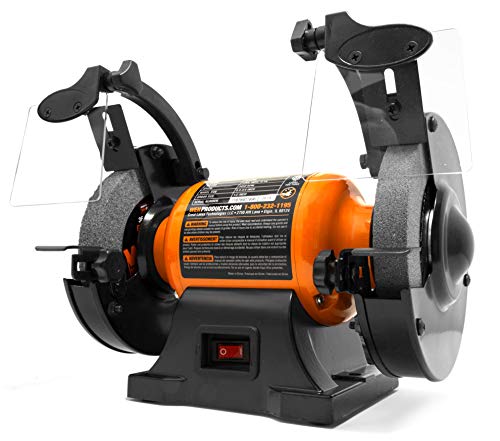
This model uses a 2.1-amp motor and a fixed 6-by-3/4 inch wheel setup. It operates at speeds up to 3450 RPM and ships with two grinding wheels (60-grit and 36-grit) to cover coarse and fine material removal. It’s a solid option for reviving dull hardware, knives, bits, and tools without the complexity of a variable-speed system. Best for: budget-minded users who need a straightforward grinder for quick sharpening and metal prep. Limitation: no variable speed control, which can reduce precision for delicate work.
Greteefor 6-Inch Grinder with Belt Sander Combo

This combo unit merges a 6-inch grinder wheel with a 2″ x 27″ belt sander, enabling sharpening, edge shaping, sanding, and light finishing in one compact machine. It runs on a 2.5-amp induction motor at up to 3600 RPM, providing stable power for frequent projects. An LED work light and adjustable eye shields help with accuracy. Best for: beginners and hobbyists who want a multi-tasking tool to handle small metal and wood projects. Caution: belt alignment and occasional wheel wear can affect consistency over time.
Woodskil Digital Display 8-Inch Variable Speed Bench Grinder
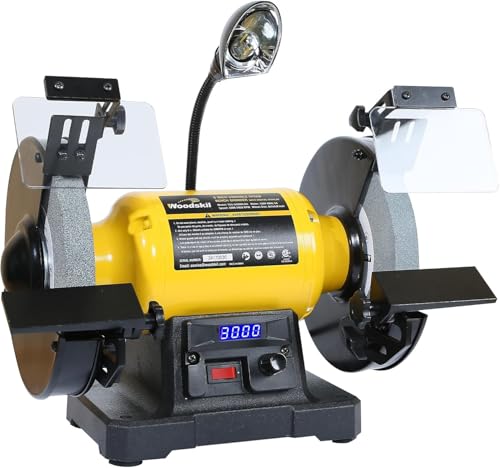
This 8-inch bench grinder emphasizes precision with a digital display showing real-time speed readings. It features a 5-amp motor with adjustable speeds from 2,000 to 3,450 RPM, allowing precise control for sharpening and finishing. A built-in 2W work light improves visibility, making it easier to manage detailed tasks. Best for: users who rely on exact speed measurements and consistent results in knife work, chisel work, and metal shaping. Limitation: larger footprint may require more table space and a sturdy base.
WEN BG625V: Variable Speed 6-Inch Grinder

The BG625V offers a 2.5-amp variable speed motor with a 2000–3400 RPM range. This makes it versatile for reviving old tools and performing detailed grinding and sharpening tasks. A flexible work light helps illuminate the work area, and the model is designed to accommodate varied projects. Best for: shoppers who want a compact, adjustable grinder with a built-in light for improved visibility. Limitation: some users may prefer a larger wheel for heavy stock removal tasks.
Buying Guide: What to Consider When Purchasing a Budget Bench Grinder
Motor and speed: Determine whether you need variable speed or a fixed speed. Variable speed provides versatility for different materials and finishes, while fixed speed can be sufficient for basic sharpening.
Wheel size and type: A 6-inch wheel is common for home shops and provides a balance between stock removal and control. Additional belts or wheels (grit options like 36, 60) enable broader tasks.
Stability and stand: A solid base, cast iron frame, or a stand helps prevent movement and improves safety during use. Look for models with good eye shields and dust management features.
Extras and compatibility: Built-in lights, adjustable tool rests, water cooling, and accessible dust chutes can enhance usability. Consider whether you need a belt sander combo for multitasking.
Size and footprint: Evaluate space in your workshop. Larger 8-inch units offer more grinding capacity, but take more space and may be overkill for light tasks.
Frequently Asked Questions
- What is the best budget bench grinder for knife sharpening? – Models with stable speed control and sharp wheels, such as variable-speed options, are preferred for precise honing.
- Is a belt sander combo worth it? – Yes, for users who perform both grinding and edge shaping or sanding in one workflow, a combo unit saves space.
- Do I need LED lighting on my bench grinder? – LED work lights improve visibility, especially in finer grinding or finishing tasks, reducing mistakes.
- How important is a digital speed display? – A digital readout helps maintain consistent speeds and repeatable results for critical projects.
- What wheel grit should I start with? – Coarse grits (e.g., 36) for aggressive stock removal and fine grits (e.g., 60) for honing; choose based on material and goal.
- Are budget grinders safe for long use? – Safety hinges on proper mounting, guards, and following manufacturer guidelines for operation and maintenance.