
Looking for an affordable belt sander that still gets the job done? This guide highlights reliable budget options ideal for hobbyists, DIY enthusiasts, and light to mid-duty projects. Each pick is evaluated for ease of use, dust management, belt size, and runtime. The table below summarizes who each product is best for, so you can compare at a glance.
| Product | Best For | Why It Stands Out |
|---|---|---|
| WEN 6321 | Entry-level projects | Lightweight, 7-amp motor, detachable dust bag |
| WEN 6502T | Small workshops | Two-in-one belt/disc, tilting belt |
| WEN 6307 | Detail work | Variable speed, pivoting belt |
| SKIL 7510-01 | Budget wood finishing | Pressure control, dust capture features |
| WEN HB321V | Portable projects | Handheld with variable speed |
WEN 6321 7-Amp Belt Sander: Compact Power
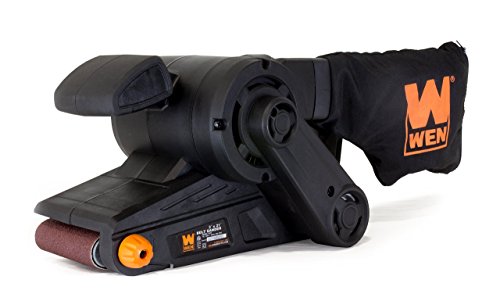
The WEN 6321 is a compact belt sander designed for quick stock leveling and finishing tasks. Best for DIY enthusiasts working on small panels, edging, or hobby projects where portability matters. Its 7-amp motor spins the belt at over 13 feet per second, delivering a capable punch for light to moderate stock removal. A detachable dust bag helps keep cleanup manageable between sessions.
Who it’s best for: beginners or hobbyists needing a light, affordable sander with a straightforward setup. Why selected: proven balance of power, weight, and dust management in a budget model. Caution: small surface area may require more passes on thick stock.
WEN Benchtop Belt and Disc Sander (6502T)
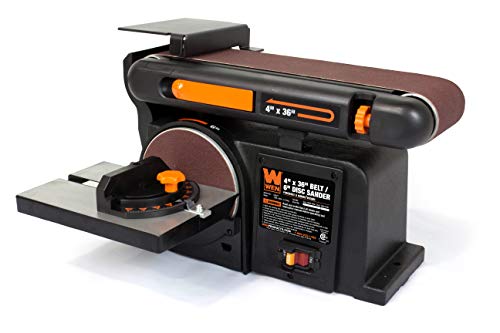
This two-in-one machine combines a 4-by-36 inch belt with a 6-by-6 inch disc, offering versatility for both flattening surfaces and shaping curves. The belt tilts from 0 to 90 degrees, enabling bevels and precise alignment for varied projects. A sturdy cast-iron base minimizes vibration during heavy use.
Who it’s best for: small shops or serious hobbyists who want both belt and disc functions in one unit. Why selected: flexible configurations and robust base help stabilize operations. Caution: heavier than a pure handheld belt sander, requiring more workspace.
WEN 6307 Variable Speed Detailing File Sander
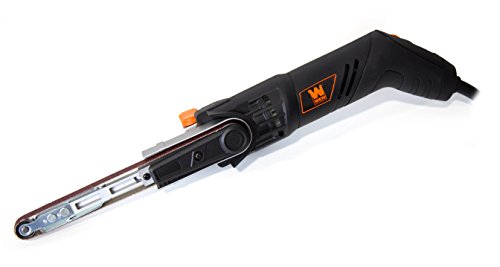
The WEN 6307 targets detail-focused projects with a 1/2-by-18 inch belt and variable speed control. It offers a belt speed range from 1080 to 1800 feet per minute and a belt auto-tracking system that requires no manual tensioning. The included pivot allows up to 55 degrees for angled work.
Who it’s best for: crafters needing tight control on small profiles, edges, or intricate contours. Why selected: precise speed control and auto-tracking reduce setup time. Caution: narrow belt width means slower material removal on large surfaces.
DEWALT 20V Max Belt Sander (DCW220B)

The DEWALT DCW220B delivers cordless versatility with a brushless motor and up to 22% more power compared to some corded equivalents. It offers efficient dust collection compatible with a DEWALT system and a larger sanding surface for faster large-area work. It’s ideal for those who prioritize portability and runtime in a compact package.
Who it’s best for: woodworkers who want to move freely around the shop without a cord, and larger sanding jobs where battery life matters. Why selected: strong cordless performance and compatible dust-collection options. Caution: price and available runtime may be higher than corded budget models.
SKIL 7510-01 Belt Sander With Pressure Control

The SKIL 7510-01 includes pressure control technology that warns when excessive pressure is applied, helping prevent gouging and prolonging belt life. It’s a solid option for general woodworking where consistent finish matters, and it uses a 6-amp motor for steady material removal. A micro-filtration system helps capture fine dust.
Who it’s best for: hobbyists who want built-in feedback to prevent over-sanding and better dust handling. Why selected: practical protection against overexertion and cleaner work. Caution: designed for wood; metal tasks may wear belts faster.
WEN HB321V Handheld Belt Sander

The WEN HB321V is a versatile handheld sander with a 7.5-amp variable speed motor, offering belt speeds from 620 to 1200 feet per minute. A lock-on switch enables continuous sanding, and a quick-release lever simplifies belt changes. This model suits detailed finish work on larger projects where maneuverability is key.
Who it’s best for: those needing a portable, adjustable sander for edges and contoured surfaces. Why selected: combines variable speed control with a convenient belt change system. Caution: longer sessions may require frequent rests due to vibration.
Blissthrill Mini Belt Sander: Small But Flexible

This mini belt sander offers a compact footprint with adjustable speeds and a versatile range for wood, metal, and knife-making tasks. It’s designed for precision work in tight spaces, such as jewelry crafting or intricate shaping. The seven-speed control and forward/reverse rotation enhance flexibility for delicate projects.
Who it’s best for: users needing a tiny, portable sander for precision finishing and small-scale projects. Why selected: exceptional portability and flexibility for constrained workspaces. Caution: lighter duty model may struggle with heavy material removal.
Buying Guide: Budget Belt Sander Considerations
- Project scope: For fine finishing, prioritize models with smaller belt widths (1/2 inch to 3 inches) and detailed speed control.
- Power vs. portability: Corded models offer consistent power; cordless options boost mobility but may limit runtime.
- Dust management: Detachable bags or integrated dust collection systems help reduce cleanup and improve visibility.
- Belt size and replacement: Standard belt sizes ease supply choices; check availability of belts in your region.
- Vibration and stability: Cast-iron bases or quality housings reduce movement, especially on larger panels.
- Ease of changes: Quick-release belts and auto-tracking features save setup time.
- Best use-case match: Detail work vs. material removal vs. edge finishing—select based on project type and workspace.
Frequently Asked Questions
- What belt size is common for budget sanders? Most entry- to mid-range models use 2- to 3-inch wide belts; 1/2 inch belts are common for detail work.
- Is a dust bag sufficient for cleanup? Yes for light cleanup; for heavier use, a shop vac connection or dedicated dust collection system improves efficiency.
- Are cordless belt sanders worth it for budget projects? They provide mobility but may have shorter runtime; ideal when cords are a constraint and tasks are manageable within battery life.
- Which feature most improves a budget sander’s performance? Variable speed and auto-tracking systems are often the most impactful for control and belt alignment.
- How do I choose between belt-only and belt-disc combos? If you need both flat surfaces and shaping curves, a belt-disc combo offers greater versatility in one unit.
- Can these sanders handle metal? Some models are optimized for wood; using them on metal can wear belts faster and require appropriate abrasive grits.