
Soldering on the go or in tight spaces requires a high-performing battery-powered option. This guide highlights top cordless and battery-powered soldering irons, focusing on fast heating, adjustable temperatures, tip variety, and battery life. Each product section provides key features, compatibility, and practical considerations to help you choose a battery soldering iron that fits your repair tasks—from electronics to jewelry and DIY projects.
| Product | Brand | Key Strengths | Battery Life / Power |
|---|---|---|---|
| Fanttik T1 Max Soldering Iron Kit | Fanttik | 7-second heat, 4 precision tips, auto sleep | Up to 60 minutes at 840°F (in wireless mode) |
| Cordless Soldering Iron Kit – Qyvorae | Qyvorae | LCD temp display, 356–842°F, USB-C charging | Single charge ~20–50 minutes depending on temp |
| Weller WLIBAK8 Cordless Soldering Iron | Weller | Cordless convenience, rapid heat-up, battery swaps | 38-second heat-up, interchangeable batteries |
| Larlarsa Cordless Soldering Iron Kit | Larlarsa | OLED control, 1400mAh, 3 tips, USB-C | 20–50 minutes per charge, adjustable temps |
| Goldseastar Cordless Soldering Iron Kit | GOLDSEASTAR | Ceramic heating, 200–450°C, LED display | 2600mAh battery, long heat cycles |
The following sections review five top contenders for the best battery-powered soldering iron, covering design, heating, accuracy, and practical usage notes. Each product is evaluated on performance and suitability for common tasks like PCB work, electronics repair, jewelry, and DIY projects.
Fanttik T1 Max Soldering Iron Kit

The Fanttik T1 Max is a compact, cordless soldering iron with rapid heating and a built-in 2600mAh battery. It heats to 840°F (450°C) in about seven seconds, delivering quick fixes for electronics and precision repairs. In wireless mode, it provides up to 60 minutes of operation with a maximum 12W output, while wired mode increases to 16W. The device includes four tailored C210 tips for versatile tasks and features an auto-sleep function after 30 seconds of inactivity to conserve power. Real-time indicators show heating status for user awareness.
Cordless Soldering Iron Kit – Qyvorae
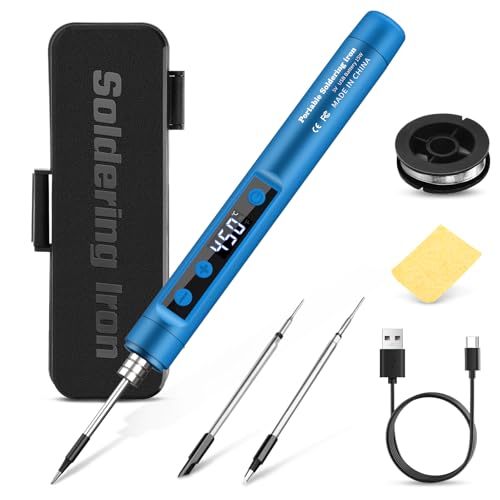
The Qyvorae cordless soldering iron offers a high-resolution LCD display for precise temperature control, ranging from 356°F to 842°F (180°C–450°C). It operates on an 1100mAh battery with USB-C charging, delivering roughly 20–50 minutes of use per charge depending on temperature. It supports easy on/off with a three-second press and includes several safety features like heat insulation on the handle. Note that it’s best for smaller projects and delicate PCB work rather than heavy-duty soldering.
Weller WLIBAK8 Cordless Soldering Iron

The Weller WLIBAK8 provides a reliable cordless option with quick heat-up and swap-ready batteries, enabling soldering on the go. Its design emphasizes user comfort and consistent temperature maintenance, helping minimize cold joints during field repairs. The cordless approach reduces downtime caused by power cords and adapters, making it suitable for electronics repair in workshop-to-field transitions. It is appreciated for its balance of portability and performance, especially for technicians who need rapid readiness.
Larlarsa Cordless Soldering Iron Kit

The Larlarsa kit emphasizes a professional-grade cordless experience with a 1400mAh battery and an OLED display to monitor temperature in real time. It supports temperatures from roughly 260–420°C (500–788°F) and includes multiple tips, a lead-free solder wire, and a heat-resistant stand. Its USB-C charging and rapid heating support quick turnarounds on PCB work, jewelry repair, and electronics assembly. The real-time temperature readout helps ensure consistent results across projects.
Goldseastar Cordless Soldering Iron Kit

The Goldseastar cordless soldering iron features a ceramic heating core for rapid heating and cooling, with a temperature range from 200°C to 450°C. It includes an LED display to monitor temperature and battery status, and its 2600mAh battery supports extended use between charges. This model emphasizes precision control for electronics repair, small components, and intricate assembly tasks, making it a solid choice for hobbyists and professionals seeking dependable cordless performance.
Buying Guide: Key Purchase Considerations
When selecting a battery-powered soldering iron, consider these critical factors to match your tasks and environment.
- Temperature range and control: Look for precise, repeatable temperatures (often ± a few degrees) and an easy-to-read display to ensure clean joints on varied components.
- Battery capacity and life: Higher mAh ratings extend work time between charges. Check if the unit supports pass-through charging or while-charging use for longer sessions.
- Heating speed: Quick heat-up reduces downtime. Seven-second or under heat times are beneficial for frequent, rapid repairs.
- Tip availability and compatibility: A kit with multiple tips expands capability for small surface-mount components and larger wire leads. Ensure tips are easy to replace.
- Weight and ergonomics: A comfortable grip and balanced weight reduce operator fatigue during extended sessions.
- Safety features: Auto sleep, heat indicators, and thermal insulation improve handling safety and battery life.
- Portability versus station use: Cordless irons excel in tight spaces, while some tasks may still benefit from a station-based setup.
- Accessories and extras: Look for stands, tips, solder wire, and charging accessories included in the kit for a ready-to-use package.
Across the evaluated products, cordless performance ranges from compact, wallet-friendly models to feature-rich kits with OLED displays and long-lasting batteries. Professionals should weigh heat stability, tip versatility, and battery strategy (swap or recharge) against the demands of their typical projects. For quick-field electronics work, high heat-up speed and reliable battery life are crucial. For detailed PCB work, precise temperature control and tip variety may take priority. Each option presents a viable path to reliable, portable soldering in everyday tasks.