
Answering buyers who want dependable backup sump pumps, this guide highlights five strong options and explains who each is best for. The selections cover battery backup, water-powered backups, and preassembled combos for quick installs. Ideal buyers include homeowners needing emergency protection during power outages, builders seeking simple setups, and those prioritizing minimal maintenance. Below, compare performance, installation, and practical limits to help you choose the right system.
Summary at a glance:
| Product | Type | Best For | Key Benefit |
|---|---|---|---|
| The Basement Watchdog Special CONNECT | Battery backup + copper-wound motor | Power outages with quick monitoring | WiFi-capable with battery fluid sensor |
| The Basement Watchdog Combo (CITS-50) | Preassembled primary + battery backup | Easy install, all-in-one | Preassembled and preplumbed |
| The Basement Watchdog Emergency Battery Backup (BWE) | Battery backup with copper-wound motor | Raw backup power without primary pump | Dual float for extra protection |
| Zoeller 540 FLEX Water-Powered Backup | Water-powered backup | No electricity or battery needed | Uses municipal water pressure |
| SumpJet Water Powered Backup | Water-powered backup | Automatic operation in high-pressure systems | High-output flow with automatic control |
The Basement Watchdog Special CONNECT Battery Backup Sump Pump System

The Basement Watchdog Special CONNECT combines a copper-wound motor with a battery backup and a WiFi-capable add-on module. It pumps about 2,500 GPH at 0 ft lift and 1,730 GPH at 10 ft lift, making it suitable for deeper basements or larger pits. The built-in control panel lights indicate issues and provide maintenance steps, while a battery-fluid level sensor adds peace of mind. Best for homeowners who want quick access to online monitoring and clear status indicators during outages. Caution: media suggests battery management becomes critical over time, so plan for periodic checks.
The Basement Watchdog Combo Preassembled Primary & Battery Backup Sump Pump System (CITS-50)
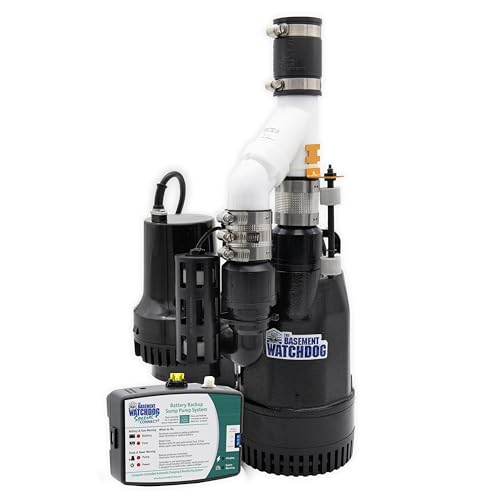
This preassembled and preplumbed system offers a compact, all-in-one solution with a copper-wound PSC motor designed for longevity and energy efficiency. It includes a WiFi-capable backup system for 24/7 monitoring of pump and battery conditions, plus an alarm and guidance for maintenance. Best for new installations where a quick, reliable upgrade is desired and space is a consideration. Limitations: installation space and compatible plumbing must be confirmed before purchase.
The Basement Watchdog Emergency Battery Backup Sump Pump System (BWE)

Designed as a dedicated backup, the BWE uses a copper-wound motor and delivers 2,500 GPH at 0 ft lift or 1,500 GPH at 10 ft lift. It features a user-friendly panel that monitors pump, power, and battery conditions with visual and audible alerts. A dual float switch adds extra protection, ensuring the pump activates when the basement is at risk. Best for basements that need a strong, independent backup option. Caution: battery life and replacement scheduling are critical factors for long-term reliability.
Zoeller 540 FLEX Water-Powered Backup Sump Pump System
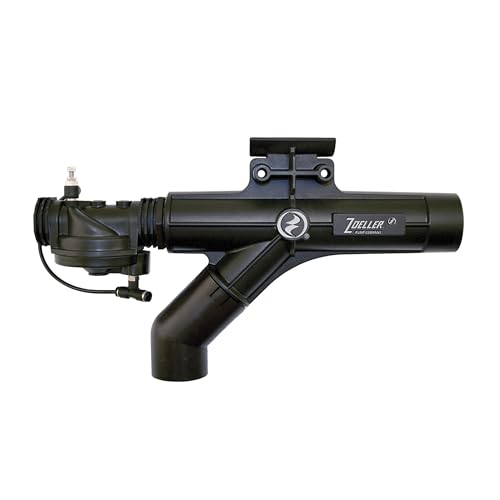
This water-powered backup operates without batteries or electricity, using municipal water pressure to remove water during power outages. It offers high-efficiency water-driven performance and flexible installation, suitable for small pits (as small as 18″ × 22″). Best for users who prefer a backup that does not rely on electrical power or battery life. Limitation: it requires a continuous water supply and professional sizing to ensure it matches the home’s needs.
The Basement Watchdog Combo Preassembled Primary & Battery Backup Sump Pump System (CITE-33)

This preassembled system features a ⅓ HP copper-wound PSC motor and a primary pump with 3,720 GPH at 0 ft and 3,100 GPH at 10 ft. It includes a monitoring controller for constant status updates and alarms. Best for homeowners seeking a balanced mix of performance and a simple, quick-install solution. Caution: lower horsepower than some high-capacity units may limit performance in extremely large pits or high-volume scenarios.
Buying Guide: Key Considerations For A Backup Sump Pump
- Power source: Batteries, water-powered, or hybrid solutions. Battery backups provide independence from municipal water, while water-powered units remove battery-dependence but require a clean water supply.
- Primary vs backup focus: Decide if you need a supplementary battery backup, a full preassembled system for quick install, or a primary pump with a backup protection.
- Flow rate and head: Match GPH ratings and lift height to your pit size and basement depth. Higher GPH is useful for larger basins or frequent pumping needs.
- Monitoring and alerts: WiFi-enabled or monitored systems can provide real-time status and maintenance reminders.
- Installation complexity: Preassembled systems save time; consider plumbing fit and space in your sump pit.
- Maintenance needs: Battery life, fluid levels, and sensor reliability affect long-term performance.
Frequently Asked Questions
- What is a backup sump pump and when do I need one?
A backup sump pump provides operation during power failures or primary pump issues to prevent basement flooding.
- Which backup type is best for a home with frequent outages?
Battery-backed units are typically best for frequent outages, offering autonomy during power loss.
- Do water-powered backups require electricity?
No, water-powered backups operate using municipal water pressure and do not rely on the home’s electricity or batteries.
- How do I decide between a preassembled combo and a standalone backup?
Choose a preassembled combo for faster installation and integrated controls; opt for a standalone backup when you want to customize components.
- What maintenance is essential for these systems?
Regularly inspect batteries, test alarms, verify sensor readings, and ensure water supply lines (for water-powered units) remain unobstructed.