
Finding the right angle finder tool can save time on carpentry, remodeling, and DIY projects. This guide highlights top digital and protractor-style angle finders designed for precise inside and outside angles, easy readability, and durable construction. Each product below includes key features to help you compare accuracy, readability, and usability across common tasks like trim work, tiling, crown molding, and framing.
| Product | Brand | Key Features |
|---|---|---|
| Klein Tools 935DAG | KLEIN TOOLS | 0–90°, 0–180° ranges; magnetic base; auto-rotating display |
| Klein Tools 935DAF | KLEIN TOOLS | 3-in-1 digital angle finder; inside/outside angles; +/- 0.2° precision |
| LEXIVON LX-230 | LEXIVON | 7-inch aluminum protractor; laser-engraved scales; smooth internal/external reads |
| Saker Miter Saw Protractor | Saker | 7-inch aluminum; easy-to-read laser scales; lightweight and durable |
| TBVHOMM Digital Angle Finder Protractor | TBVHOMM | 2-in-1 ruler and protractor; large LCD; ±0.3° accuracy |
Klein Tools 935DAG Digital Electronic Level and Angle Gauge

The 935DAG combines a versatile digital angle gauge and level with a wide 0–90° and 0–180° range. It offers a zero calibration feature for relative angle checks and a high-visibility, auto-rotating display for easy reading in any orientation. The magnetic base enables hands-free operation on ferromagnetic surfaces such as pipes, conduit, and saw blades, making it ideal for woodworking, plumbing, and setup tasks where stable, quick angle checks are essential.
Klein Tools 935DAF Digital Angle Finder

This 3-in-1 digital angle finder excels at measuring inside and outside angles, lengths, and calculating miter saw angles. It helps users quickly determine the proper saw blade angle for precise joints. The device features machined ruler edges for accurate measurements and a precision tolerance of about +/- 0.2 degrees, ensuring reliable results across carpentry and remodeling projects.
LEXIVON Aluminum Miter Saw Protractor LX-230
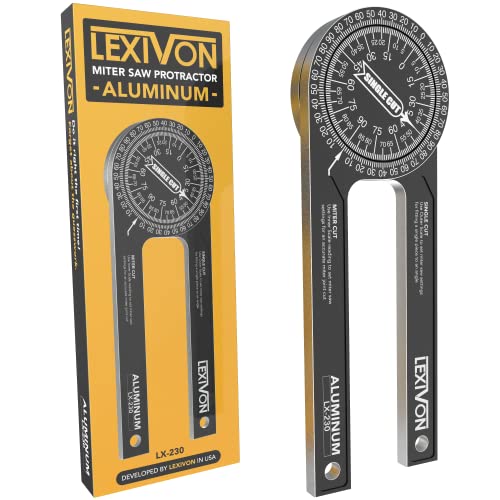
LEXIVON’s LX-230 is crafted from CNC-machined aluminum with precision laser-engraved scales for clear readings. Its internal Teflon O-ring mechanism provides smooth, precise adjustments for inside and outside corners. By transferring angles directly to a miter saw, it helps reduce guesswork and delivers accurate results for crown molding, trim work, and joint cuts in a compact, portable package.
Saker Miter Saw Protractor

The Saker Miter Saw Protractor is built from lightweight aluminum alloy with an “O” body design that ensures smooth, precise readings for inside/outside corners. It features precision laser-engraved scales for direct angle reading to the miter saw and is designed for easy portability, making it a practical option for carpenters, plumbers, and DIY enthusiasts who need dependable angle measurements on the go.
Digital Angle Finder Protractor TBVHOMM
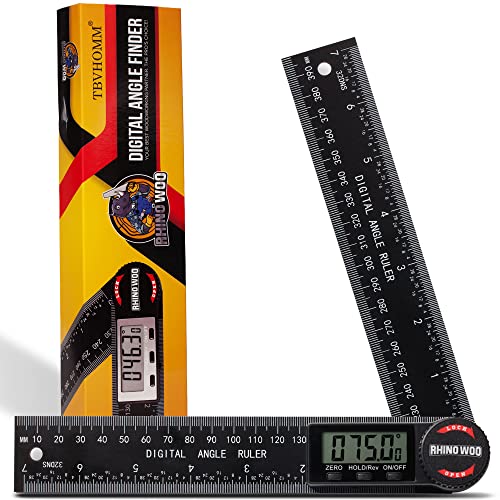
The TBVHOMM Digital Angle Finder Protractor combines a ruler and protractor into a single tool with 0–999.9° range and an accuracy of ±0.3°. It ships with two batteries and a large LCD display for easy reading. The tool is suitable for woodworking, construction, drafting, and DIY projects, enabling quick and accurate angle measurements with a straightforward operation.
Buying Guide: Key Purchase Considerations
Angle finder tools come in a range of designs, from digital levels with magnetic bases to compact protractors. When choosing, consider accuracy, range, readability, and how the tool will be used in real-world tasks.
- Measurement range and accuracy: Look for devices with at least ±0.2° to ±0.3° precision. A broader range (0–360°) is useful for complex angles, though many woodworkers rely on 0–180° with precise inside/outside readings.
- Display readability: High-contrast displays and auto-rotation help in dim or awkward lighting. A large LCD or backlit screen improves visibility on busy jobsites.
- Construction and durability: Aluminum or stainless steel bodies offer better wear resistance. A secure locking mechanism or smooth sliding action reduces drift during use.
- Readiness and power: Battery-powered units are common; check included batteries and battery life. Automatic shut-off helps conserve power on longer projects.
- Magnet and mounting options: A magnetic base is valuable for hands-free operation on steel surfaces, pipes, or metal fixtures. Non-magnetic models may suit delicate surfaces better.
- Portability and weight: Lighter units are easier to carry on job sites, but ensure they remain rigid enough to resist bending or flexing during use.
- Special features: Zero-calibration for relative measurements, internal/external angle capability, and direct transfer of angles to saws can reduce steps and errors in setup.
- Compatibility with tasks: For crown molding or cabinetry, choose a tool with easy inside/outside readings and accurate miter angle calculation.
Overall, select a tool that balances precision, ease of use, and durability for your typical projects. For frequent saw work, a protractor that directly translates angles to the miter saw reduces setup time. For dynamic jobs, a digital angle finder with a magnetic base provides flexibility and hands-free operation.