
Choosing the right AC recovery and recharge machine can streamline vehicle service, protect refrigerant assets, and ensure compliance with safety standards. This guide highlights five top-performing models that cover dual refrigerants, portability, and automated features for both R134a and 1234yf systems. Each option is evaluated for recovery speed, reliability, and ease of use to help shop owners and DIY enthusiasts select the best fit for their workflow.
Summary Of Selected Products
- Airtek Airtek AC-Dual Fully Automatic Machine — Dual R134a and HFO1234yf with 95% recovery rate
- Robinair 34288NI Economy R-134a — Simple operation, high accuracy, exceeds SAE J2788
- Robinair RG3 Portable — Compact, lightweight, recovers both liquid and vapor refrigerants
- VIVOHOME 110-120V — 3/4 HP, broad refrigerant compatibility, auto shut-off
- Airtek IDENTIFIER AC-Dual — Built-in 1234yf identifier for fast recovery and recharge
The following sections detail each product, with a focus on how their features translate into real-world performance and value in an American repair or service setting.
Airtek Airtek AC-Dual Fully Automatic Machine
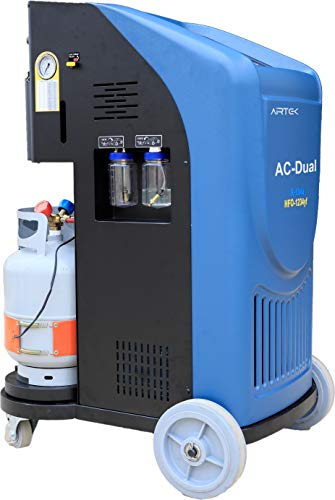
The Airtek AC-Dual combines dual refrigerants with a fully automatic workflow, targeting both R134a and HFO1234yf. It emphasizes ease of use by letting technicians enter vehicle data and walk away, which can improve throughput in busy shops. Recovery rate is listed at 95%, which aligns with industry expectations for efficient containment of refrigerant during service. The dual-capability design makes it suitable for mixed fleets common in many American repair facilities, including older vehicles that still rely on R134a and newer models that use 1234yf.
Operation and safety are aided by a straightforward interface and built-in safeguards. Its automatic recovery and recharge sequences can reduce human error, especially for technicians who service a large volume of vehicles with varying refrigerant types. The kit’s versatility supports both small repair bays and mid-sized service centers that want a single machine to cover a broad range of A/C work.
In practice, shops should verify electrical compatibility and availability of standard 115V power. With dual refrigerant support and a strong recovery rate, this model offers a solid balance of efficiency and flexibility for mixed automotive A/C tasks.
Robinair 34288NI Economy R-134a Machine

The Robinair 34288NI emphasizes simple operation paired with high accuracy. It performs recovery, recycling, evacuation, and recharge for standard automotive A/C systems using R-134A. The design aligns with shop workflows that prioritize reliability and repeatable results. It is noted to exceed SAE J2788 standards, delivering robust performance in terms of accuracy and efficiency.
Key features include a programmable vacuum function with a default 15-minute run time, extendable up to 99 minutes. The display provides time remaining, supporting technicians in scheduling and workflow planning. The model recovers more than 95% of refrigerant and aims to maintain charge accuracy within about 1/2 oz of the programmed value, which helps meet service documentation requirements.
For shops focusing on cost-conscious options without sacrificing performance, this unit provides dependable recovery, a clear user interface, and compatibility with common R-134a refrigerant systems—ideal for mid-range service bays or independent repair shops facing budget constraints.
Robinair RG3 Portable Refrigerant Recovery Machine

The RG3 stands out for portability, offering a compact footprint and light weight at 18 pounds. This makes it especially suitable for technicians who need to carry equipment between jobs or service calls. It handles both liquid and vapor refrigerants and runs on a standard 115V power supply. Compatibility with a wide range of refrigerants, including R-410A and other common automotive CFC/HFC/HCFC types, makes it versatile for diverse fleets.
The device uses a compressor-based cooling method and is designed to manage common refrigerant types, enabling quick extraction and transfer. For smaller shops or mobile technicians, the RG3 offers a balance of mobility and capability, keeping overhead low while delivering dependable recovery performance for most automotive A/C systems.
VIVOHOME 110-120V Refrigerant Recovery Machine

The VIVOHOME model offers high-efficiency recovery with a 3/4 HP oil-less, air-cooled piston compressor and a high-powered fan to accelerate recovery of both vapor and liquid refrigerants. It supports multiple refrigerants, including R12, R134a, R22, and R410A, and is positioned for workshops and field service where speed matters. The machine includes an auto shut-off at 558 PSI to protect operators and equipment, and a real-time pressure gauge helps monitor operations during recovery and recharge tasks.
Beyond raw speed, the unit emphasizes broad compatibility and safety, enabling service across residential HVAC, automotive A/C, and some light commercial systems. Its portability and self-contained safety features make it a practical choice for technicians who need reliable performance with straightforward operation in varied environments.
Airtek IDENTIFIER AC-Dual Fully Automatic Machine

The IDENTIFIER AC-Dual mirrors the Airtek dual-refrigerant concept with an added separate 1234yf identification feature. This function helps quickly verify 1234yf purity, potentially speeding up recovery and recharge cycles by clarifying refrigerant type before processing. The dual-refrigerant capability remains a core strength for mixed fleets, allowing a single machine to manage both R134a and 1234yf refrigerants.
By integrating an identifier, technicians can reduce misidentification risk and ensure more precise charging. The unit’s built-in 1234yf identifier supports fast decision-making, which can be valuable in shops handling frequent 1234yf service. As with similar Airtek models, its automation supports ongoing productivity with a focus on accuracy and operator convenience.
Tektino RCC-6S-Dual Fully Automatic Recovery Machine

The RCC-6S-Dual is designed for workshops that handle both R134a and R1234yf. Its dual-cylinder configuration supports rapid processing of multiple refrigerants in one unit, with two tanks and two sets of quick couplers enabling quick tank swaps. Its recovery rate reaches up to 96%, and the built-in database includes vehicle models for broader service coverage, including electric and hybrid vehicles.
Industrial-focused features, like dual tanks and a vehicle model database, support faster service iterations and reduce downtime between jobs. This model is well-suited for professional shops looking to optimize workflow across a mixed refrigerant fleet while maintaining safety and control during recovery and recharge operations.
VEVOR Portable 3/4 HP Refrigerant Recovery Machine

The VEVOR portable model emphasizes self-cleaning capabilities and broad refrigerant compatibility, with a maximum recovery rate of 4.85 lb/min. It supports a range of refrigerants including R134a, R12, R401A, R410A, and R22, making it adaptable for many automotive and HVAC service scenarios. The self-cleaning purge feature after each use helps maintain performance and reduce maintenance time for busy technicians.
With a weight around 30 pounds and a compact form factor, it balances portability with robust recovery capability. The self-cleaning system is a practical advantage for shops that perform frequent recovery tasks and want to minimize disassembly and manual cleaning time between jobs.
Buying Guide: Key Purchase Considerations
- Refrigerant compatibility: Confirm support for R134a and 1234yf if your shop services a mixed fleet. Dual-refrigerant machines reduce equipment needs and training time.
- Recovery speed and efficiency: Look for units advertising high recovery rates and low leakage. Faster recovery improves throughput in busy bays but ensure accuracy remains within acceptable tolerances.
- Automation and ease of use: Automated recharge sequences, programmable vacuum times, and clear displays reduce operator error and training time.
- Portability vs. capacity: Portable cords and light weight are ideal for mobile technicians, while dual-tank configurations and larger capacities suit fixed shops with heavy workloads.
- Safety features: Automatic shut-offs at high pressures, overcurrent protection, and real-time pressure gauges help prevent accidents and protect refrigerants.
- Maintenance and durability: Self-cleaning features, rugged construction, and serviceability influence long-term cost of ownership.
- Compliance and standards: Ensure the model aligns with SAE standards and local regulatory requirements for refrigerant handling and recovery.
- Vendor support and training: Access to parts, spares, and customer support is critical for minimizing downtime during shop operations.
In choosing a unit, weigh the need for dual-refrigerant support against the expected service volume, fleet mix, and whether mobility or fixed installation best fits your workflow. A well-chosen machine can improve recovery efficiency, reduce refrigerant waste, and help maintain regulatory compliance across automotive and HVAC service tasks.