
Choosing the right 7-1/4 inch circular saw masonry blade can significantly enhance your cutting projects involving concrete, fiber cement, brick, and other tough materials. Below is a summary of some top-rated blades specifically designed for masonry use, focusing on durability, cutting efficiency, and compatibility with standard saws. The table highlights key product specs to help you quickly compare options before diving into detailed reviews.
| Blade | Diameter | Tooth Type | Arbor Size | Cutting Material |
|---|---|---|---|---|
| DEWALT DWA3193PCD | 7-1/4″ | 4 Diamond Tipped | 5/8″ | Fiber Cement, Laminate |
| WEN BL0704 | 7-1/4″ | 4 Diamond Tipped | 5/8″ | Fiber Cement, Laminate |
| FEWELL 7 Inch Diamond Blade | 7″ | Segmented Diamond | 7/8″ with 5/8″ Adapter | Concrete, Brick, Stone |
| Trabo 7 Inch Segmented Rim Blade | 7″ | Segmented Diamond | 7/8″ with Reducer | Cement, Pavers, Concrete with Rebar |
| EDiamondTools 7″ Segmented Blade | 7″ | Segmented Diamond | 7/8″ | Concrete, Brick, Masonry |
DEWALT 7-1/4 Inch Circular Saw Blade for Cement Cutting

The DEWALT DWA3193PCD is a specialized blade featuring synthesized polycrystalline diamond tipped teeth that deliver clean and durable cuts especially tailored for fiber cement and laminate flooring. With a 7-1/4 inch diameter and a standard 5/8″ arbor, it ensures compatibility with most circular saws. The 4-tooth design minimizes material waste and heat buildup for smoother cutting performance.
WEN 7-1/4-Inch 4-Tooth Diamond Tipped Circular Saw Blade
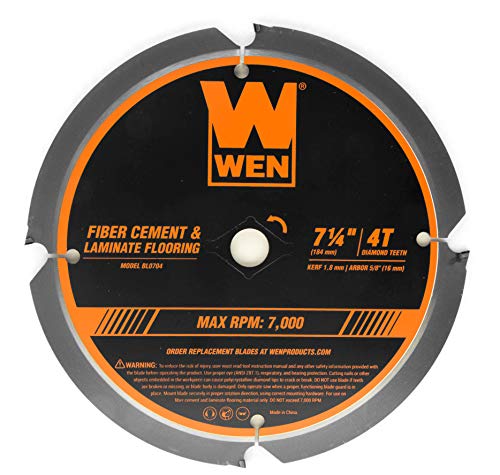
This WEN BL0704 blade features ultra-thin 1/15-inch kerf and diamond tipped teeth optimized for cutting fiber cement board and laminate flooring. It operates efficiently up to 7000 RPM with a 7-1/4 inch diameter and 5/8 inch arbor. The thin kerf design reduces cutting resistance, resulting in cleaner, faster cuts with less effort and wear on your saw.
FEWELL 7 Inch Diamond Blade for Concrete and Masonry

The FEWELL 7 Inch Diamond Blade is a segmented saw blade designed for both dry and wet cutting of concrete, brick, block, stone, and masonry materials. It features 14 diamond segments with 10 mm height for long-lasting cutting power. The included 7/8″ to 5/8″ arbor adapter enhances versatility, allowing use on various angle grinders and circular saws.
Trabo 7 Inch Segmented Rim Diamond Blade for Cement

The Trabo Segmented Rim Diamond Blade is engineered for fast, professional-grade cutting of cement, pavers, concrete with rebar, and natural stone. Embedded diamonds on the segmented rim ensure extended blade life and efficient performance. It comes with a 7/8 inch arbor and a 5/8 inch reducer ring for broad tool compatibility.
EDiamondTools 7″ Segmented Diamond Masonry Saw Blade

The EDiamondTools segmented diamond blade offers a multipurpose solution for cutting concrete, brick, block, and masonry materials. The blade’s sharp, diamond-encrusted segments provide precise, efficient cuts while the 7/8″ arbor fits most circular saws. This blade balances performance with value and durability for demanding construction projects.
Buying Guide for 7-1/4 Inch Circular Saw Masonry Blades
When purchasing a 7-1/4 inch circular saw masonry blade, consider the following factors to ensure suitability and optimum performance:
Blade Composition and Tooth Type
Diamond-tipped blades are preferred for masonry materials due to their superior hardness and durability. Segmented rims improve debris removal and cooling during cutting, which prolongs blade life. For fiber cement or laminate, polycrystalline diamond-tipped teeth provide clean cuts.
Diameter and Arbor Size Compatibility
Ensure the blade diameter matches the circular saw size (commonly 7-1/4 inches). Arbor size must also match your saw’s spindle, often 5/8 inches, but adapters like 7/8 to 5/8 inches increase compatibility.
Cutting Applications and Material Suitability
Select blades specifically designed for the target materials: concrete, brick, fiber cement, or steel. Using the correct blade type avoids damage to both the material and blade, and improves cut quality.
Kerf Thickness and Tooth Count
Thinner kerfs reduce material waste and require less power, ideal for fine cuts. Lower tooth counts (4-14 teeth) facilitate faster cutting in denser materials, while more teeth are better for smoother cuts in wood or softer materials.
Wet vs Dry Cutting Capability
Some blades are designed for wet cutting, helping reduce dust and heat. Others are optimized for dry cutting; choose accordingly based on your workspace and project needs.
Durability and Heat Resistance
Diamond bond quality and blade construction affect heat management and wear resistance. Quality carbide tips and heat-treated blade steel extend lifespan and reduce downtime for blade changes.