
Finding the right adhesive for 3D printing can dramatically improve bed adhesion, reduce warping, and simplify print removal. This guide highlights five well-regarded options and explains how they work across common build surfaces like glass, PEI, and magnetic spring steel. Each product is evaluated on adhesion strength, ease of use, surface compatibility, and cleanup. Use the buying guide to compare formats (sticks, sprays, liquids) and choose the adhesive that fits your printer, filament, and workflow.
| Product | Brand | Build Surface Compatibility | Format | Notes |
|---|---|---|---|---|
| Magigoo All-in-One Adhesive | Magigoo | Glass, PEI, BuildTak, Kapton, more | Liquid | Multi-material versatility |
| 3DLAC Adhesive Spray | 3DLAC | Glass, PEI, BuildTak, Kapton, etc. | Aerosol | Strong initial bite, easy release |
| ENOMAKER Bamboo Lab Bed Adhesive | ENOMAKER | Various build plates including glass/PEI | Liquid | Low residue, strong adhesion |
| Outus Glue Sticks For Bed | Outus | Hot bed surfaces | Solid sticks | Economical, long-lasting |
| Creality Glue Sticks For Beds | Creality | PLA/ABS-ready beds | Solid sticks | Safe, eco-friendly |
Magigoo All-in-One 3D Printer Adhesive

Brand: Magigoo. This versatile adhesive is designed for ABS, PLA, PETG, HIPS, and TPU across multiple surfaces such as Glass, PEI, BuildTak, and Kapton. The formula emphasizes reliable bonding and easy release when cooled, helping prints stay in place during early layers and peel away cleanly after cooling. Its all-in-one approach makes it a staple for users working with varied filaments and bed surfaces, delivering consistent results with minimal cleanup.
3DLAC 3D Printing Adhesive

Brand: 3DLAC. This spray adhesive provides firm adhesion to popular bed surfaces and offers quick-release capabilities after prints finish. It serves as a practical alternative to Kapton tape or blue painter’s tape, working across glass, PEI, BuildTak, Kapton, and other common surfaces. Suitable for a variety of materials including PLA, ABS, PETG, HIPS, and TPU, it helps maintain consistent first layers while simplifying post-processing.
3D Printer Adhesive Glue Bed Weld (LAYERNEER)
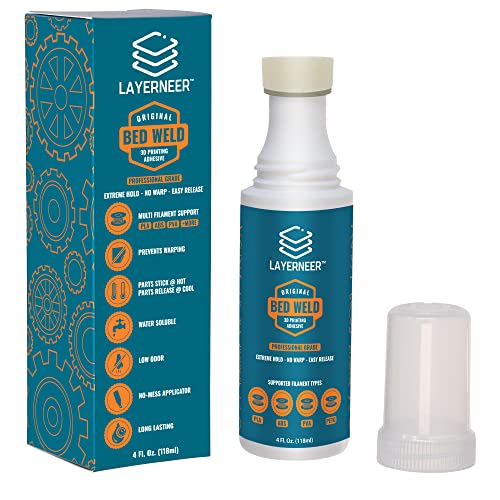
Brand: LAYERNEER. This liquid adhesive features a thermal dynamic coating that sticks when hot but releases upon cooling. It’s designed for multiple prints per coating and claims low odor with water solubility for cleanup. Compatibility guidance varies by surface, so users should check the surface type for optimal results before applying. The product emphasizes reusability and cost efficiency for makers who print in higher volumes.
Outus 6 Pack 3D Printer Glue Sticks

Brand: Outus. These solid PVP glue sticks are non-toxic and provide high viscosity adhesion for hot bed surfaces. Each stick supports numerous prints, with guidance suggesting application to a defined area and easy cleanup with water after cooling. Packaging may vary, but the core value remains consistent adhesion and straightforward usage for beginners and experienced users alike.
Creality 3D Printer Glue Sticks For Bed

Brand: Creality. Engineered to reduce bed warp with a PVP-based composition, these glue sticks avoid formaldehyde while delivering a reliable, thin coating for precise first layers. They are designed for safe handling and environmental responsibility while supporting easy demolding as prints cool. The product emphasizes quality assurance from a primary 3D printing brand and is suitable for PLA, ABS, PETG, and other common filaments.
Buying Guide: Key Considerations For 3D Printer Adhesives
- Filament compatibility: Some adhesives perform better with specific materials (PLA, ABS, PETG, TPU, Nylon). Check recommended filaments and test on a small model before large prints.
- Bed surface compatibility: Build surfaces vary (Glass, PEI, BuildTak, Kapton, etc.). Choose an adhesive known to bond well with your bed material to maximize first-layer quality and minimize warping.
- Format and application: Sticks, liquids, and sprays each have different coverage, application ease, and cleanup. Sticks can offer precise control on small areas; sprays provide quick coverage; liquids often require less reapplication.
- Reusability and cost-per-print: Some coatings last many prints, while others require more frequent reapplication. Consider your printing volume to estimate cost per print.
- Odor and safety: Look for low-odor formulas and non-toxic ingredients, especially for home or classroom environments. Water-solubility can simplify cleanup and reduce residue on prints.
- Removability and residue: A good adhesive should allow easy print removal after cooling without leaving significant residue or damaging the bed. Water rinse or gentle wipe-offs are common.
- Environmental and health considerations: Opt for products that minimize harsh chemicals and formaldehyde, aligning with safety policies and sustainable practices.
- Brand and support: Reputable brands often offer more consistent performance and better customer support. Consider brand trust and compatibility with your printer ecosystem.
Choosing the right 3D printer adhesive involves balancing adhesion strength, ease of use, and compatibility with your build plate and filament choices. For mixed-material projects or frequent filament swaps, an all-in-one adhesive like Magigoo can simplify your workflow. If you prefer a quick application with broad surface compatibility, a spray like 3DLAC offers a robust alternative. For ongoing projects with repeated prints, consider long-lasting glues or sticks from ENOMAKER, Outus, or Creality to maximize efficiency and yield without compromising bed integrity.