
For small woodworking shops, maintaining clean air and an efficient work environment is paramount. A 2 stage dust collector helps keep harmful dust and debris contained by combining cyclone separation with high-efficiency filtration. Below is a summary table of the most relevant 2 stage dust collectors designed for small shops, focusing on airflow capacity, portability, and filtration quality.
| Product Name | Brand | CFM (Airflow) | Filtration | Portability |
|---|---|---|---|---|
| Shop Fox W1666-2 HP Dust Collector | Shop Fox | Approx. 1,550 CFM | 2.5 Micron Bag Filtration | Stationary |
| Pemedor Double Filtration Cyclone Dust Collector | PEMEDOR | Variable (vacuum dependent) | Double Filtration Cyclone System | Connects to Vacuum Cleaner |
| OUKEETO Portable 2 Stage Intake Air Filtration System | OUKEETO | 850-1250 CFM | HEPA Carbon Deodorization Filter | Benchtop Portable |
| VEVOR 2 HP Portable Cyclone Dust Collector | VEVOR | Approx. 1,059 CFM | 3 Micron Canister Filter | Portable with Mobile Base |
| ALORAIR Portable 2 Stage Air Filtration System | ALORAIR | 580/780 CFM | Two-Stage Air Filtration | Compact Portable Design |
Shop Fox W1666-2 HP Dust Collector Review
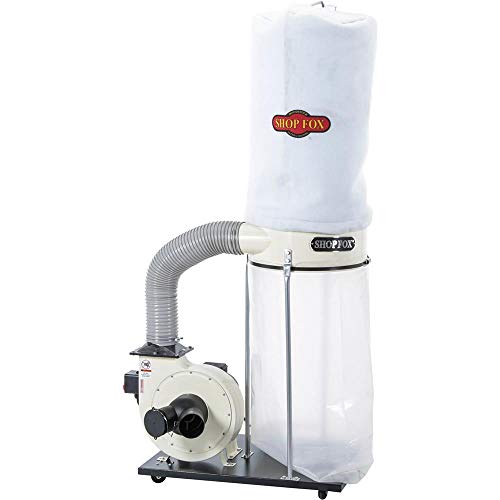
The Shop Fox W1666 features a robust air suction capacity of approximately 1,550 CFM and a static pressure of 12.3 inches, making it effective for small to medium-sized woodworking shops. It employs a 2.5 micron bag filtration system to capture fine dust particles, contributing to improved shop air quality.
This model is designed primarily as a stationary system due to its size and requirements but provides powerful air movement for capturing dust at the point of origin. It is suitable for a variety of dust generating machines due to its strong suction performance.
Pemedor Double Filtration Cyclone Dust Collector Review

The Pemedor Double Filtration Cyclone Dust Collector is a versatile cyclone system designed for DIY woodworking and small shop use. It features a double filtration setup that helps trap dust before it reaches the vacuum cleaner, extending vacuum life and improving performance.
This collector includes multiple connector sizes for easy attachment to a variety of vacuum models. With its 2-inch turbocharged filter and cyclone technology, it captures both large chips and fine dust effectively. Though dependent on the vacuum it connects to, it offers a compact and efficient solution for smaller setups.
OUKEETO Portable 2 Stage Air Filtration System Review

The OUKEETO Portable 2 Stage Intake Air Filtration System is ideal for benchtop applications. It offers adjustable airflow from 850 to 1250 CFM, powered by a strong vortex fan that provides quiet but effective air filtration for shops up to 800 sq.ft.
This system’s highlight is its HEPA high-performance carbon deodorization filter, which removes up to 99.5% of 0.3-micron particles, reducing harmful dust and odors. Its compact size, leather handle, and portability make it well-suited for woodturning, carving, and other detailed shop work where dust control is needed on a smaller scale.
VEVOR 2 HP Portable Cyclone Dust Collector Review

The VEVOR 2 HP Portable Cyclone Dust Collector boasts a powerful 1,059 CFM airflow thanks to its 2.0 HP motor. It operates with a noise rating of 73 dB and comes equipped with a large 13.2-gallon collection drum for wood chips, supported by quick-release levers and wheels for mobility.
Its cyclone separation technology efficiently differentiates larger wood chips from finer dust, which is captured by a 3-micron canister filter capturing up to 99% of tiny particles. This direct filter mounting system enhances convenience and reduces maintenance time.
ALORAIR Portable 2 Stage Air Filtration System Review

The ALORAIR Portable 2 Stage Air Filtration System is designed for compact workspaces needing effective dust control. With dual-speed airflow options of 580 and 780 CFM, it supports up to 800 sq.ft. of coverage, featuring a strong vortex fan that helps circulate and clean air efficiently.
Its lightweight design with a top handle makes it highly portable for garage or small shop use. The two-stage filtration system reduces smoke and airborne dust from woodworking, contributing to a cleaner, healthier shop environment. Note that this model is not approved for sale in California.
Buying Guide for 2 Stage Dust Collectors in Small Shops
Airflow Capacity (CFM)
Choose a dust collector with sufficient airflow measured in cubic feet per minute (CFM) to handle your machines’ dust output. Typical requirements range from 600 to 1,600 CFM for small shops. Higher CFM provides stronger suction but often comes with increased noise and power consumption.
Filtration Efficiency
Look for a micron rating of 2.5 or below to capture fine dust particles that affect health. Systems with cyclone technology separate larger chips mechanically before the filter, reducing clogging and maintenance frequency.
Portability and Footprint
Consider how mobile the dust collector needs to be. Portable models with wheels or compact benchtop units are excellent for limited space or flexible workshop layouts. Stationary units offer more power but require dedicated space.
Filtration Media Type
Common filters include bag filters, canister filters, and HEPA filters. HEPA filters provide superior air purification but may cost more. Carbon deodorization filters help reduce odors during woodworking.
Noise Levels
Noise ratings vary significantly. If working in a home or shared space, consider dust collectors with noise ratings below 70 dB or those equipped with insulated motors and quieter fans.
Compatibility and Connectors
Ensure the dust collector has compatible inlet ports for your tools or vacuum systems. Some models include multi-size connectors or adapters to fit various hose diameters.
Maintenance and Collection Capacity
Look for collectors with easy-access collection drums or bags and quick-release mechanisms. Larger capacity drums reduce emptying frequency, improving workflow efficiency.
Electrical Requirements
Verify the voltage and amperage needs match your shop’s electrical infrastructure. Some high-CFM units require 220V while others run on standard 115V circuits.