
You’re looking for lineman climbing boots that pair ankle support, grip, and durability. This guide highlights five top options that suit electrical line work, climbing poles, and demanding outdoor tasks. Each boot is explained with who it’s best for, why it stands out, and one practical limitation to consider. The buyer-friendly table below compares key traits at a glance so you can decide quickly.
| Product | Best For | Key Strength |
|---|---|---|
| Kenetrek Lineman Extreme | Professional linemen needing durability | All-leather build with heavy tread |
| Carolina Linesman 10″ Composite Toe | Lightweight safety with memory foam | Composite toe, slip resistance |
| Carolina 8″ Waterproof Logger | Wet environments with EH protection | Waterproof, cushioned comfort |
| ARIAT Sierra Shock Shield Patriot | Comfort and support for long wear | Shock-absorbing, durable leather |
| Irish Setter Mesabi 8″ | All-around waterproof safety boot | All-day waterproof with steel toe |
Kenetrek Lineman Extreme Non-insulated Steel Toe Boot

The Kenetrek Lineman Extreme is an all-leather, 10″ tall boot designed for serious climbing and durability. Its 2.8 mm full-grain leather and double/triple stitching emphasize longevity in demanding outdoor work. The new K-73 Outsole provides a deep tread pattern with 360-degree traction teeth and a solid one-piece vulcanized rubber sole for stability on uneven surfaces. Forged boot hardware offers corrosion resistance and swivels to resist breakage. This boot suits professional linemen who prioritize ruggedness and long service life, and it is best for dry to moderately wet conditions where maximum support is needed. A potential limitation is its non-insulated design, which may be less comfortable in cold environments.
Carolina Linesman 10″ Composite Toe Work Boots

The Carolina Linesman 10″ Composite Toe boots are lightweight yet protective, featuring memory foam cushioning for day-long comfort. They pair a composite toe with slip-resistant traction, making them well-suited for tradespeople, construction workers, and enthusiasts who value a lighter boot without sacrificing safety. They transition from outdoor work to casual settings, offering versatile use. The main caveat is that composite toes can be less protective against heavy impact than steel in extreme conditions, so consider your site hazards before choosing.
Carolina 8″ Waterproof Logger Boots for Men

These 8″ waterproof logger boots emphasize protection and stability for climbing tasks. They feature an electrical hazard rating and a triple-rib steel shank for stability. The memory foam footbed provides all-day comfort, supporting long shifts on rugged sites. They are best for wet conditions where waterproofing and shank support matter most. A limitation is that the higher shaft may feel bulky for some wearers during prolonged indoor work or tight spaces.
Carolina 8″ Steel Toe Logger Boots
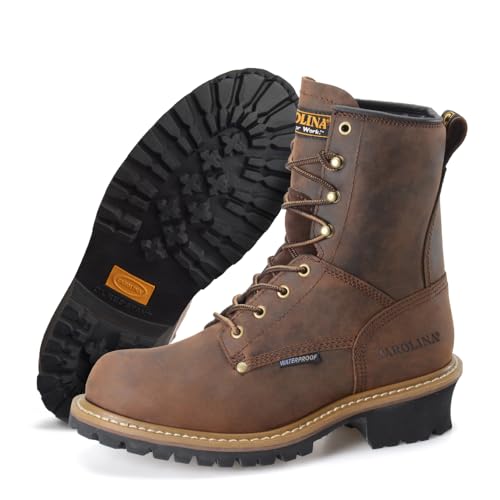
These logger boots combine a steel toe with waterproofing and a durable welt construction. The triple-rib steel shank supports stability, while the Memory Foam footbed adds comfort for long wear. They are well-suited for linemen who need robust protection and dry feet. A potential limitation is that steel toes can be heavier than composite options, affecting fatigue over very long climbs or shifts.
ARIAT Sierra Shock Shield Patriot Steel Toe

The ARIAT Sierra Shock Shield Patriot combines comfort and durability with a focus on shock absorption. It meets ASTM safety expectations for electrical hazard resistance and safety toe footwear, with Goodyear welt construction for durability. These boots are best for workers who prioritize maximum on-the-job comfort during long wear in harsh outdoor conditions. A caveat is that some users may prefer a lighter boot for extended climbs, as the leather and sole can add weight.
Irish Setter Mesabi 8″ Waterproof Steel Safety Toe

The Irish Setter Mesabi 8″ is a waterproof, steel-toe logger boot designed for all-day use. It includes a removable EVA footbed for comfort and UltraDry waterproofing to protect feet in wet environments. This boot is recommended for workers who need reliable waterproof protection and a traditional steel toe. A potential limitation is that some climbers may prefer lighter materials for long ascents or narrower fits for various foot shapes.
Buying Guide: Lineman Boot Essentials
What should you prioritize when choosing lineman climbing boots?
- Protection vs. weight: Steel toes offer maximum protection but add weight; composite toes save weight while still providing safety.
- Waterproofing and insulation: Waterproof uppers are crucial in wet sites; insulation matters for cold climates.
- Sole and traction: Look for deep tread, 360-degree lugs, and slip resistance for ladder rungs and wet surfaces.
- Shank design: A sturdy shank improves stability during climbs and kneeling on ladders.
- Fit and comfort: Memory foam or cushioned footbeds reduce fatigue over long shifts.
- Durability and construction: Goodyear welt or vulcanized soles promote long-term wear in rugged environments.
How do you choose between leather and synthetic uppers?
Leather uppers tend to be more durable and offer better resistance to abrasion, while synthetic uppers can be lighter and more breathable. For consistently rough environments, leather is usually the safer option.
What level of ankle support is necessary?
10″ to 8″ boots provide varying ankle support. Higher shafts offer more support for climbing but can be heavier. Choose based on your typical climb height and comfort tolerance.
Are composite toe boots safer than steel toe boots?
Composite toes are lighter and heat-insulating, which can improve comfort during long days. Steel toes provide maximum protection against heavy impacts but are heavier. Evaluate site hazards to decide.
How important is waterproofing for linemen?
Waterproofing helps keep feet dry during wet weather or damp environments, reducing fatigue and the risk of blisters. Consider waterproof membranes and sealed seams for best protection.
What about insulation for cold climates?
Insulation (such as Thinsulate) adds warmth but can narrow the boot’s fit or reduce breathability. If you work in cold climates, prioritize insulation without compromising fit.
FAQ
- Q: Do these boots meet electrical hazard requirements? A: Several options shown include EH ratings; verify the specific model on its product page for safety features.
- Q: Is a memory foam footbed essential for linemen? A: It helps with long shifts but not all models include it; check for comfort features in the product description.
- Q: Are steel-toe boots heavier than composite-toe boots? A: Generally yes, but weight varies by design and material; consider leg fatigue for long climbs.
- Q: How important is waterproofing for climbing poles in rain? A: Very important; waterproof uppers maintain foot dryness and reduce fatigue.
- Q: Should I choose a higher shaft boot? A: Higher shafts offer more ankle support but can restrict ankle mobility in tight spaces; choose based on climb height and fit.
- Q: Can these boots be resoled? A: Some models offer resolable Goodyear welt construction, which improves long-term durability; check the product’s construction details.