
Answering the common question: which weed eater string is best for your trimmer? This guide highlights five top picks that cover different needs—from heavy-duty industrial use to light-use residential maintenance. Best for heavy brush and rocky edges, best for durable all-around performance, and best for compatibility with popular brands. The buyer-friendly table below helps you compare key points at a glance.
| Product | Diameter | Length | Best For |
|---|---|---|---|
| Viabrico .095″ Square String | .095″ | 330 ft | Heavy-duty cleanup, tough vegetation |
| Viabrico .105″ Square String | .105″ | 330 ft | Extra cutting surface, professional-grade rough work |
| Husqvarna Titanium Force .095″ | .095″ | 140 ft | Durable, quiet, professional use |
| BLACK+DECKER .065″ AF1003ZP | .065″ | 30 ft | Compact, compatible with many Black+Decker models |
| Arnold Maxi-Edge .080″ | .080″ | 140 ft | Universal fit, economical spares |
Viabrico .095″ Square String – Heavy Duty Trimmer Line

Best for: Property owners facing thick weeds and rocky edges. This string uses a square profile to maximize cutting surface, delivering a noticeably cleaner edge and faster work. It is designed for high-impact resistencia and longer life, making it a practical option for frequent use in challenging terrain.
Why selected: The string’s square geometry increases cutting area by up to 300%, resulting in faster performance with less pass repetition. Its polyamide composition provides 110 lb tensile strength, high impact resistance, and durable abrasion resistance for long-term use.
Caution: Very thick lines can stress smaller or lighter-duty trimmers; verify your unit’s compatibility with a .095″ line before use.
Viabrico .105″ Square String – Premium Heavy-Duty

Best for: Professionals or homeowners with dense vegetation and hard surfaces. The .105″ diameter provides increased cutting power and robustness for tougher trimming jobs without excessive wear.
Why selected: Shared benefits with the smaller Viabrico string—300% more cutting area and abrasion resistance—plus a heavier diameter for tougher growth. Ideal for users who want the same design philosophy at a higher removal rate per pass.
Caution: The thicker line may reduce efficiency on very lightweight trimmers; ensure your model supports .105″ line before purchasing.
Husqvarna Titanium Force .095″ – Professional Copolymer Line
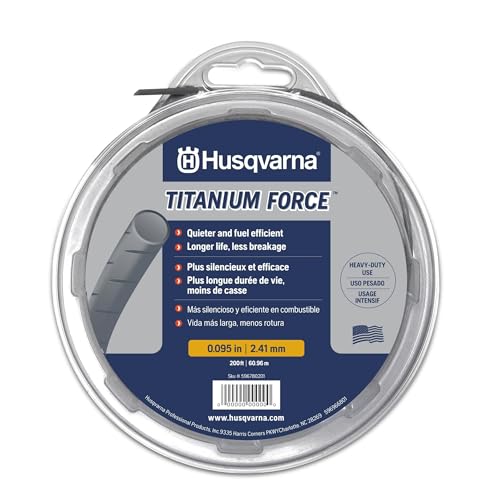
Best for: Professional-grade trimming where durability and efficiency are priorities. This line is designed for quiet operation and precise cutting with a robust co-polymer blend, suitable for longer sessions.
Why selected: It features a round, dimpled surface and co-extruded polymer that enhances durability and energy efficiency. The undulated surface contributes to smoother operation and consistent cutting quality.
Caution: Runs best on compatible Husqvarna heads; confirm your trimmer model supports Titanium Force before use.
BLACK+DECKER 0.065″ AF1003ZP – OEM Replacement Spool

Best for: Black+Decker owners seeking an OEM-spool solution with straightforward installation and reliable feeding. Ideal for light-to-moderate yard tasks and everyday lawn maintenance.
Why selected: This 0.065″ line is a common standard for many Black+Decker models, and the OEM design helps ensure a smooth feed and compatibility with the automatic feed spools. The 3-foot spool provides quick replacements.
Caution: The smaller diameter may wear faster when dealing with tough brush; choose thicker options if your yard has heavy vegetation.
Arnold Maxi-Edge .080″ Trimmer Line
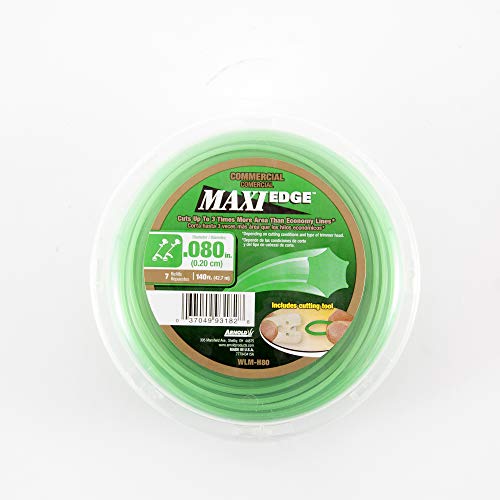
Best for: Users wanting a reliable, universal line that fits most straight and curved shaft trimmers. This option provides good balance for a variety of domestic lawn tasks and spare spools for multiple sessions.
Why selected: The Maxi-Edge line offers a practical, mid-range option with a broad compatibility window and a substantial 140 feet of line per package, making it a practical choice for general upkeep and eventual spool replenishment.
Caution: At .080″, it sits between thin and heavy-duty; ensure your trimmer’s recommended diameter aligns with this choice to prevent feeding issues.
Buying Guide: How To Choose The Right Trimmer String
What should you consider when selecting trimmer line? Here are the critical factors to help decide.
- Trimmer compatibility: Check your model’s manual for recommended line diameter and shape. Some strings fit only certain heads and shafts.
- Line diameter and density: Thicker lines (e.g., .095″ or .105″) cut denser vegetation but may cost more in fuel consumption and require a heavier unit.
- Line shape and material: Square (or twisted) profiles increase cutting surface and impact resistance; round lines offer smoother feeds and quieter operation. Polyamide (nylon) blends provide durability for long-term use.
- Terrain and vegetation: Rocky edges warrant abrasion resistance; soft, open lawns may perform well with lighter lines for efficiency.
- Spool type and feeding: Automatic feed spools simplify operation; replacement spools reduce line winding time, which is beneficial during long yard projects.
- Cost vs. longevity: Higher tensile strengths and abrasion resistance reduce replacement frequency, offering long-term savings.
Frequently Asked Questions
- Q: What line diameter should I use for a light-duty trimmer? A: For typical residential lawns with light weeds, a 0.065″ to 0.080″ diameter is usually sufficient.
- Q: Are square trimmer strings better than round ones? A: Square or twisted profiles increase cutting surface and can improve edge quality and efficiency on tougher growth.
- Q: Can I use a heavier line on a lightweight trimmer? A: No. Heavier lines may overwork the engine, reduce performance, or cause feed issues. Always match line diameter to the trimmer’s specification.
- Q: How important is abrasion resistance? A: Abrasion resistance matters for longevity, especially when edging near rocks or gravel. It can significantly extend line life.
- Q: Do OEM spools perform better than aftermarket ones? A: OEM spools ensure compatibility with feed mechanisms. Aftermarket spools can be an economical alternative if they are designed for your model.
- Q: How often should I replace trimmer line? A: Replacement depends on use and vegetation. Heavier-duty lines may last longer under regular use but will wear with rocks and hard surfaces.