
Answering your search for a reliable roll-on roof sealant, this guide highlights five top options tailored for DIY roof repairs and maintenance. Each product suits different roof types and climates, from RVs to flat residential roofs. Whether you need high elasticity, heat reflection, or primer-free adhesion, these selections help you choose the best match for your project. The following table offers a quick comparison of the five chosen products.
| Product | Best For | Key Benefit |
|---|---|---|
| AMES Maximum Stretch Roof Coating | Low-slope residential/industrial roofs | 650% elongation; 88% reflectivity |
| Liquid Rubber RV Roof Sealant (1 Gal) | Travel trailers and campers | Flexible waterproof membrane; heat reflective |
| Liquid Rubber Color Roof Sealant (Beige, 1 Gal) | Flat/low-slope and metal roofs | Up to 900% elongation; rubber-like membrane |
| Countryman Coatings 100% Silicone Roof Coating (4.75 Gal) | RV roofs and diverse substrates | High reflectivity; no primer required |
| Gardner-Gibson Sta-Kool 15-Year Turbo-Dri (5 Gal) | Residential and RV roofs requiring fast rain-safe cure | Cool-core technology; rapid recoat window |
AMES Maximum Stretch Roof Coating
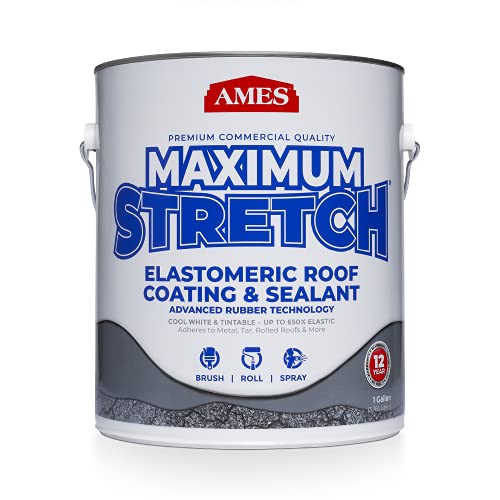
Features: A white, elastomeric acrylic coating with 650% elongation to resist cracking and peeling. It provides 88% light reflectivity for cooler roof surfaces and lower cooling costs. It adheres to metal, tar, rolled roofs, and is suitable for RV roofs, waterproof sealing, and other rubber roofing applications. It can be brushed, rolled, or sprayed on. Designed for low-slope roof maintenance.
Who it’s best for: Homeowners or small contractors working on low-slope metal or tar roofs who need a flexible, long-lasting sealant. Why chosen: High elongation reduces crack risk during temperature shifts, and the bright white finish helps reduce heat gain. Caution: Ensure proper surface cleaning and dry conditions for optimal adhesion; it may require multiple coats for some substrates.
Liquid Rubber RV Roof Sealant (1 Gal)

Features: Flexible waterproof membrane that maintains elasticity across temperatures. It’s designed for EPDM, TPO, fiberglass, and aluminum RV roofs, with heat-reflective properties to reduce interior temperatures and energy use. It’s part of a complete RV roof sealing system and pairs with compatible primers for enhanced adhesion.
Who it’s best for: RV owners seeking a professional-grade, solar-reflective sealant for EPDM or TPO roofs. Why chosen: It provides a durable, flexible coat that resists cracking and remains effective in varying weather. Caution: Best results come with proper surface prep and compatible primers when used on EPDM or TPO surfaces.
100% Silicone Roof Coating (4.75 Gal)

Features: Silicone roof coating designed for a wide range of substrates, including metal, EPDM, TPO, and built-up roofs. It claims no primer is required in many cases and offers high UV reflectivity to reduce energy costs. It’s suitable for RVs and flat roofs alike, resisting ponding water and weathering.
Who it’s best for: Builders or DIYers needing a versatile, primer-saving silicone coating for mixed roof types. Why chosen: High reflectivity and broad substrate compatibility simplify future roof maintenance. Caution: Check roof surface compatibility if not applying to common substrates; curing times may vary with temperature and humidity.
Gardner-Gibson Sta-Kool 15-Year Turbo-Dri
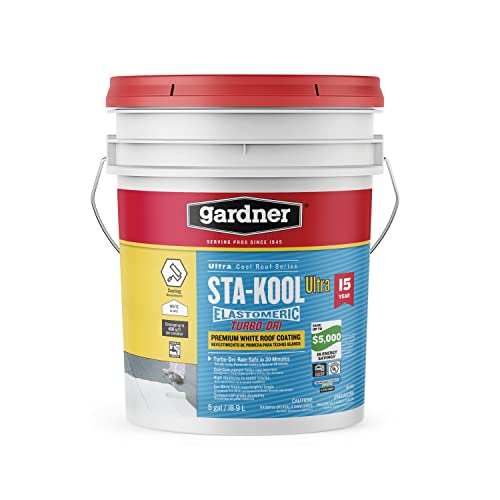
Features: Elastomeric roof coating with “cool-core” technology to reflect heat. Marketed as a premium, single-day white roof coating with a rapid rain-safe cure in about 30 minutes and potential recoating in three hours, enabling faster project completion.
Who it’s best for: Those needing fast protection against unexpected rain and quick re-coating windows on residential or RV roofs. Why chosen: The combination of heat-reflective pigments and rapid cure improves project timelines. Caution: For best results, follow application guidance on multiple coats and surface compatibility; it’s optimized for white finishes and may not match colored roofs well.
Buying Guide
What to consider when choosing a roll-on roof sealant:
- Roof type and substrate: Flat, low-slope, metal, EPDM, TPO, or concrete roofs may require different chemistries (silicone, acrylic, or bitumen-based formulas).
- Elongation and crack resistance: Higher elongation helps accommodate roof movement without cracking—important on aging roofs.
- Reflectivity and heat management: White or light-colored coatings reduce heat absorption and cooling costs, beneficial in hot climates.
- Primer requirements: Some silicone coatings claim primer-free adhesion; others may require surface prep for optimal bonding.
- Cure time and weather tolerance: Faster cures allow quicker return-to-service, but outdoor conditions (humidity, temperature) influence results.
- Coverage and layers: Some products require multiple coats for the intended membrane thickness; plan accordingly for square footage.
Practical Buyer’s Tips
- Match product to roof material: Use RV-specific products for trailers and campers; use flat/metal roof products for dwellings or commercial spaces.
- Plan for maintenance cycles: Elastomeric coatings typically require re-coats every few years; select products with longer recoat windows if you want fewer applications.
- Safety and ventilation: Some sealants contain solvents; ensure adequate ventilation when applying indoors or in enclosed spaces.
FAQ
- Q: Do these products require primer? A: It depends on the formula; silicone coatings often advertise primer-free adhesion, but some surfaces may still benefit from primer.
- Q: Can I use a color roof sealant on a white roof? A: Yes, but color choice may affect reflectivity and heat management; light colors maximize reflectivity.
- Q: How many coats are needed? A: Many products specify one to three coats depending on substrate and thickness required for a waterproof membrane.
- Q: Are these products suitable for ponding water? A: Some formulations are designed to withstand occasional ponding, but check product specs for standing water use.
- Q: What is the best option for RV roofs? A: Look for RV-specific or flexible elastomeric sealants with compatibility for EPDM, TPO, or metal roofs and heat reflectivity.
- Q: How long does curing take? A: Curing times vary; expect 24–48 hours for full cure under optimal conditions, with some coatings reaching rain-safe stages much sooner.