
Finding the right jigsaw for woodworking depends on your project needs and whether you prefer corded power, cordless convenience, or a balance of both. This guide highlights five top options that cover everyday cutting, bevel work, and precision for hobbyists and DIYers. Each pick is explained with who it’s best for, its standout features, and a practical caveat.
The following quick reference table helps compare essentials at a glance. It uses practical criteria buyers care about: power type, speed range, bevel capability, and standout advantage.
| Product | Power Type | Bevel / Orbital | Best For | Notable Edge |
|---|---|---|---|---|
| Hammerhead HAJS048 | Corded | 4-stage orbital; up to 45° bevel | Budget-friendly versatility | High no-load speed (3,000 SPM) |
| DEWALT DCS334B | Cordless 20V | Bevel present; LED spotlight | Lightweight cordless with long runtime | Bare tool; needs battery/charger |
| SKIL JS314901 | Corded | Beveling and 4-stage orbital | Value with tool-free features | Requires manual blade changes |
| DEKOPRO Electric Jigsaw | Corded | ±45° bevel; 4 orbital settings | Beginner projects with quick blade changes | Basic base plate material |
| BLACK+DECKER BDEJS600C | Corded | Bevel up to 45° with curve settings | General-purpose wood cutting | Lower power vs pro-grade models |
Hammerhead 4.8-Amp 3/4 Inch Jig Saw with 2pcs Wood Cutting Blades

The Hammerhead HAJS048 is a corded jigsaw designed for versatile wood cutting with a strong 3,000 SPM motor. Its 4-stage orbital action allows smooth or aggressive cuts, and the 45° bevel base supports angled cuts for workpiece bevels and complex shapes. This makes it a practical choice for hobbyists who need reliable power without worrying about battery life. Best for entry to mid-level projects where consistent speed control matters.
Best for: Budget-conscious woodworkers who want steady power and adjustable cutting modes without frequent blade changes. Caution: Corded power means you’ll be tethered to an outlet, which can limit mobility on larger jobs.
DEWALT 20V MAX XR Jig Saw DCS334B
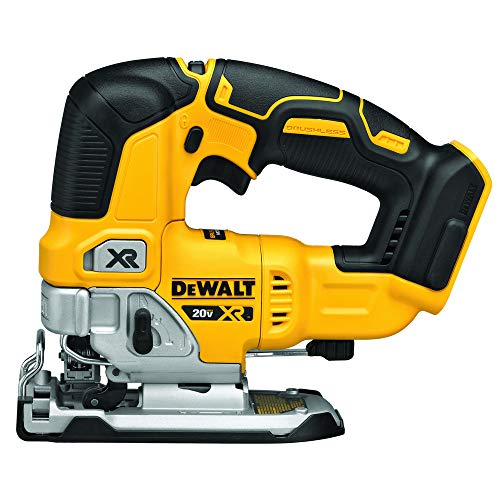
The DEWALT DCS334B is a cordless jigsaw powered by a brushless motor for extended runtime. Its compact design supports comfortable handling and precise control, and the integrated LED light helps illuminate the cut line on dim surfaces. Ideal for electricians, carpenters, or DIYers who need mobility and consistent performance without a cord. Best for: light- to medium-duty woodworking where cordless operation is valued. Caution: Bare tool requires a compatible battery and charger to be functional.
SKIL 6 Amp Corded Jig Saw JS314901
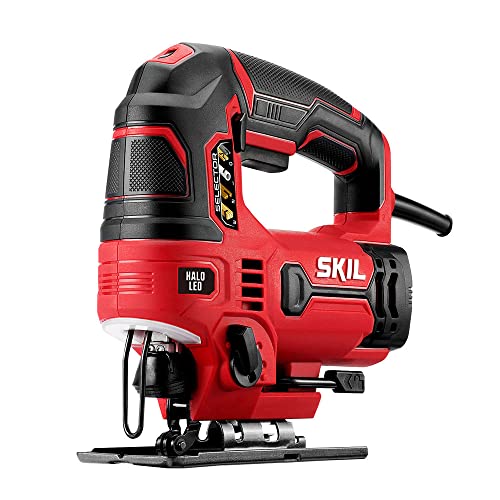
The SKIL JS314901 offers solid cutting efficiency with a 6-amp motor and 4-stage orbital action. The two-finger trigger enhances control, and the tool-free bevel and quick-adjust angled cutting capabilities simplify setup for bevel cuts. This model suits hobbyists who want easy adjustments and reliable performance for varied wood and light materials. Best for: users who value quick, tool-free changes and predictable, versatile cutting. Caution: Heavier base may require more hand effort on larger sheets.
DEKOPRO Corded Electric Jigsaw Tool

The DEKOPRO jigsaw offers up to 3,000 SPM with 4 orbital settings and ±45° bevel capacity. Its tool-less blade clamp enables quick blade changes, reducing downtime between cuts. This model is a practical option for DIYers tackling a range of wood projects, from shelving to curved cuts. Best for: beginners and hobbyists who value ease of blade changes and bevel versatility. Caution: Basic metal base plate may require careful handling on delicate workpieces.
BLACK+DECKER Jig Saw, 5-Amp 3/4” Orbital

The BLACK+DECKER BDEJS600C provides a robust 5-amp motor and a 3/4-inch orbital blade action, enabling precise curved cuts with four curve settings. Beveled cuts reach up to 45 degrees for angled work. This jigsaw is well-suited for general woodworking and home projects where a balance of power and control is desired. Best for: casual woodworkers who need a reliable all-around tool. Caution: Not a pro-grade heavy-duty option for frequent, high-volume cuts.
Buying Guide: Key Purchase Considerations
Power type: Corded models deliver consistent power without recharge needs, ideal for long sessions. Cordless variants offer mobility for outdoor or awkward workspace setups but rely on battery life.
Speed and control: Look for variable speed to match blade hardness and material, plus an orbital setting that changes cutting aggressiveness. A practical jigsaw should respond smoothly to throttle input and provide predictable results at different speeds.
Bevel capacity and base: A bevel angle up to 45 degrees expands cut options for mitered and profile cuts. A sturdy, flat base plate improves stability and accuracy on flat materials.
Blade system: Tool-less blade changes save time between cuts and enable quick blade swaps for different materials (wood, laminate, plywood). Ensure blades are readily available and compatible with the tool’s clamp design.
Ergonomics and visibility: A compact, well-balanced tool with a bright LED or good line-of-sight helps maintain accuracy, especially for detailed work. A comfortable grip reduces fatigue on longer projects.
Accessories and value: Extra blades, batteries, or a carrying case add value for beginners building a starter kit. Consider whether the tool includes essential extras or requires separate purchases.
FAQ
- What should I look for in a beginner-friendly jigsaw? Look for tool-free blade changes, a strong 4-stage orbital setting, bevel capability to 45 degrees, and clear line-of-sight for accurate cuts.
- Is a cordless jigsaw as powerful as a corded one? Cordless models offer convenience and mobility but may have shorter runtimes depending on battery capacity. Corded jigsaws maintain uninterrupted power for extended tasks.
- Why is orbital action important? Orbital action adjusts the blade’s movement, influencing how aggressively it cuts and how clean the edge looks on different materials.
- How important is LED lighting on a jigsaw? LED lighting helps illuminate the cut line, improving accuracy on darker surfaces and intricate curves.
- Can I use the same blades across brands? Blades are often universal within a given shank type, but verify compatibility with your tool’s blade clamp and shank size before purchasing.
- What is a good bevel range for most woodworking projects? A bevel range up to 45 degrees covers most curve and miter tasks encountered in home woodworking.