
Finding the right post hole digger can save time and reduce back strain. This guide highlights five top options suited for homeowners, gardeners, and small-scale fence installers who need strong, reliable digging power in varied soils. Each product is evaluated for ease of use, durability, and suitability for common tasks like fence posts, plant holes, and sign posts. Below is a quick, at-a-glance comparison table of the selected models.
| Product | Best For | Key Benefit |
|---|---|---|
| LLARGUEST Post Hole Digger | Heavy-duty outdoor digging | 57-inch reach reduces bending |
| Nohovu Post Hole Digger | Hard soil, long sessions | Thick fiberglass handle with sharp carbon steel blades |
| VNIMTI Post Hole Digger | Balanced, sturdy reliability | Double-reinforced joints with fiberglass handle |
| AugFir Steel Post Hole Digger | Versatile post setting | All-metal build with non-bending head |
| THANKSFINE Post Hole Digger Manual | Homeowners and landscapers | Ultra-sharp carbon steel blades and rust resistance |
LLARGUEST Post Hole Digger Review

The LLARGUEST model offers a 57-inch heavy-duty metal digger with a sharp screw-connected shovel head designed for efficient digging in tough soil. It’s best for long sessions where back and waist comfort are priorities due to its extended handle length. The integrated hardware and sturdy construction support post installation, plant holes, and trench work. A potential limitation is the absence of an auxiliary handle, which could help with leverage for very deep holes in dense soil.
Nohovu Post Hole Digger With Fiberglass Handle
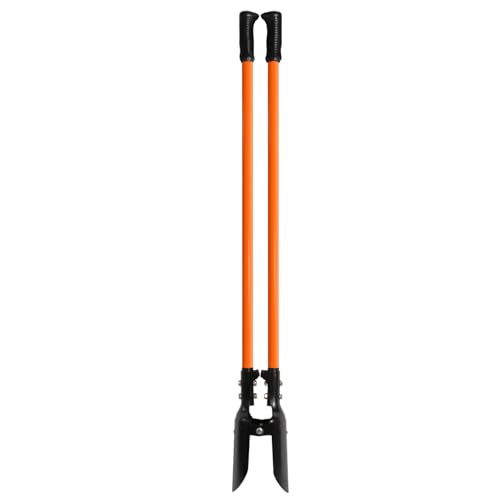
The Nohovu tool combines thickened fiberglass handles with carbon steel blades, delivering a robust option for hard soils and extended use. The non-slip grip improves control, and the four-screw joint reinforces blade-to-handle connections for reliability in demanding environments. It suits professional landscapers and homeowners tackling clay or rocky substrates. A caveat is that the fiberglass handle, while durable, can feel less rigid than metal in extremely tight spaces.
VNIMTI Post Hole Digger With Fiberglass Handle

VNIMTI emphasizes a sturdy steel blade paired with a thick fiberglass handle, designed to penetrate hard soil and rooted layers. Its double-reinforced joints offer durability in repeated use, making it a good choice for homeowners who regularly install fence posts or plant stock in challenging ground. A limitation to note is that performance will depend on soil consistency; extremely rocky sites may require heavier-duty equipment.
AugFir Steel Post Hole Digger

AugFir focuses on an all-metal construction with a reinforced, non-bending shovel head. It is designed for precision post placement and clean, vertical holes. The metal handle and non-slip grip contribute to durability and consistent control. This option is best for users who frequently set fence posts and require dependable straight holes. A potential drawback is added weight compared to fiberglass-handled models, which can impact fatigue over long sessions.
THANKSFINE Post Hole Digger Manual

The THANKSFINE model emphasizes ultra-sharp carbon steel blades and a robust, rust-resistant coating, designed to cut through tough soil quickly. Its adjustable long handle suits varied tasks—from fence posts to planting holes. It is well suited for homeowners who want a versatile, long-lasting digging tool. A limitation is that the blade edge could require maintenance in rocky environments to maintain efficiency.
Buying Guide: How to Choose the Right Post Hole Digger
- Soil Type and Depth Needs: For clay or rocky soil, curved carbon steel blades and reinforced joints improve penetration and durability. If you need deeper holes, consider models with longer handles to reduce bending.
- Handle Material: Fiberglass handles offer light weight and good durability, while steel handles provide maximum rigidity. Choose based on how much you value ease of use versus stiffness.
- Blade Construction: Sharp, pre-ground blades cut through soil more efficiently. Rust-resistant or coated blades help extend life in damp conditions.
- Joint and Fastener Design: Multi-screw joints tend to stay tight longer under heavy use, reducing wobble and breakage in rough soil.
- Weight and Fatigue: Heavier tools can cause fatigue on long digging sessions. Look for a balance between weight and grip comfort, especially if you will be digging for extended periods.
- Versatility: Some post hole diggers double as trench diggers or plant hole diggers. If you frequently perform multiple tasks, a multifunction model can be cost-effective.
Frequently Asked Questions
- What is the ideal handle length for a typical home project? A length around 57–58 inches is common for reducing back strain when digging standard fence posts and plant holes.
- Should I prefer fiberglass or steel handles? Fiberglass handles are lighter and offer good grip; steel handles provide maximum stiffness. Choose based on how you plan to use the tool.
- Do curved blades dig faster? Yes, curved carbon steel blades often cut through soil more efficiently in hard ground by following a lower-resistance path.
- Can these tools handle rocky soil? Many models are designed for tough soils, but very rocky ground may require specialized augers or additional manual effort.
- Is a multi-screw joint better than a basic joint? Yes, multi-screw joints generally stay tighter longer under heavy use in harsh conditions.
- How should I maintain post hole digger blades? Clean after use, dry thoroughly, and apply a light rust-preventive coating to extend blade life.