
Choosing the right tachometer for small engines helps ensure accurate RPM readings, reliable maintenance reminders, and safer operation across tools like chainsaws, lawn mowers, and generators. The following selections cover a range of inductive, non-contact, and hour-meter-equipped models suitable for 2-stroke and 4-stroke engines. Each option emphasizes ease of use, durability, and clear displays, making them practical for DIY enthusiasts and professionals alike.
| Product | Brand | Key Benefit |
|---|---|---|
| Electronic Specialties 328 EZ Tach Plus | ES | Wide RPM range up to 20,000 with built-in LED flashlight |
| Runleader HM011F | Runleader | Integrated hour meter and maintenance reminders |
| Archer Digital Engine Tachometer | Rotary | RPM range 100–19,000; 0.5s refresh; 2/4-stroke modes |
| BIBARAJM Small Digital Tachometer | Generic | Inductive sensing; sleep mode; up to 99,999 RPM |
| NEIKO 20713A Digital Tachometer | NEIKO | Noncontact laser readings up to 99,999 RPM |
Electronic Specialties 328 EZ Tach Plus

The Electronic Specialties 328 EZ Tach Plus is designed for versatility across small engines and various automotive applications. It reads engine revolutions up to 20,000 RPM, making it suitable for string trimmers, lawn equipment, and light automotive use. The device’s easy-to-read display helps users monitor RPM quickly, and its built-in LED flashlight offers illumination for measurements in low-light environments, such as engine bays or shed workspaces. With inductive sensing, it minimizes contact and wear on wiring while delivering consistent results. The EZ Tach Plus is a practical choice when a compact, all-purpose tachometer is needed for a mixed tool set.
Features include a broad RPM range, quick response, and a simple workflow that fits both beginners and seasoned technicians. The unit’s robust measurement capability helps confirm idle speeds and engine timing adjustments, supporting routine maintenance tasks. While offering essential RPM data, it remains lightweight enough for field use, reducing operator fatigue during longer projects. Overall, it suits hobbyists who require a reliable instrument that doubles as a utility tool for different engines and mechanical setups.
Runleader HM011F Small Engine Hour Meter
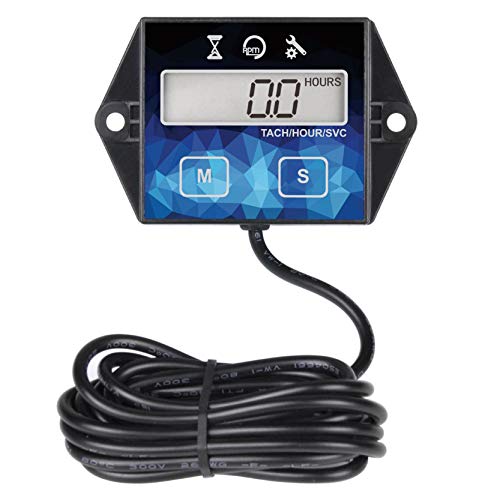
The Runleader HM011F combines a tachometer with an hour meter and maintenance reminders in a compact package. It tracks RPM while the engine runs and displays total running hours when the engine is off. The device supports programmable maintenance intervals, flashing a service icon when the countdown reaches zero. This makes it especially useful for equipment where routine service intervals are critical, such as ZTR lawn mowers, generators, and marine applications. Its 0.1-hour accuracy supports precise scheduling of oil changes, filter replacements, and spark plug checks. The HM011F’s ability to reset total hours enables ongoing lifecycle monitoring across multiple engines or seasons.
From a user perspective, the inclusion of a programmable service timer adds value beyond simple RPM measurement. It helps operators align maintenance tasks with engine usage, potentially extending engine life and reducing downtime due to unexpected failures. The overall design emphasizes clear readouts and reliable performance, making it a strong candidate for shop benches and mobile repair kits alike. For users who want integrated RPM data plus maintenance planning in one device, this model offers a practical balance of features and ease of use.
Archer Digital Engine Tachometer

The Archer Digital Engine Tachometer is a versatile option for measuring RPM on both 2-stroke and 4-stroke engines. It reports RPM from 100 to 19,000 with an accuracy of ±10 RPM and features a 0.5-second refresh rate for near real-time readings. This model supports multiple sensing settings to adapt to different engine configurations and firing patterns, making it suitable for chainsaws, lawnmowers, and small outboard motors. The device’s rapid refresh aids in quickly identifying idle or peak RPM during tuning procedures, while its compact form fits easily into tool kits or glove compartments.
Users benefit from a straightforward interface and reliable inductive sensing, which reduces the risk of misreads caused by spark plug wire movement. With a focus on practicality, the Archer tachometer provides essential RPM data without unnecessary complexity, helping technicians verify engine timing and acceleration behavior in both workshop and field environments. The combination of a broad RPM range and 2/4-stroke adaptability makes it a flexible pick for various small-engine tasks.
BIBARAJM Small Digital Tachometer

The BIBARAJM tachometer emphasizes inductive sensing with a spark wire clip, offering a safe, non-contact method to measure RPM on chainsaws, marine engines, ATVs, and more. The device includes a sleep mode to conserve battery life and wakes when needed, which helps extend operational use in field settings. It can display up to 99,999 RPM and features an auto-reset function for hours, facilitating an easy start to new maintenance cycles. The compact clip-on design simplifies attachment to various spark plug wires without extensive wiring changes.
In addition to RPM data, the model’s energy-saving design is suited to battery-powered use, ensuring longer measurement sessions between charges. The combination of reliability, ease of use, and clear digital readouts makes it a practical choice for quick checks on a wide range of small engines. Its inductive approach minimizes interference and provides consistent results across environments with variable noise or engine wiring layouts.
NEIKO 20713A Digital Tachometer
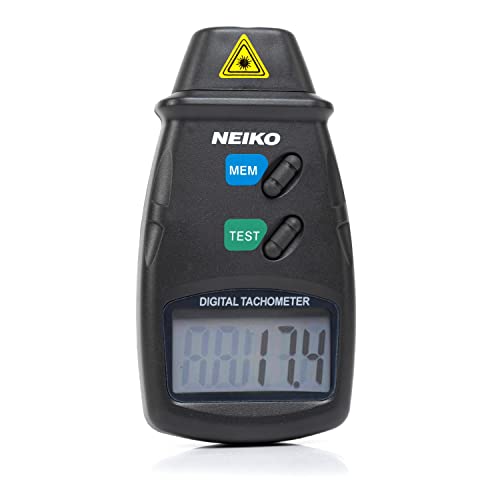
The NEIKO 20713A digital tachometer combines noncontact laser readings with a large LCD display, offering RPM measurements from 2.5 to 99,999. This makes it suitable for automotive and small-engine work where distance readings are advantageous. The noncontact design is particularly useful for engines where spinning parts are difficult to access or when minimizing disturbance to the engine setup is preferred. The device’s batteries are included, enabling immediate use after purchase, and the big display supports easy readability, even in dim workshop lighting.
For technicians seeking a long-range, noninvasive RPM tool, the NEIKO model provides precise results from a safe distance while maintaining straightforward operation. Its laser measurement capability is well-suited for larger small engines and scenarios where clamping or induction methods are not convenient. While it excels at general RPM checks, users should note the need for proper aiming at the reflective target to achieve optimal accuracy. Overall, it’s a solid option for accuracy-focused RPM testing in varied work environments.
Buying Guide: Key Considerations For Small Engine Tachometers
- Measurement method: Inductive (clip-on to spark wire) vs noncontact laser vs direct contact. Inductive is common for portability and ease; noncontact reduces interference when wires are hard to access.
- RPM range and accuracy: Match the engine type (2-stroke, 4-stroke) and typical idle/peak RPM. Look for models with at least 100–19,000 RPM or higher for larger small engines.
- Display and readability: Large, backlit LCDs improve readability in bright or dim environments. Consider refresh rate for dynamic measurements during tuning.
- Power and maintenance: Battery life, replaceable batteries, and auto-sleep features affect field usability. Some units include batteries and long-lasting power options.
- Additional features: Hour meters, maintenance reminders, programmable alarms, and service timers add value for ongoing engine upkeep and scheduling.
- Durability and water resistance: IPX-rated or rugged housings help with workshop use and outdoor environments such as garden equipment or boat engines.
- Compatibility: Ensure the tachometer supports the engine types you work with (gasoline, 2-stroke, 4-stroke) and the intended measurement method for best results.
- Ease of use: Simple calibration or quick-start operation reduces setup time and minimizes measurement errors for casual users and professionals alike.
- Price-to-value balance: For a mixed toolkit, prioritize models offering essential RPM data plus useful extras (hour meter, reminders) without overcomplicating operation.