
Choosing the right 10-inch metal cutting blade can significantly impact cut quality, tool life, and efficiency. This guide highlights top 5 blades designed for ferrous and non-ferrous metals, aluminum, and mixed-material cutting. Each option balances durability, heat management, and clean cuts to suit workshops, fabrication shops, and DIY projects. Below you’ll find a concise buying guide and product snapshots to help you compare performance features side by side.
Summary of selected products (no prices listed):
| Product | Brand | Highlights |
|---|---|---|
| TOMAX 10-Inch 80 Tooth | TOMAX | Aluminum and non-ferrous metals; rust-resistant coating |
| JINSINA 10″ Miter Table Saw Blade | JINSINA | 60T; ATB design; high RPM compatibility |
| Diablo D1050CF Steel Demon | Diablo | Cermet II teeth; long life; precise cuts |
| FOXBC 10-Inch 100-Tooth | FOXBC | Thin kerf; aluminum and non-ferrous metals; noise reduction vents |
| IVY Classic 40088 Swift Cut | IVY Classic | Resin bonded grain; fiberglass reinforced |
TOMAX 10-Inch 80 Tooth TCG Blade

TOMAX offers a versatile 10-inch blade built for cutting plastic, aluminum, and non-ferrous metals. The 80-tooth carbide teeth provide high wear resistance for longer blade life, while an electrophoretic coating helps reduce rust and corrosion in demanding shop environments. This blade is suitable for miter saws and other 10-inch platforms with a 5/8-inch arbor, delivering clean cuts in metalworking and fabrication tasks where precision matters.
JINSINA 10″ Miter Table Saw Blade
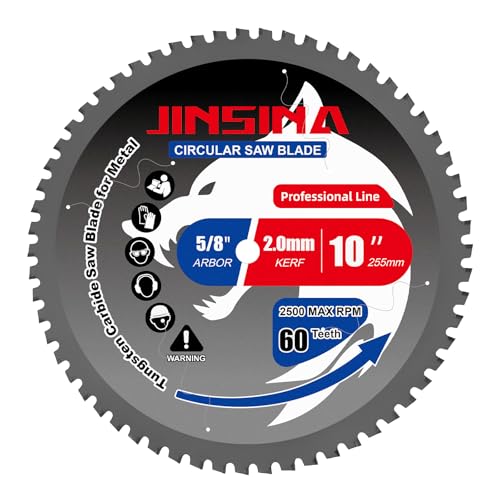
JINSINA’s 10-inch, 60-tooth carbide-tipped blade is designed for metal cutting across multiple saw types, including miter, slide, and stationary table saws. With a 5/8-inch arbor and operating range up to 2500 RPM, it balances efficiency and precision. The ATB (alternate top bevel) design minimizes cutting resistance, while premium carbide tips enhance wear resistance, extending service life in continuous or demanding metal-cutting workflows.
Diablo Steel Demon Cermet II Blade
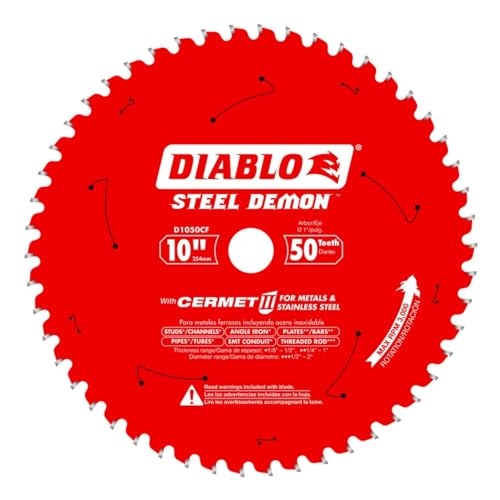
Diablo’s D1050CF blends Cermet II teeth with a reinforced design for heavy-duty metal cutting. Claimed benefits include up to 25X longer life and cooler cuts compared with standard discs, plus precise, burr-free results due to a triple-chip grind and Perma-Shield coating. The blade is engineered for fast, efficient metal and stainless steel cuts with reduced heat buildup and fewer sparks.
FOXBC 100-Tooth 10-Inch Blade
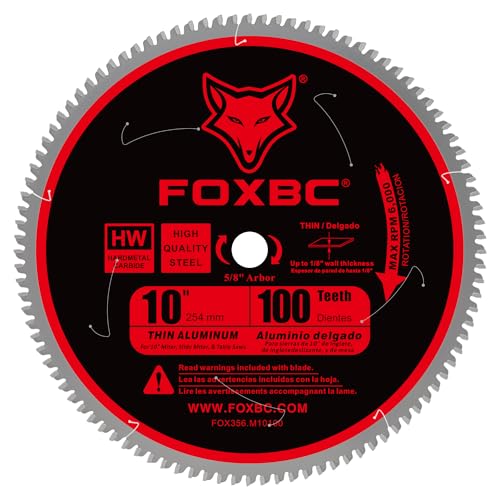
FOXBC’s 100-tooth blade targets aluminum and non-ferrous metal cutting with a thin kerf of 0.095 inches. It features a 5/8-inch arbor and is designed to minimize waste while delivering smooth, precise cuts in thin to moderately thick aluminum sections. Tungsten carbide construction offers durability and long life, with stabilizer vents reducing noise and vibration for steadier operation.
FOXBC 80-Tooth Miter Blade

This 80-tooth FOXBC blade is designed for aluminum and non-ferrous metal cutting with a 5/8-inch arbor. The blade’s design emphasizes precision and durability, featuring laser-cut stabilizer vents to trap noise and reduce vibration. Its tungsten carbide composition delivers wear resistance and longer service life for repeated metal cuts in home workshops or professional shops.
FOXBC 52-Tooth 10-Inch Metal Blade

FOXBC’s 52-tooth blade is optimized for metal cutting with a 1-inch arbor and a 5/8-inch bushing. It targets studs, tubing, angle iron, and varied metal profiles with a kerf of about 0.0787 inches. This blade emphasizes robust sturdiness for aggressive metal cutting tasks while maintaining ample control to avoid wandering or deflection during cuts.
Evolution 10-Inch 52-Tooth Blade

Evolution’s 10-inch blade emphasizes mild steel and ferrous metal cutting with a 52-teeth configuration. Made from high-quality Japanese carbide and heat-treated for durability, this blade is designed to minimize heat buildup and burr formation for cleaner cuts on mild steel, without applying excessive heat or sparks during operation.
Buying Guide: Key Considerations For 10-Inch Metal Cutting Blades
- Material compatibility: Consider whether you primarily cut aluminum, non-ferrous metals, mild steel, or mixed metals. Teeth geometry (ATB, FTG, or herringbone patterns) affects chip formation and cut quality for different materials.
- Tooth count and kerf: Higher tooth counts yield smoother finishes but slower material removal, while lower tooth counts cut faster but may leave rough edges. Kerf width impacts waste and force required; thinner kerf saves material but can be more sensitive to vibration.
- Arbor compatibility: Most 10-inch blades use a 5/8-inch arbor, but some setups require adapters or 1-inch arbors. Confirm your saw’s arbor size and compatibility with the blade’s bore.
- Coating and corrosion resistance: Electrophoretic coatings and other protective finishes help extend blade life in humid environments and when cutting reactive metals.
- Durability vs. heat management: Cermet, carbide-tipped, and additional coatings improve life in tough cuts, often at a higher cost. Assess whether long life or faster cutting is the priority for your workflow.
- Safety and compatibility: Ensure the blade is designed for your saw type (miter, table, or sliding) and never exceed the saw’s RPM rating. Look for blades with reinforced edges and fiber mesh for safety when cutting metal.
- Application notes: Some blades are optimized for thin-wall tubing, studs, or thick plate. Review the blade’s intended use to minimize rework and maximize precision.
- Maintenance: Regular cleaning of buildup and proper storage extend blade life. Use appropriate cutting fluids or dry cutting as recommended for metal types.