
Air quality monitors help communities and households track pollutants, allergens, and gases that influence comfort and health. This guide highlights five top picks that perform well outdoors or in mixed indoor-outdoor environments, offering clear data, alarms, and trend graphs. Each option is evaluated on sensor quality, data presentation, ease of use, and integration capabilities, so you can choose a model that fits your home or yard monitoring needs.
Chosen products at a glance
| Product | Key Focus | Data & Alerts |
|---|---|---|
| Temtop PM2.5 Monitor P600 | Particle-centric monitoring with data histograms | PM2.5/PM10, data graph, health indicators |
| Temtop M2000C Air Quality Meter | Budget-friendly, multi-parameter indoor/outdoor use | PM2.5, PM10, CO2, audio alarm, TFT display |
| Ambient Weather PM2.5 Wireless Outdoor Monitor | Outdoor-ready sensor network and alerts | PM2.5 via Sensirion sensor, web alerts, smart home integration |
| Amazon Smart Air Quality Monitor | Low-friction smart home integration | PM2.5, VOCs, CO, humidity, temperature, Alexa integration |
| YNAK 16-in-1 Indoor Air Quality Monitor | Comprehensive, high-precision multi-sensor | CO2, PM2.5, PM1.0, PM10, HCHO, TVOC, temp, humidity, AQI |
Temtop PM2.5 Monitor P600 Overview

The Temtop P600 is designed around a second-generation PM2.5 laser sensor with a practical focus on particle concentrations and health indicators. It provides direct visualization of PM2.5 and PM10 levels along with a color-coded health gauge, helping households gauge air quality at a glance. The device is built for longer life, featuring an industrial-grade sensor that promises more than 20,000 hours of operation. A key feature is its data histogram and 12-hour data history, enabling users to see short-term air quality trends and identify periods of poorer air. This monitor is well-suited for outdoor environments or areas with fluctuating outdoor air entry into living spaces. Its data graphs support users who want to see how particle levels shift over time.
Primary advantages include durable sensor design, stable readings due to a particle swarm optimization algorithm, and accessible visual data. The model is helpful for parents, commuters, or homeowners who need quick, graphical evidence of air quality changes across dayparts. Limitations may include a narrower set of gases beyond PM particulates, so supplementing with a CO2 or VOC monitor could be necessary for full environmental context. Overall, it emphasizes particle measurements with clear data visualization and trend tracking for outdoor or semi-outdoor monitoring scenarios.
Temtop M2000C Air Quality Meter: Essential Indoor/Outdoor Monitoring

The Temtop M2000C offers an accessible approach to essential air quality metrics with cost-conscious performance. It combines PM2.5 and PM10 detection with CO2 sensing, plus temperature and humidity readings. The device emphasizes clear, audible alerts when air quality thresholds are exceeded, supporting quick user actions. Its TFT display provides an intuitive snapshot of real-time air conditions, enabling households to track changes as they occur. This model is particularly appealing for home offices, classrooms, or living spaces where a single, straightforward monitor is desired. It balances value with practical functionality, making accurate detection approachable without sacrificing essential data.
While the M2000C covers core pollutants reliably, it may not offer the deeper data history or additional sensors found in higher-end models. Still, for families seeking a compact, reliable option for indoor and immediate outdoor-adjacent use, this monitor delivers strong performance with easy interpretation and alerting features.
Ambient Weather PM2.5 Wireless Outdoor Monitor
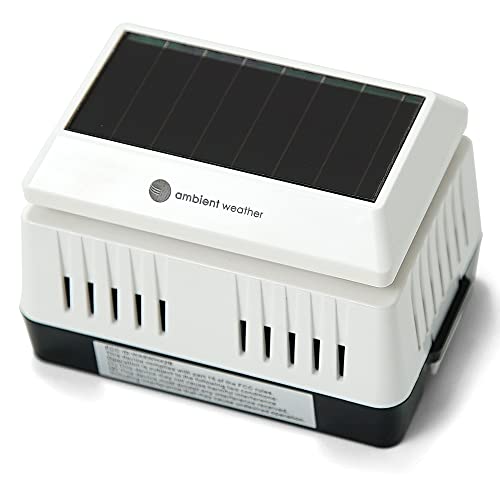
Ambient Weather centers its PM2.5 monitor on a high-quality Sensirion particle sensor, designed for robust outdoor use. The device is capable of sending data to the Ambient Weather Network, enabling alert creation and smart home integrations like Google Home or Amazon Alexa. This model suits homeowners who want a networked approach to air quality, where the sensor data can be aggregated with other weather and environmental sensors. The ability to issue alerts and integrate with existing ecosystems makes it a flexible option for those who want proactive monitoring and automation tied to air quality events, such as times of heightened outdoor pollen or pollution.
Potential considerations include the need for an online connection for full functionality and data sharing. Because it’s designed to connect into a broader weather system, it’s optimal for users who already participate in a connected home or smart weather setup and want to centralize their data streams for comprehensive environmental awareness.
Amazon Smart Air Quality Monitor with Alexa Integration

This Amazon-branded monitor emphasizes ease of use and smart home synergy. It captures PM2.5, VOCs, CO, humidity, and temperature, presenting a straightforward air quality score within the Alexa ecosystem. The device’s LED indicators provide at-a-glance cues about current conditions, while the Alexa app offers deeper insights. This model is ideal for users who want a plug-and-play device that integrates with voice control and routine automation, such as routines that adjust air purifiers or HVAC settings based on live air quality data.
One limitation is the focus on a fixed set of metrics, which may suffice for most homes but may lack advanced historical analysis compared to more specialized monitors. For users prioritizing smart-home compatibility and a clean user experience, this option pairs well with other Alexa-enabled devices and routines to maintain comfortable indoor air quality.
YNAK 16-in-1 Indoor Air Quality Monitor

The YNAK 16-in-1 monitor is positioned for thorough indoor air quality assessment. It measures CO2, PM2.5, PM1.0, PM10, HCHO, TVOC, temperature, humidity, and provides an AQI reading with time display. A notable feature is the 0.001 accuracy claim from external high-precision sensors and a UI that highlights real-time AQI with seven distinct alert buzzers, including a mute option. The device is designed with external sensors to enable precise sampling and a broad range of pollutants, making it suitable for homes, schools, or offices where a detailed environmental picture matters. Battery options and external sensors enhance versatility in various setups.
Considerations include ensuring proper sensor exposure and maintenance—avoiding perfumes or strong odors near sensors helps preserve accuracy. The multiple alarms and external sensing approach make this model a strong candidate for environments that demand robust, multi-faceted data to keep occupants informed and safe.
Buying Guide
- Sensor fidelity: For outdoor or semi-outdoor use, prioritize devices with high-quality laser PM sensors or Sensirion/other reputable particulate sensors. Accurate PM2.5 and PM10 readings are crucial for assessing outdoor air ingress into homes.
- Parameter breadth: If you want more than particulates, look for CO2, VOCs, CO, temperature, and humidity sensors. Multi-parameter devices reduce the need for multiple gadgets and simplify interpretation.
- Data presentation: Choose monitors with intuitive displays, histograms, or trend graphs. Clear data visualization helps you recognize patterns and take timely actions, such as running purifiers or sealing gaps.
- Alarms and alerts: Audio alarms and app-based notifications are valuable for immediate action, especially in households with sensitivities or allergies. Verify customizable alert thresholds and muting options.
- Connectivity and ecosystem: Consider whether you prefer standalone readings or integration with a smart home or weather network. Some devices offer Alexa, Google Home, or proprietary apps for centralized control and automation.
- Outdoor suitability and placement: Outdoor monitors should withstand weather exposure and be positioned where they can accurately sample air without direct heat sources or obstructions. Some models require a gateway or network to function optimally.
- Maintenance and data storage: Some units store hours of historical data locally, while others rely on cloud storage. Decide which approach fits your data retention needs and privacy considerations.
- Power options: Battery-powered or USB-powered devices offer flexibility for locations without constant power access. For extended outdoor use, check battery life and charging options.
- Budget vs. value: Higher-end models deliver comprehensive sensor suites and richer data history, but budget-conscious options can still provide actionable PM data with essential alerts. Balance your needs with cost.
- Interpretation aids: Devices that accompany interpretation guidelines, mobile apps, or automated insights help non-experts translate numbers into practical actions for healthier living spaces.