
Protecting your property starts with reliable motion-sensing lighting. The following outdoor motion sensors combine adjustable sensitivity, flexible mounting, and smart modes to fit porches, garages, driveways, and yards. This guide highlights five top options, spanning traditional wired detectors to smart lighting integrations, to help you choose the right sensor for your setup.
Summary of chosen products:
| Product | Brand | Key Feature | Amazon Link |
|---|---|---|---|
| TREEWELL 240-Degree Replacement Motion Sensor (Auto/DTD/Manual) | treewell | 240° coverage, adjustable lux, 10s–10min timer, 3 modes | Link |
| TREEWELL 240-Degree Replacement Motion Detector (3 Modes) | treewell | 180° vertical, 300° horizontal head, 60 ft range | Link |
| EDISHINE Motion Sensor, 180° Detector | EDISHINE | 180° coverage, 60 ft range, 0–10 min delay | Link |
| LUTEC 72W LED Security Lights with Motion Sensor | LUTEC | 72W, 7500 lumens, 180° sensing, 1/3/10 min timer | Link |
| Philips Hue Outdoor Motion Sensor | Philips Hue | 160° detection, bridge required, works with smart home ecosystems | Link |
TREEWELL 240-Degree Replacement Motion Sensor

This 3-mode sensor provides Auto, Dusk-to-Dawn, and Manual Override options. In Auto mode, the floodlight activates when motion is detected in darkness and turns off after a selectable period between 10 seconds and 10 minutes. DTD mode operates only at night, turning lights on automatically after dusk and off at dawn, while Manual Override lets you keep the light on for up to 8 hours. The device offers a wide 60-foot sensing range and a stepless timer; Lux control (5–300) adjusts the ambient brightness required to trigger the light, giving you custom control over illumination and energy use.
Key features include adjustable time and sensitivity, a large detection footprint, and flexible mounting with outdoor suitability. This model is ideal for front porches, garages, and walkways where customizable dusk lighting enhances safety and visibility without constant operation.
TREEWELL 240-Degree Replacement Motion Detector (3 Modes)

This model emphasizes flexible head movement with a rotatable sensor neck (180° vertically, 300° horizontally), enabling precise aiming for porches, driveways, and entryways. The 60-foot sensing range and stepless timer let you tailor when and where the light activates. It maintains three operating modes—Auto, Night-only (D2D-like), and Manual—for diverse lighting needs, including long nighttime security or energy-conscious daytime silence, depending on the setting chosen.
EDISHINE Motion Sensor, 180-Degree Detector

EDISHINE’s three-mode control includes Auto, Dusk-to-Dawn, and Manual Override. In Auto, lights turn on at night upon motion and off after a delay. Dusk-to-Dawn ensures operation only during darkness, reducing daytime activation. The sensor supports up to 60 feet of range with a broad 180-degree angle, and its neck is fully adjustable (180° vertical, 360° horizontal) to optimize coverage. The result is flexible installation for porches, sidewalks, and backyards, with reliable performance in variable lighting conditions.
LUTEC 72W LED Security Lights with Motion Sensor

LUTEC’s LED floodlight combines high output with energy efficiency: 72W delivering about 7500 lumens at 5000K. The 180-degree sensing angle covers wide areas, with an adjustable timer offering 1, 3, or 10 minutes of active lighting after motion is detected. The fixture supports multiple modes, including Test, Security, Dusk-to-Dawn, and Manual Override, which allows continuous operation for a preset period before daylight deactivates the light. It’s a powerful choice for garages, driveways, and large entryways that need broad coverage.
Philips Hue Outdoor Motion Sensor
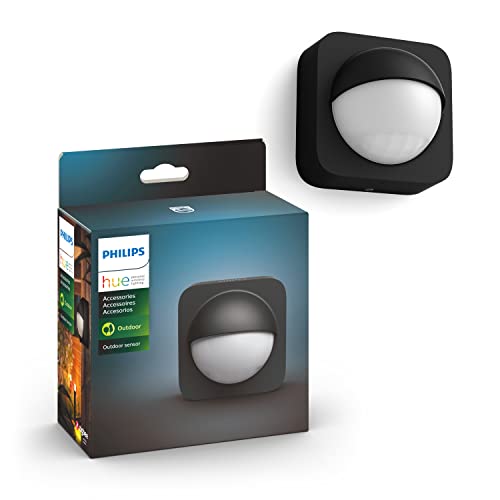
The Philips Hue Outdoor Motion Sensor integrates with Hue lighting and requires a Hue Bridge. This enables automatic lighting control and interoperability with other Hue devices and smart home ecosystems. Its 160-degree detection range helps trigger outdoor Hue lights across porches, patios, and driveways, enabling scenes and automations that respond to presence. This option is best for users seeking a connected lighting experience and voice assistant compatibility in an outdoor setting.
Buying Guide: Key Purchase Considerations
When selecting an outdoor motion sensor, consider the following factors to match your needs and installation environment:
- Detection range and coverage: Choose a sensor with a wide angle and adequate distance to cover entry points, walkways, and driveways without dead zones. If you have a large porch or yard, higher-range options like 60 ft or more are beneficial.
- Field of view and adjustability: Rotable sensor heads and adjustable mounting angles help ensure the sensor faces the area you want to monitor, reducing false triggers from nearby activity or trees.
- Power source and installation: Wired vs. battery-powered models affect wiring, accessibility, and maintenance. Solar-powered options offer easy installation but may depend on sun exposure for performance.
- Modes and automation: Auto, dusk-to-dawn, and manual override modes support different routines. For smart homes, consider models that integrate with bridges or hubs for automation and scene control.
- Lighting options and brightness: Look for compatibility with existing fixtures and the ability to adjust brightness or delay times. LED fixtures save energy and provide longer life than traditional bulbs.
- Environmental rating: Ensure the device is UL-listed or equivalent and rated for outdoor use (weatherproof or waterproof) to withstand rain, heat, and cold.
- Smart home compatibility: If you use Alexa, Google Assistant, or Apple HomeKit, preference for sensors that support routines, scenes, or bridging beyond standalone operation.
- Installation considerations: Wall mounting vs. eave placement, and access to power or a neutral line (for wired models). A rotatable neck or long mounting arm can simplify installation in challenging spaces.
For optimal security, combine motion sensors with compatible outdoor lighting and, if possible, a smart hub or bridge. This creates responsive, energy-efficient lighting that helps deter intrusions while enhancing nighttime visibility for residents and guests alike.