
Choosing a reliable sewage sump pump is essential to keep basements dry and prevent backup during heavy rainfall or plumbing issues. The following five models offer a mix of power, durability, and automatic operation to suit typical residential needs. Below, you’ll find concise overviews, practical specs, and a buying guide to help you compare options side by side.
style=”display:none”>Summary Table
| Product | Brand | Discharge | Max Flow (GPH) | Notes |
|---|---|---|---|---|
| Acquaer 3/4HP Submersible Sewage Ejector Pump | Acquaer | 2” NPT | 6400 | |
| Schupethauer 1HP Sewage Sump Pump | Schupethauer | 2” NPT | 6400 | |
| LANCHEZ 1HP 6600 GPH Submersible | LANCHEZ | 2” NPT | 6600 | |
| Aquastrong 1HP Sewage Grinder Pump | AQUASTRONG | 2” NPT | 3962 | |
| Superior Pump 93020 1/2 HP | Superior Pump | 2” | 4800 |
Acquaer 3/4HP Submersible Sewage Ejector Pump

The Acquaer model combines a 3/4 HP oil-filled motor with a rugged cast-iron exterior and a non-clogging vortex impeller. It delivers up to 6400 GPH and lifts water as high as 29 feet, suitable for residential sewage or effluent applications. Equipped with a 2″ NPT discharge and a 10-foot power cord, it supports automatic operation via an adjustable mechanical float switch. The design emphasizes durability for basement or below-grade installations, though it should not be used in septic tanks. The unit is built to handle solids up to 2″ in diameter, helping reduce clogs in complex drainage scenarios.
Schupethauer 1HP Sewage Sump Pump
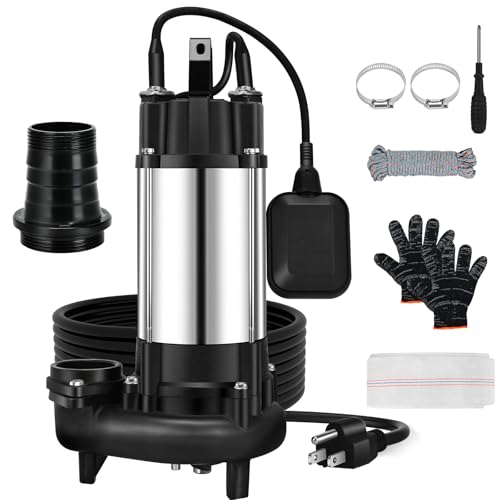
This 1 HP submersible sewage pump uses a cast iron impeller and stainless steel outer shell for robust, corrosion-resistant performance. It provides up to 6400 GPH with a 40-foot lift and 2″ discharge, targeted at basement sewage, wastewater, and stormwater removal. Automatic operation is managed by a mechanical float switch, and a portable handle facilitates transport. The unit emphasizes durability, with a reinforced anti-clog impeller designed for abrasive wastewater. Do not use in gasoline, alcohol, or certain septic environments as indicated by usage notes.
LANCHEZ 1HP 6600 GPH Submersible Pump
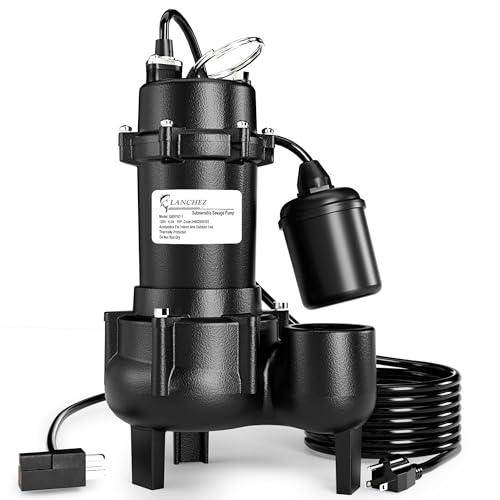
Powered by a 1HP PSC motor, this model pushes up to 6600 GPH and lifts water up to 27 feet. It features a cast iron body for corrosion resistance and a built-in thermal overload protector to guard the motor during dry running. The auto float switch ensures hands-off operation based on the sump water level, while the solid construction includes a reinforced anti-clog impeller to handle common solids. The 2″ discharge and 2″ hose compatibility make it a versatile choice for basements and sump basins with larger drainage needs.
Aquastrong 1HP Sewage Grinder Pump

The Aquastrong grinder pump features a stainless steel cutting blade to shred solids such as clothing and wipes, reducing blockages in basement and sump basin applications. It delivers up to 3962 GPH with a head of about 46 feet and employs a 2″ NPT discharge with a sturdy cast iron base and anti-clog impeller. An adjustable tether float switch enables automatic on/off operation, while a cable-lock design and portable handle streamline handling and winter adjustments. Suitable for residential sewage and effluent tasks, with caution about incompatible septic environments noted in the product guidance.
Superior Pump 93020 1/2 HP 2″ Cast Iron Sewage System

This 1/2 HP unit handles up to 4800 GPH with a 25-foot vertical lift. It features a cast iron body, a non-clogging vortex impeller, and a 2″ discharge with a vertical float switch for automatic operation. Its 30-gallon basin and robust inlet hub facilitate installation in standard sump pits. The combination of a compact power profile and solid pumping capacity makes it suitable for smaller basements or spaces where a smaller footprint is preferred, while still providing dependable automatic drainage.
Buying Guide: Key Considerations For Sewage Sump Pumps
When selecting a sewage sump pump, consider compatibility with your sump pit size, discharge requirements, and the type of wastewater you manage. A few core factors help guide a smart choice:
- Flow rate and head: Match gallons per hour (GPH) and lift height to your basement’s drainage needs and vertical distance to the discharge point. Higher head often means lower flow at extreme lifts.
- Impeller design: Non-clog or anti-clog impellers handle solids more effectively. For areas with fibrous or coarse waste, this is crucial to reduce jams.
- Material and durability: Cast iron housings offer strength and heat dissipation, while stainless steel shells resist corrosion in abrasive environments.
- Discharge size and compatibility: Most pumps use 2″ NPT discharges; verify your piping and hoses align with the unit’s connections.
- Automatic vs. manual operation: Float switches enable hands-off control. Tethered floats provide reliable operation without constant monitoring, but consider a backup in case of pump failure.
- Electrical considerations: Ensure voltage compatibility (often 115V in U.S. homes) and verify cord length or the availability of a nearby outlet.
- Maintenance and service life: Look for robust construction, clog-resistant features, and manufacturer guidance on dry-running protection and thermal overload safeguards.
- Installation environment: Avoid use in septic tanks unless specified. For basements with potential for solids, grinder pumps can reduce blockage risk but may require more power and maintenance.
- Noise and energy use: Grinders and high-capacity units can be louder and more energy-intensive; weigh daily use against energy costs and noise tolerance.
In summary, select a pump with adequate GPH and head, durable materials, solid impeller design, and reliable automatic operation. Consider whether a grinder model is needed for tough solids, and ensure compatibility with your sump pit and drainage system to minimize maintenance and maximize longevity.