
Choosing the right thermally conductive epoxy is essential for protecting sensitive electronics while ensuring efficient heat dissipation. The following five products are well-regarded for their balance of thermal performance, electrical properties, and ease of use. This guide highlights their key features, suitability, and practical considerations to help you decide which compound fits your project needs.
| Product | Brand | Key Features |
|---|---|---|
| MG Chemicals 832TC-450ML | MG Chemicals | Excellent electrical and thermal conductivity; 1:1 mix; strong chemical resistance |
| WANJAO Electronic Potting Compound | WANJAO | Insulation and waterproofing; easy 5:1 mix; strong adhesion |
| Atom Adhesives AA-Duct 902 | Atom Adhesives | Room-temp cure; high volume resistivity; strong lap shear |
| Easycargo Thermal Glue | Easycargo | High conductivity; low thermal impedance; strong adhesion |
| MG Chemicals 8331D Silver Conductive Epoxy | MG Chemicals | High conductivity; 20 min working time; solder-replacement potential |
MG Chemicals 832TC-450ML Thermally Conductive Epoxy

MG Chemicals 832TC-450ML is designed for encapsulating and potting electronic assemblies. It offers excellent electrical and thermal conductivity, enabling efficient heat transfer from components to surrounding media. The product uses a simple 1:1 mix ratio, facilitating straightforward preparation in a production or repair setting. It also resists brine, acids, bases, and aliphatic hydrocarbons, providing robust chemical resistance for challenging environments. This epoxy suits applications where both heat dissipation and environmental protection are crucial, such as power supply boards, motor drivers, and high-power LED driver modules.
WANJAO Electronic Potting Compound

WANJAO’s potting compound provides strong insulation and waterproofing, protecting electronics from moisture ingress and environmental exposure. It uses a two-component system with a 5:1 ratio (400 g A, 80 g B) and typically cures within about 24 hours, making it suitable for batch repair or production workflows. The formulation emphasizes adhesion to diverse substrates, forming a durable protective layer around components, seals, and power modules where thermal management plus environmental isolation are required.
Atom Adhesives AA-Duct 902
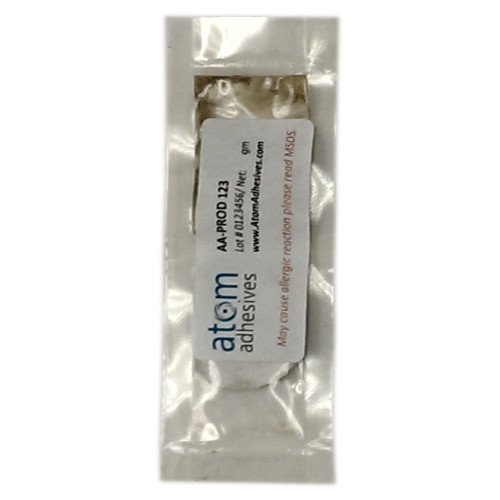
Atom AA-Duct 902 is an electrically conductive epoxy adhesive that cures at room temperature, offering a practical option for quick repairs or prototyping. Its reported properties include a high lap shear strength and a respectable Shore D hardness, with a resistivity profile suited for conductive joints without sacrificing heat transfer. The provided data indicate a robust 2.5 g kit scale that fits small-to-moderate bonding jobs on PCBs, heatsinks, or shielded modules where reliable electrical paths and thermal management are required.
Easycargo Thermal Glue
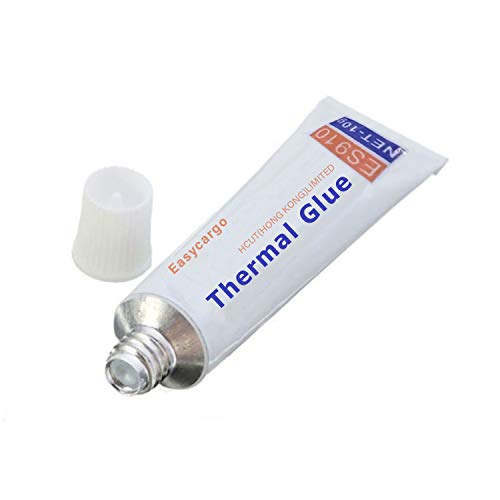
Easycargo Thermal Glue is a high-performance silicone-based thermal adhesive. With a conductivity rating exceeding 0.975 W/mK and a low thermal impedance under 0.06, it is well-suited for bonding heat sinks, VRMs, and LED components where rapid heat spread is beneficial. The product’s silicone matrix typically offers flexibility and resistance to thermal cycling, making it a practical choice for components subject to vibration or repeated temperature changes. It provides a straightforward, clean application for 3D-printed enclosures and compact electronics assemblies.
MG Chemicals 8331D Silver Conductive Epoxy

MG Chemicals 8331D is a silver-filled conductive epoxy designed for fast, reliable electrical connections with appreciable thermal conductivity. Its 20-minute working time supports mid-length assembly tasks, while room-temperature curing is possible, with heat curing recommended for best conductivity. This makes it suitable for bonding heatsinks to high-power components, repairing heat-sensitive electronics, and creating robust electrical pathways where soldering is impractical or undesirable.
Buying Guide: Key Considerations for Thermally Conductive Epoxies
- Thermal Conductivity vs. Electrical Conductivity: For heat dissipation, prioritize materials with high thermal conductivity. If the target is both heat spreading and electrical connectivity, consider conductive epoxies that balance both properties, such as silver-filled formulations.
- Cure Type and Time: Room-temperature cures are convenient for field repairs, but faster cures can improve production throughput. Check pot life and curing schedules to match your workflow.
- Mix Ratio and Handling: 1:1 mix ratios simplify preparation, but some products require specific A:B ratios. Ensure you have accurate measuring tools and adequate working time for your application.
- Electrical Insulation vs. Conductivity: Some epoxies emphasize insulation to protect sensitive circuits, while others are designed to create conductive paths. Select based on whether you need insulation, conduction, or both at targeted interfaces.
- Environmental and Chemical Resistance: If the device operates in moisture, salt spray, acids, or bases, choose compounds with proven resistance to those conditions to prevent degradation over time.
- Substrate Compatibility: Verify adhesion to common materials such as copper, aluminum, FR-4, plastics, and silicone surfaces. Poor adhesion can lead to delamination under thermal cycling.
- Mechanical Properties: Consider hardness, flexibility, and impact resistance. A rigid epoxy may crack under thermal expansion, while a more compliant formulation can better absorb stress.
- Safety and Handling: Some products contain silver or other conductive fillers that can raise safety considerations during handling and curing. Follow manufacturer guidelines for ventilation and PPE.
- Application Type: Determine whether the epoxy is intended for encapsulation, potting, bonding, or coating. Potting compounds provide environmental protection and mechanical support, while adhesives prioritize bonding strength.
When selecting a thermally conductive epoxy, align product features with the specific demands of your project—heat flow requirements, environmental exposure, cure logistics, and substrate materials. The 5 options reviewed here cover a spectrum from encapsulation-ready formulations to conductive epoxies suitable for quick repairs and prototyping, offering practical pathways for electronics cooling and protection.