
When field readiness matters, a belt-mounted IFAK (Immediate First Aid Kit) offers rapid access to essential trauma supplies. This guide reviews five notable options, highlighting design, deployment, and compatibility with common MOLLE and belt systems. Each pick provides a balance of compact size, durable construction, and organized interiors to support emergency response in tactical, outdoor, and duty environments.
Summary of chosen products
- GYDEHUTJ Molle First Aid Pouch: 500D nylon, belt and MOLLE mounting, integrated med roll and carrier.
- LIVANS Molle IFAK Micro Trauma Pouch: compact interior, one-handed deployment, MOLLE compatibility.
- Esstac Belt Mounted Elastic Tourniquet/TQ Holder: slim, belt-sited TQ holder with hook-and-loop closure.
- KRYDEX Tactical Blow Out Kit Bag: 500D nylon, belt loops and MOLLE compatibility, compact but functional.
- Blue Force Gear Micro Trauma Kit Now!: ultra-lightweight, belt-mounted kit with quick access and minimal bulk.
GYDEHUTJ Molle First Aid Pouch Overview

The GYDEHUTJ Micro Trauma Kit uses high-quality 500D nylon and features a two-piece system with a Med Roll and Carrier. It supports belt mounting and MOLLE configurations, enabling vertical or horizontal placement on 1.5″–2.25″ belts or MOLLE panels. This versatility suits chest rigs, tactical vests, backpacks, and heavy-duty belts, making it a practical option for diverse duty setups.
The pouch prioritizes quick access and modularity. Its dual-mount approach helps responders secure and deploy supplies rapidly, with the option to switch to a MOLLE setup when equipment layout changes. Its compact footprint is designed for essential items, keeping weight manageable for extended wear. This model suits users seeking a straightforward, robust belt-first medical pouch.
LIVANS Molle IFAK Micro Trauma Pouch
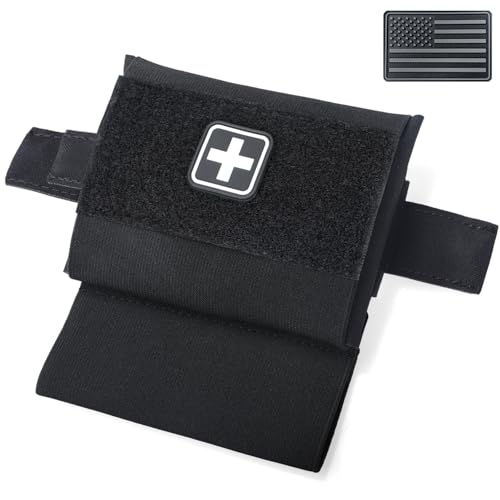
The LIVANS IFAK focuses on compact interior layout with elastic bands and loops to immobilize trauma supplies. It supports one-handed deployment via a pull-tab integration and can be used as a standalone pouch or inserted into an outer sleeve cover. The design emphasizes quick extraction of critical items in emergencies, aligning with the need for rapid response in field conditions.
Two back MOLLE straps with hooks allow reliable mounting to duty belts without hindrance. The split design accommodates additional tourniquet storage or use as a standalone tourniquet holder in larger medical kits. This makes LIVANS a flexible choice for responders who prioritize fast access and adaptable mounting options.
Esstac Belt Mounted Elastic Tourniquet Holder

The Esstac holder is a dedicated belt-mounted elastic tourniquet solution. The horizontal TQ placement and hook-and-loop closure enable secure attachment to a variety of belt sizes and outer belts with compatible Velcro surfaces. This compact option is ideal for users who want a focused, streamlined way to carry a tourniquet on the belt for rapid access during trauma response.
Its modular design ensures compatibility with common belt configurations, providing a straightforward route to deploy a tourniquet quickly without digging through a larger pouch. For those prioritizing a minimal, dedicated TQ holder, this Esstac model offers a reliable, low-profile choice.
GYDEHUTJ Micro Med Kit Belt Mounted Pouch

This belt-mounted medical pouch from GYDEHUTJ uses 500D nylon for lightweight durability and is designed to fit under or with chest rigs and plate carriers that have hook-and-loop panels. It is compatible with chest rigs such as JPC, CPC, LBT, D3CR, and MK series, making it a versatile choice for responders who need a compact, modular medical pouch that can adapt to different tactical setups while keeping essential supplies accessible.
The interior is structured for quick access and organization, with the ability to hold key first-aid items while remaining unobtrusive. The design supports easy integration with existing MOLLE systems and belt attachments, providing a balanced option for duty or outdoor use where space is at a premium.
KRYDEX Tactical Blow Out Kit Bag

The KRYDEX Blow Out Kit Bag emphasizes a slim, 500D nylon build with belt loop mounting and MOLLE compatibility. It is designed to hold essential trauma items in a compact form factor, capable of fitting a C.A.T. tourniquet, Israeli bandage, gloves, chest seals, and related supplies. The product supports two wearing methods: built-in belt loops or full MOLLE attachment, offering versatility for different belt and harness configurations.
Its balance of compact size and essential capacity makes it suitable for users who need a durable, low-bulk option that still accommodates critical items. The included guidance video helps users optimize MOLLE strap usage and deployment techniques, which can be advantageous for new users seeking practical how-to support.
Blue Force Gear Micro Trauma Kit Now!

The Blue Force Gear MTKN! is a belt-mounted micro trauma kit designed for ultra-low bulk. It uses ULTRAcomp fabric, Ten-Speed elastic, and CORDURA for durability and lightweight performance. Access is swift via BLIP pull tabs, and the compact dimensions (roughly 6″ x 3.5″ x 2.5″) ensure it remains unobtrusive while still holding essential medical items. It is well-suited for everyday carry and service members who need dependable, fast-access trauma supplies without adding noticeable weight.
The MTKN! insert is removable, allowing the main pouch to stay secure while the internal components can be swapped or reorganized as needed. This modular approach supports ongoing readiness and customization for various mission profiles or personal preferences.
Buying Guide — Key Considerations And Comparisons
Choosing the right belt-mounted IFAK involves evaluating mounting options, capacity, organization, and deployment speed. Consider these factors to align a pouch with your roles and environments:
- Mounting compatibility: Check whether the pouch supports belt mounts, MOLLE backing, or both. If you switch harnesses often, choose a model with flexible attachment methods.
- Size and capacity: Define the minimum items you need on hand (tourniquet, bandages, chest seals, gloves, markers). Slim pouches are lighter but offer less internal space; larger pouches may be easier to inventory quickly but add bulk.
- Accessibility: Look for quick-pull tabs, one-handed deployment, and clearly organized interiors. The ability to deploy essential items instantly can influence outcomes in emergencies.
- Durability: Favor durable materials such as 500D nylon or reinforced laminates. Seams, zippers, and hook-and-loop closures should withstand harsh conditions and repeated use.
- Modularity: Some pouches offer removable inserts, split designs, or compatibility with various chest rigs and vests. Modular options adapt to changing missions and gear.
- Weight considerations: For daily carry or extended use, weight matters. Ultra-lightweight options reduce fatigue but may compromise capacity.
- Maintenance and care: Tools such as cleaning frequency, water resistance, and inspection routines help ensure readiness over time.
For professionals and enthusiasts, balancing practicality with portability is key. Items that provide rapid access to a الدفاعed set of supplies, while remaining adaptable to different vests, belts, and pouches, tend to perform best across multiple scenarios. Always familiarize yourself with the deployment method and proper packing order to maximize effectiveness in real emergencies.