
As an Amazon Associate I earn from qualifying purchases.
Shed flooring can mean the foundation beneath the building, its structural floor, or a removable protective surface. Those are different purchases. The four original products compared here are flexible felt-and-PE mats for surface protection. They are candidates for a suitable existing floor, rather than substitutes for a missing foundation or a damaged structural deck.
Begin with the condition of your shed, then decide how much of its usable floor needs a removable covering. A correctly sized mat may make an ordinary storage area easier to organize and clean. It cannot establish the load capacity of the floor below or solve an unidentified water problem. This comparison checks product identity and selected size; it does not report our own durability, moisture or traction tests.
First decide which layer needs attention
If the shed is new, start with its assembly manual and foundation requirements. If it is already installed, identify the existing floor and any concerns before hiding them with a covering. Record the shed model, floor material and intended use. A mat chosen for garden-bin storage may have a different practical role from a workshop surface regularly crossed by equipment.
As a manufacturer-specific example, Suncast’s foundation FAQ requires its sheds to use a sturdy, level foundation built to the relevant assembly manual. It describes wood or concrete options and cautions against changing specified dimensions or materials. Those are instructions for Suncast products, not a universal construction plan for every shed.
For your own building, ask its manufacturer about the approved supporting surface, anchoring and any added floor covering. Keep that answer separate from a mat seller’s general-purpose advertising. If the underlying floor appears damaged, movement or capacity is uncertain, or the installation differs from its instructions, obtain appropriate assessment before adding stored weight.
A quick comparison by selected footprint
- RUNZEG: the selected 8.2-by-10.2-foot rectangular mat, worth comparing for a larger usable area.
- Haull: the selected 8.2-by-8.2-foot square mat, a different layout rather than a demonstrated durability upgrade.
- Ahpuhtan: the selected 6-by-4-foot mat for a smaller area or defined storage zone.
- Niuyhe: the selected 12.2-by-10.2-foot mat, subject to having room to handle, clean and dry it.
Compare these dimensions with the actual interior floor, not the shed’s headline size. Roof overhangs, wall thickness, door frames and posts can make the usable space different. The best footprint is the one that fits the measured layout and a workable maintenance plan.
The four original mat candidates
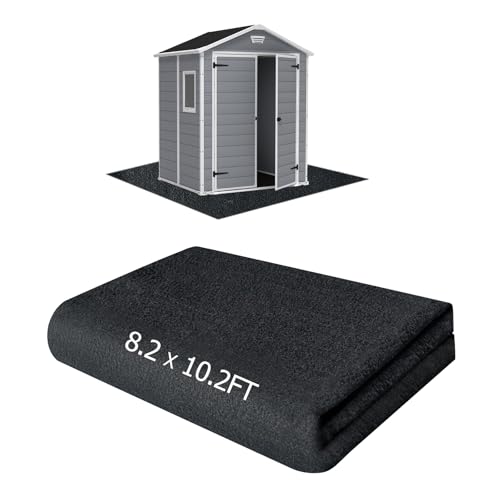
RUNZEG: 8.2 × 10.2 ft rectangular mat
View the selected mat and size on Amazon
The verified selection is a RUNZEG outdoor storage-shed mat with a felt top and PE backing. The listed package is a mat only; a shed is not included. Its rectangular footprint makes it a candidate to investigate where that shape matches the measured floor.
The seller describes vacuuming, rinsing or soap washing, followed by air drying. It also describes trimming and folding. Confirm those instructions on the delivered product and ask about any planned cleaner before using it. A permitted cleaning method is not a promise that the mat will dry quickly in every season.
Decision point: choose it for an eligible surface-protection job after confirming fit and floor compatibility. Seller statements about stopping ground moisture or erosion do not demonstrate a complete moisture-control system. Neither the size nor the backing establishes support for heavy equipment.
Haull: 8.2 × 8.2 ft square mat
View the selected mat and size on Amazon
The original Haull selection is a square felt-surface mat with PE backing. Its current listing describes a washable, foldable covering that can be trimmed for a suitable floor layout. Keep the selected square size on the order rather than assuming every option on the same page is identical.
The seller describes water or mild-soap cleaning and drying before reuse. Ask about the floor beneath it, the intended cleaning routine and any uncertain exposure. Anti-slip wording is a seller claim, not a tested traction rating supplied by this comparison.
Decision point: investigate this option when a square protective zone fits your layout. Compare how you will reach its edges and remove it for inspection. Do not treat its backing as proof that the surrounding shed, floor joints or stored items will remain dry.
Ahpuhtan: 6 × 4 ft smaller mat

View the selected mat and size on Amazon
This original Ahpuhtan selection is the six-by-four-foot felt-and-PE mat. It is a possible size to compare for a smaller shed interior or a deliberately limited storage zone. The listing’s generic ten-inch dimension field does not describe that advertised spread-out footprint; verify the usable dimensions with the seller if your fit has little tolerance.
The listing permits machine washing, soap scrubbing or a hose rinse. Before choosing machine washing, confirm the current care directions and whether the mat can be handled by your appliance. Do not transfer that permission to the other products in the comparison.
Decision point: investigate it when its stated smaller footprint suits the project. Treat sweeping promises about preventing rot or rust as unverified outcomes. Its size and surface description do not establish structural performance or protection against every kind of dampness.
Niuyhe: 12.2 × 10.2 ft large mat

View the selected mat and size on Amazon
The verified original Niuyhe selection is a large felt-top mat with PE backing. The seller states a two-millimeter thickness and permits trimming, rolling or folding. Those are selected-product details, not measurements made here or evidence of a load rating.
Its current listing describes vacuuming, soap cleaning, machine washing or rinsing and then air drying. Confirm the delivered care instructions and make sure the chosen method is practical for a mat of this size. Think through the space needed outside the shed before selecting a larger covering.
Decision point: investigate it for an eligible large-area surface-protection project. Extra coverage can be inconvenient if it hides areas you need to inspect or cannot be removed without unloading the shed. Seller claims about groundwater protection and disappearing creases are not guarantees of the result in your installation.
Measure the floor as a layout, not one number
Draw a simple plan showing the door, shelves, workbench, posts and fixed equipment. Mark where people walk and where stored objects rest. Record interior length and width at the relevant locations, including any narrowed sections. This turns a general shed-size question into a specific mat-fit question.
Then decide between broad coverage and a defined zone. Broad coverage may be convenient for a largely open floor, while a smaller zone may be easier to remove in a crowded storage room. Neither arrangement is automatically better. Compare access for cleaning, the position of edges and the floor areas you want to keep visible.
If trimming is permitted, prepare the layout before cutting. Verify the selected size on arrival and follow the product’s cutting instructions. Do not cut around an assumption that the shed has perfectly square corners. A measured sketch also helps you explain an awkward doorway or post to the supplier before purchase.
Avoid inventing a universal overlap allowance or fastening method. Ask the shed and mat manufacturers about compatible placement, transitions and any allowed securing method. The aim is an appropriate installation for that combination, rather than applying a generic technique to all four products.
Moisture: ask what the mat does and what remains exposed
A water-resistant backing claim concerns the product layer. It does not automatically cover edges, cuts, seams or the surrounding building. Ask how the exact mat is intended to be used and how the floor beneath it should be checked. A photograph of a mat in a shed does not demonstrate control of water entering elsewhere.
The EPA’s moisture and mold guide emphasizes fixing water problems and drying affected materials. For indoor leaks or spills, it describes prompt drying within twenty-four to forty-eight hours as a way to reduce mold growth. It also explains that mold can be difficult to remove completely from porous materials. This guidance supports addressing the cause of dampness, rather than regarding a covering as a cure.
Keep observations specific. Did dampness appear after rain, after cleaning, or after wet equipment was put away? Where was it visible? Record what you noticed and obtain help to assess an unresolved building problem. A clear description is more useful than choosing a product solely because its title includes waterproof.
Loads, wheels and sharp contact deserve separate questions
Make a list of the items you expect to store, including equipment that will be moved across the covering. Ask about the relevant floor and mat limits. A felt mat’s thickness or square footage is not a substitute for a structural floor rating.
Describe concentrated contacts as well as total weight. A shelf foot, narrow stand or wheel presents a different question from a broad container base. Do not infer an allowed arrangement from an advertising image. If a manufacturer supplies conditions for use, keep those conditions with the relevant rating.
For equipment movement, consider the whole route: doorway, transition, turns and resting location. Ask whether the exact mat is suitable for that equipment and surface. A small successful trial does not certify floor capacity, and this guide does not assign a load limit to any of the four mats.
Cleaning convenience includes removal and drying
Imagine a routine cleaning day before ordering. Which items must be moved? Who will lift or carry the covering? Where can it be cleaned under its instructions, and where can it dry? A foldable product can still be inconvenient when shelves prevent access to its edges.
Keep the care instructions product-specific. Permission to rinse one mat does not establish an approved machine cycle, detergent or pressure-washer method for another. If the listing is vague, request directions for the exact selected product instead of filling the gap with a technique from a similar mat.
Plan the return to service as well. Check the mat and the underlying surface under the applicable instructions before replacing stored items. If an ordinary cleaning method does not address the condition you encounter, ask the supplier or an appropriate specialist rather than escalating to a stronger chemical on guesswork.
Work through three realistic purchase scenarios
A small shed used for garden supplies
The first decision is whether the existing floor is suitable and dry enough for an approved covering. Once that is resolved, map the containers and walking space. A smaller removable zone may be easier to maintain than covering every inch. Compare Ahpuhtan’s selected dimensions with the actual area rather than treating compact as a quality score.
A larger open storage shed
Compare the rectangular RUNZEG and Niuyhe sizes with the interior plan. More coverage is useful only if it fits and can be maintained. Consider how the chosen piece reaches the entrance, how it will be taken outside for cleaning and where it can dry. Do not use a larger mat to avoid resolving damage in the original floor.
A square area already crowded with shelving
Haull’s square shape may be worth comparing, but access can matter more than shape. Mark the shelving footprint and ask about the intended arrangement. If removing the mat requires unloading the entire room, consider whether the maintenance effort makes that arrangement unsuitable before purchasing.
Compare total effort and evidence before price
Only compare delivered costs after the selected size and intended use are suitable. Include any permitted installation accessories, cleaning space and effort needed to move stored items. These are project planning considerations, not a prediction that one of the mats will last longer or save a fixed amount of money.
Check the order against the selected listing and inspect the delivered package before cutting or installing. Keep the size, care directions and supplier response together. A return policy can be worth reading when a fit remains uncertain, but do not assume a modified product can be returned on the same terms as an unopened one.
Product ratings can help you find questions to ask, such as whether a buyer struggled with creases or cleaning. They do not establish a universal result on your floor. Give more weight to exact instructions and your measured layout than to a star average or a broad claim of professional-grade protection.
Use a supplier comparison sheet for unanswered questions
Put the candidates in a simple worksheet with a column for your requirement and another for the answer you received. Start with the selected dimensions, intended floor surface, permitted cleaning method and installation directions. Add a source and date for each answer. This prevents a feature from one mat being accidentally credited to another when several similar marketplace pages are open.
Separate a missing answer from a negative answer. A supplier may explicitly exclude your intended application, or may simply not have documented it. Both can stop a purchase where that requirement matters, but they mean different things. Record the distinction rather than calling the product defective or assuming it will work because no exclusion is visible.
Make performance language specific enough to discuss. If water protection is central to the project, ask what part of the product the statement concerns and under what conditions it applies. If traction matters, ask whether the seller can provide relevant information for the intended surface and use. Do not turn a general adjective into a quantified result when no test conditions are supplied.
For maintenance, explain the available equipment rather than asking only whether the mat is washable. Mention how you intend to clean it, whether you can remove it and the space available for drying. The useful reply identifies an approved method for that exact product. An answer saying easy care leaves your practical question open.
Review the plan with the people who use the shed
Walk through the layout together before ordering. Check whether the proposed covering interferes with the ordinary route to stored items, changes how equipment is moved or makes a frequently inspected area harder to reach. A plan that suits the person measuring may still be awkward for someone who regularly reorganizes the storage space.
Decide who will retain the instructions and handle the routine removal and cleaning. Keep the measured sketch with the product record so later changes can be compared with the original arrangement. If new equipment, shelving or a different use changes an important requirement, review suitability again. A mat purchase for light garden storage should not silently become approval for an unrelated workshop setup.
Your final order checklist
- Identify which layer needs work: foundation, structural floor or removable surface covering.
- Confirm the existing floor and planned mat arrangement with the relevant instructions.
- Measure the usable interior and mark doors, posts, shelving and walking routes.
- Verify the exact product and selected footprint on the order.
- Resolve load, equipment, moisture and surface-compatibility questions separately.
- Plan removal, product-approved cleaning, drying and inspection.
- Keep package instructions and any supplier clarification available after installation.
A useful shed mat is a practical surface accessory for a known layout. Choose the size you can fit and maintain, while leaving foundation, capacity and moisture-control decisions with the appropriate building instructions and assessment.