
Discover top electricity usage monitors that help American homeowners track, analyze, and optimize energy consumption in real time. This guide highlights reliable, UL-certified devices and smart energy systems that work with solar, time-of-use plans, and home automation. Each pick includes key features to help you compare performance, ease of installation, and long-term savings. A quick product table below summarizes the strongest options for quick scanning.
| Product | Brand | Key Strength |
|---|---|---|
| Emporia Vue 3 Home Energy Monitor | EMPORIA | Whole-house real-time monitoring with solar/net metering |
| Refoss Smart Home Energy Monitor | Refoss | 2 main + 16 branch sensors; robust app |
| Sense Energy Monitor | Sense | Real-time usage with insights and time-of-use support |
| Fusion Energy Monitor with 16 50A Sensors | Fusion Energy | High-sensor, multi-circuit monitoring |
| Kill A Watt (P3) Electricity Usage Monitor | P3 | Simple plug-in watt meter for individual devices |
Emporia Vue 3 Home Energy Monitor

The Emporia Vue 3 operates as a UL-listed energy monitoring module installed in a circuit panel. It supports single-phase and multi-wire configurations and monitors real power, solar contributions, and net metering. Real-time energy management is possible from anywhere, enabling automation and potential cost savings while protecting electrical safety with UL certification.
Key features include in-panel installation with clamp-on sensors, compatibility with 2-wire and higher systems (3-phase options with an additional sensor), 24/7 monitoring, and a one-year warranty. This model is designed for consumers seeking a centralized, high-visibility view of home energy trends and solar integration.
Upgraded Watt Meter Power Meter Plug

This plug-in energy monitor tracks power, energy, voltage, current, frequency, power factor, and cost. It offers eight display modes and an overload warning to help users identify devices that consume excessive power. The device is housed in durable ABS material and is designed for easy integration with most standard US outlets, making it ideal for quick spot checks on individual appliances.
Smart Home Energy Monitor With 16x60A Sensors

Refoss offers a robust energy monitoring system designed for whole-home visibility. The kit includes 2 main sensors (up to 200A each) and 16 branch sensors (up to 60A each), enabling detailed tracking of major appliances and circuits. It supports multiple single-phase and three-phase configurations and provides 24/7 monitoring via the accompanying app, with a stated two-year warranty for reliability.
P3 P4400 Kill A Watt Electricity Usage Monitor

The P3 Kill A Watt is a compact, plug-in device that lets users monitor usage on a per-appliance basis. It provides simple, day-to-year usage trends and an easy-to-read screen, making it practical for quickly assessing whether a device or charger is energy-inefficient. It is well-suited for renters or anyone needing a basic, portable monitoring solution.
Sense Energy Monitor
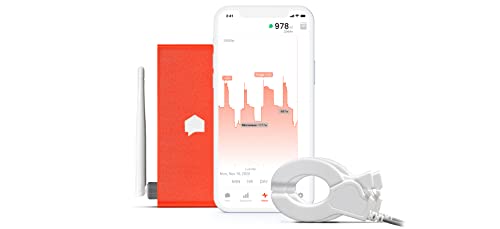
The Sense Energy Monitor provides real-time electrical usage data with actionable insights. It supports mobile and web access, enabling remote monitoring and control. The device emphasizes pattern recognition to identify efficiency opportunities, and it now supports time-of-use rate plans, helping households align usage with rate changes and potentially lower bills.
Fusion Energy Monitor (16 x 50A Sensors)

Fusion Energy’s monitor supports 16 50A sensors for extensive circuit coverage, including single-phase and three-phase configurations. It provides real-time monitoring and solar/net metering capabilities. The kit is designed for homeowners needing granular visibility across multiple circuits, enabling efficient energy management and maintenance planning.
Buying Guide: Key Purchase Considerations
- Installation scope: Decide between a whole-home panel monitor (more comprehensive) and a plug-in meter (great for individual appliances or renters).
- Sensors and circuits: Consider the number and amperage of sensors required for your panel. Some systems support 2 main sensors plus many branch sensors, others focus on single-phase setups.
- Solar and net metering: If you have solar, choose a monitor with solar tracking and net metering compatibility to accurately reflect true usage and production.
- Connectivity and app: Look for devices with reliable mobile and web apps, real-time data, historical history, and user-friendly interfaces.
- Safety and certification: UL/ETL/Intertek certifications indicate adherence to safety standards in the US and Canada.
- Historical data and reporting: Depending on needs, some products offer 36-month histories or longer, useful for peak usage analysis and rate optimization.
- Installation constraints: Some monitors require panel access or professional installation, while others are DIY-friendly via standard outlets.
- Warranty and support: A longer warranty and active customer support can reduce long-term ownership risk.
- Price vs features: Balance upfront cost against sensor count, data depth, and long-term energy savings from improved efficiency.
- Privacy and security: Ensure the device uses secure connections for data access and does not expose sensitive home energy data unnecessarily.