
The right 3D printer can speed up mold-making workflows, improve detailing, and support high-temperature casting processes. This article highlights five Amazon-listed products that are well-suited for silicone and resin mold work, castable resins, and easy post-processing. Each section explains how the product supports mold making, including material compatibility, curing behavior, and handling during vulcanization or casting. A buying guide at the end helps compare options across key criteria like temperature tolerance, resin compatibility, and workflow simplicity.
| Product | Brand | Image | Key Benefit for Mold Making |
|---|---|---|---|
| AmeraLabs SiOmaster High Precision 3D Printer Resin | AmeraLabs | 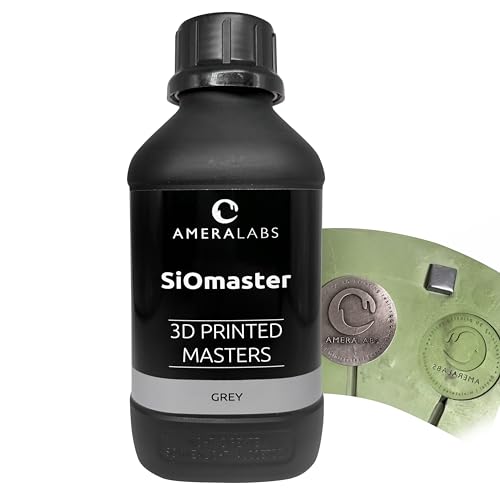 |
Withstands up to 180°C vulcanization; high-detail silicone master molds |
| Defiant 25 Platinum Silicone Mold Making Kit | Siraya Tech |  |
Resists curing inhibition and high-temp castings; durable silicone molds |
| Funcrecol Castable 3D Printer Resin | FUNCRECOL | 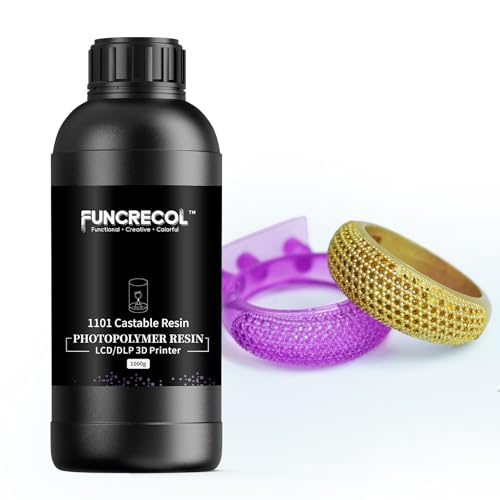 |
High-resolution jewelry/resin casting with low ash content |
| Smooth-On XTC-3D Mold Making Coating | Smooth-On |  |
Clear top coating for 3D prints; smooths and hardens parts for mold release |
| Tina2 Basic 3D Printer | Entina |  |
Affordable, beginner-friendly printer for rapid mold prototypes |
AmeraLabs SiOmaster High Precision Resin
AmeraLabs SiOmaster is designed for silicone mold masters that must endure multiple vulcanization cycles. Its resin formulation withstands temperatures up to 180°C, enabling reliable silicone casting without warping or cracking. The material produces hard-surfaced, highly detailed models that resist bending under pressure during vulcanization, preserving intricate channel details and mold corners. The resin’s fidelity to digital designs ensures accurate masters for consistent mold reproduction across repeated casts. This makes it a strong choice for silicone mold workflows that require repeated use and precise replica fidelity.
Siraya Tech Defiant 25 Silicone Mold Kit
Defiant 25 is a 25A hardness platinum-cured silicone designed for durable, reusable silicone molds. It provides extra resistance to curing inhibition, reducing issues from sulfur compounds during UV resin processing and allowing curing in water with minimal delays. Its flexibility and tear resistance contribute to longer mold life and multiple pulls per mold, lowering per-cast costs. The resin withstands temperatures up to 200°C, making it compatible with a wide range of casting resins, including high-temperature epoxy and some UV-curing systems. No surface coating is required, simplifying workflow for many hobbyist and professional mold makers.
Funcrecol Castable 3D Printer Resin
Funcrecol Castable Resin is formulated for jewelry and metal parts casting with low ash content, supporting cleaner burnouts. Its high-resolution printing capability helps capture fine details essential for detailed jewelry components and small prototypes. The resin’s smooth flow during printing yields consistent mold surfaces, and its burn-out characteristics reduce post-casting finishing work. This resin is well-suited for practitioners who need reliable, repeatable results in investment casting and direct resin-to-metal workflows.
Smooth-On XTC-3D Mold Making Coating
XTC-3D is a clear top coat designed to smooth and harden 3D-printed parts before mold making. It is compatible with SLA, SLS, PLA, ABS, and other rigid media, creating a sealed, even surface that improves mold release and reduces imprint lines. The product cures to a hard, impact-resistant coating, providing a more uniform base for silicone or resin molding. With a typical working time of about 10 minutes and a cure in roughly 3.5 hours to 80D Shore hardness, XTC-3D helps standardize mold surfaces for more consistent castings.
Tina2 Basic 3D Printer
Entina’s Tina2 Basic is a fully assembled, auto-leveling 3D printer designed for beginners and classrooms. Its compact form factor (approximately 8.3 x 8.3 x 11.4 inches) and removable magnetic build plate streamline mold prototype workups at home or in school environments. The built-in resume printing feature, 2.4″ LCD, and straightforward slicer workflow enable quick iteration cycles for mold prototypes and tool-path testing. While aimed at entry-level users, it provides a dependable platform for early-stage mold design and experimentation.
Buying Guide: Key Considerations For Mold Making
- Temperature tolerance: For silicone molds and high-temperature casting, choose resins or printers that withstand elevated temperatures without deformation. Silicones and burn-out resins benefit from higher heat resistance.
- Resin compatibility: Align resins with your casting workflow—platinum-cured silicones for flexible molds, castable resins for jewelry or metal casting, and hard plastics for rigid molds and masters.
- Detail fidelity: Fine feature capture is essential for intricate mold details. Look for resins with low shrinkage and stable curing to preserve delicate textures and channels.
- Surface finishing: A coating like XTC-3D can smooth prints before molding, improving mold release and surface quality of final casts.
- Workflow practicality: Consider auto-leveling, safety enclosures, and integrated software for straightforward setup, especially when working with kids or beginners.
- Mold life and reuse: Materials with higher tear resistance and temperature tolerance can extend mold life, reducing per-cast costs.
- Post-processing needs: Some resins require post-curnt cleaning or curing; factor in time and equipment needed to finish masters before molding.
- Budget and scalability: Entry-level printers are approachable, but professional or high-temperature capable setups may offer better long-term value for commercial mold making.
In summary, the highlighted products cover a broad range of mold-related needs—from durable silicone masters and high-resolution castable resins to surface-finishing coatings and beginner-friendly printers. The combination of materials, temperature tolerance, and process compatibility supports multiple mold-making approaches, from jewelry casting to silicone prosthetic molds. Prospective buyers should map their specific casting process, target resin types, and required mold reuse cycles to select the best-fit option.