
Choosing the right wood preservative helps fences resist rot, insects, and weathering, extending their life and reducing maintenance. This guide highlights five top options designed for outdoor use, from below-ground applications to above-ground fencing. Each product offers unique benefits, whether you need deep insect protection, a transparent finish, or a long-lasting copper-based treatment. The following selections are suitable for various fence types and climates, helping you make an informed decision based on effectiveness, application, and durability.
| Product | Brand | Best For |
|---|---|---|
| Rust-Oleum CopperCoat Green Wood Preservative | Rust-Oleum | Below ground and ground contact applications |
| Rust-Oleum WoodLife Classic Clear | Rust-Oleum | Above-ground wood protection and finish primer |
| Roxil Wood Sealer Protection | Roxil | Long-lasting exterior wood sealer for decks, fences, sheds |
| Tenino Copper Naphthenate 17% | Tenino | High-concentration copper-based preservative |
| PenaShield Penetrating Wood Preservative | Nisus | Termite and fungal protection for wood |
Rust-Oleum CopperCoat Green Wood Preservative
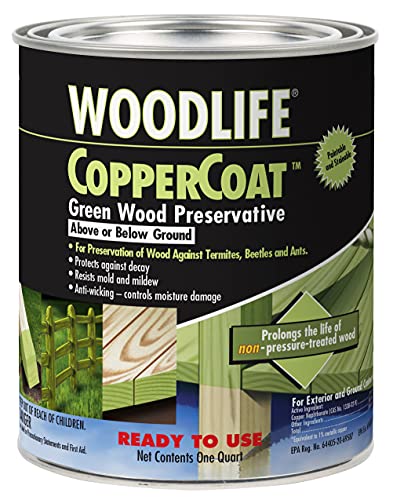
Rust-Oleum CopperCoat Green is an EPA-registered insecticidal exterior wood preservative intended for below-ground and ground-contact use. It protects against termites and other wood-boring insects while helping prevent rot and decay. The transparent, natural green color preserves the wood’s appearance, making it suitable for fence posts and sleepers in damp ground contact, fresh water contact, or above-ground installations. The formulation is designed to treat untreated or pressure-treated wood, offering a protective barrier where moisture and pests are common concerns.
Rust-Oleum WoodLife Classic Clear

WoodLife Classic Clear is an EPA-registered fungicidal exterior wood preservative with a 100% clear formula that preserves the wood’s natural color while providing protection against rot and decay. It is water-repellent and enhances weather resistance, leaving wood visually authentic as it slowly grays over time. The product can be used as a primer for topcoats or as a standalone clear treatment, and it can be painted or stained after 24 hours to match your fence’s style.
Roxil Wood Sealer Protection Liquid

Roxil Wood Sealer provides waterproofing while maintaining natural wood appearance. It helps protect against warping and improves dimensional stability for outdoor wood used in fences, decks, and sheds. The product offers a long-lasting shield against the effects of moisture, reducing maintenance frequency and helping preserve the wood’s structural integrity in exposed environments.
Tenino Copper Naphthenate 17% Double Strength

Tenino Copper Naphthenate 17% is a high-concentration preservative designed for wood protection, including end-cuts on pressure-treated lumber. It meets AWPA M4 standards and is often required by building codes for certain applications. The product is low VOC and domestically sourced from recycled copper, offering a durable copper-based defense against decay and insect activity while meeting regulatory requirements for fencing projects.
PenaShield Penetrating Wood Preservative

PenaShield is a ready-to-use penetrating preservative that also functions as a termiticide and fungicide. Its borate-based formula penetrates deeply to protect against termites, carpenter ants, wood-boring beetles, and decay fungi, making it suitable for decks, attics, and other exposed wood surfaces. After treatment, wood can be painted, sealed, or stained without discoloration, preserving a natural wood appearance while extending its service life.
Buying Guide
Key purchase considerations help ensure you select a product that matches your fence material, climate, and maintenance expectations:
- Application context: Determine whether your fence is above ground, ground contact, or in damp environments, and choose a product designed for that exposure.
- Active protection vs. sealant: Some products focus on insect resistance and rot prevention, while others emphasize water repellency and finish compatibility. Decide which outcome you prioritize.
- Concentration and coverage: Higher copper or preservative concentrations often provide longer protection but may affect color or finish. Evaluate how much product you need per square foot of fence.
- Regulatory and environmental considerations: Look for EPA-registered products and consider VOC levels, especially for projects in residential settings or near water sources.
- Finish compatibility: If you plan to paint or stain, check whether the product supports finishing after curing and the recommended time before topcoats.
- Longevity and maintenance: Some preservatives offer long-term protection, reducing maintenance cycles, while others are more suited for reapplication after a few years.
- Material compatibility: Fences made from pressure-treated lumber, cedar, redwood, or composite materials may react differently to preservatives; select a product formulated for your wood type.
Overall, choosing a preservative involves balancing pest protection, moisture resistance, and aesthetic outcomes. For below-ground or ground-contact fence components, copper-based or insecticidal formulations provide robust protection. For above-ground posts and rails, clear or stainable formulas support natural wood tones while maintaining durability. If termite and fungal threats are a primary concern, penetrating formulations with long-term protection offer strong defense against infestation and decay. Always follow label directions for safe and effective use.