
Protecting your household from carbon monoxide (CO) exposure is essential, especially when power outages can disable some detectors. Battery-powered CO alarms offer continuous monitoring, portability, and easy placement without wiring. This guide highlights five reliable options with electrochemical sensors, test features, and battery backup. Each product below includes practical strengths, common installation scenarios, and considerations to help you choose the right detector for bedrooms, living spaces, and travel.
| Product | Brand | Power | Notable Feature |
|---|---|---|---|
| Kidde Carbon Monoxide Detector, Battery Powered CO Alarm with LEDs | Kidde | 2 AA Batteries (included) | LED indicators, portable design |
| First Alert CO400 Carbon Monoxide Detector, Battery Operated Alarm | First Alert | Battery powered | Advanced electrochemical sensor, long alarm duration |
| First Alert Carbon Monoxide Detector, Plug-In Alarm with Battery Backup CO605 | First Alert | Plug-in with battery backup | Outlets-friendly, loud 85 dB alarm |
| Kidde Carbon Monoxide Detector, AA Battery Powered CO Alarm with LEDs | Kidde | 2 AA Batteries (included) | Portable and wall-mountable |
| X-Sense Combination Smoke and Carbon Monoxide Detector XP0A-SR | X-Sense | Replaceable battery | Voice alerts; 2-in-1 protection |
The following sections provide detailed overviews of each option, focusing on sensor technology, ease of use, battery reliability, and best placement. Each product emphasizes quick setup and ongoing safety, whether at home, on travel, or during a power outage.
Kidde Battery Powered CO Alarm With LEDs
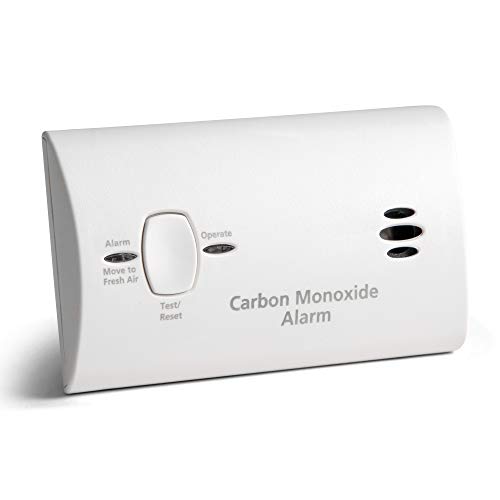
The Kidde model uses an electrochemical sensor for accurate CO detection and operates on two AA batteries during power outages. Installation is simple—mount on a wall or place on a tabletop. A green LED indicates power, while an 85-decibel alarm and red CO indicator signal danger. The unit’s compact, portable design makes it suitable for bedrooms, living rooms, or travel scenarios where wired detectors aren’t feasible. Battery life and test/reset functionality help ensure ongoing readiness.
First Alert CO400 Battery-Operated CO Alarm

First Alert’s CO400 keeps monitoring even during power outages thanks to its battery operation. It relies on an advanced electrochemical sensor to accurately detect CO levels anywhere in the room. The unit is designed for easy installation with a straightforward battery door and a loud 85 dB alarm. If the alarm doesn’t activate when testing, replace batteries and test again. This model is well-suited for hallways or bedrooms where a simple, reliable CO alarm is preferred.
First Alert CO605 Plug-In CO Alarm With Battery Backup
This plug-in model offers convenient wall outlet placement with the added security of a battery backup for continued protection during power failures. It features an electrochemical CO sensor for accurate detection and a single test/silence button for easy operations. An 85 dB alarm provides a clear alert, and a low-battery signal helps ensure timely battery replacement. Ideal for living rooms, kitchens, or near sleeping areas where wall outlets are readily available.
Kidde Portable AA Battery CO Alarm
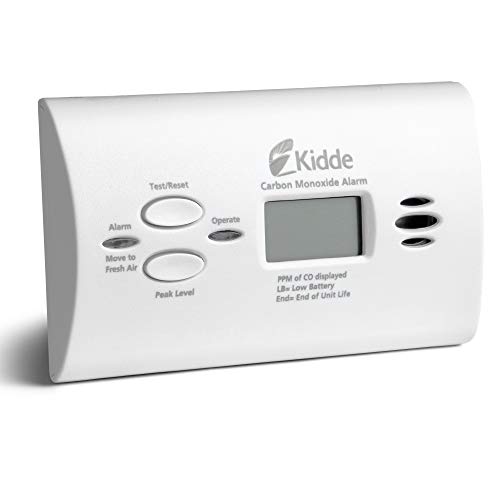
This portable Kidde CO detector emphasizes portability with AA batteries and a compact footprint. It’s designed for easy setup on a wall or tabletop, making it suitable for travel, boats, or temporary living spaces. The device relies on an electrochemical sensor for accurate CO detection and provides clear visual and audible alerts. Battery compatibility and portability are key advantages for users who need a detector that travels with them or can be relocated quickly within a home.
X-Sense XP0A-SR With Voice Alerts

The XP0A-SR offers a 2-in-1 protection concept with a separate smoke detector and CO sensor that work independently. It features voice alerts to identify the danger type, which can help with quick evacuation decisions. While the XP0A-SR is standalone and lacks interconnectivity, it provides reliable CO detection with a replaceable battery and a clear audible warning system, making it suitable for individual rooms or short-term spaces where wireless features aren’t required.
X-Sense XC0C-SR 10-Year Battery CO Alarm

This detector uses a 10-year sealed battery and a digital display to show CO levels, reducing the need for frequent battery changes. It is portable and can be placed on a desk, bookshelf, or mounted on a wall. The 10-year power source provides extended reliability and reduces maintenance, making it a strong choice for long-term monitoring in bedrooms or offices where steady power is a priority.
X-Sense 10-Year Battery Combination Smoke/CO Alarm
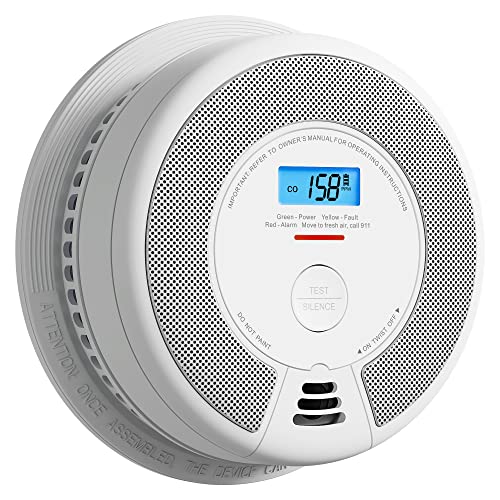
This standalone unit combines smoke and CO detection with a ten-year battery. It uses a sealed lithium power source and a dual-sensor setup for faster warning of two threats. The integrated design is suitable for bedrooms, hallways, and living spaces where a single device can provide both smoke and CO protection without frequent battery changes.
Kidde Plug-In CO Alarm With 9-Volt Backup
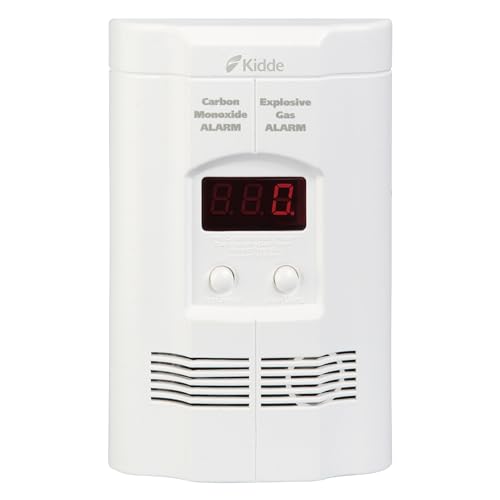
This Kidde model plugs into a standard outlet with a 9-volt battery backup to maintain protection during outages. The digital LED display conveys CO levels and can indicate “GAS” if explosive gas is detected. This combination of plug-in convenience and backup power makes it a practical choice for spaces where wall outlets are abundant and continuous monitoring is critical.
Buying Guide: Key Considerations for Battery CO Detectors
- Sensor type and accuracy: Look for electrochemical sensors for CO accuracy and low false alarms. Avoid models that rely on simple simple chemical sensors.
- Power source and backup: Battery-only models offer portability and outage protection; plug-in units with battery backups ensure continuous operation during outages.
- Alarm and notification features: An audible alarm of at least 85 dB is standard. Visual indicators (LEDs) help in low-light rooms, and some models offer voice alerts for immediate danger clarity.
- Placement flexibility: Consider units that can be mounted on walls or placed on tables, and evaluate travel-friendly options if you move between locations frequently.
- Maintenance: Choose detectors with easy battery replacement, clear test functions, and long-life batteries or sealed power sources to minimize maintenance intervals.
- Interconnection and expansion: If you need multiple detectors to work together, check for interconnectivity features and compatibility with other devices or basestations (not all listed models support Wi-Fi or interconnection).
- Durability and certifications: Search for units with proper safety certifications and a robust build for family homes, apartments, or rentals.
- Cost of ownership: Consider initial cost, replacement batteries, and whether a 10-year sealed battery model offers better long-term value than shorter-life units.
In selecting a battery-powered CO detector, prioritize a model with a reliable electrochemical sensor, clear alarms, convenient installation options, and a battery-backup design for uninterrupted protection during power failures. For travelers or households needing portable coverage, compact and battery-powered units provide flexible placement without sacrificing safety.