
Choosing a timer light switch can simplify your daily routine, save energy, and boost home security. This guide reviews five top options that cover a range of features—from astronomical clocks and vacation modes to multiple on/off programs and easy installation. Each product is evaluated on scheduling versatility, ease of use, and compatibility with common wiring setups. Read on to compare capabilities and find the timer switch that best fits your needs.
| Product | Brand | Key Features |
|---|---|---|
| GE SunSmart Digital In-Wall Timer | GE | SunSmart, weekly programming, sunset/sunrise presets, neutral-required, 1-pole/3-way compatibility |
| BN-LINK 7 Day Programmable In-Wall Timer | BN-LINK | Blue backlight, 18 ON/OFF programs, 7-day scheduling, DST support, auto/manual modes |
| Honeywell Home RPLS730B1000 | Honeywell Home | 7-day programmable, multiple device control, high wattage compatibility |
| Leviton VPT24-1PZ | Leviton | Astronomical clock, 49 ON/OFF events, randomization, dual-faceplates |
| ENERLITES HET01-C-J-W | ENERLITES | No neutral required option, 18 on/off settings, 7-day programming, indoor/outdoor suitability |
GE SunSmart Digital In-Wall Timer
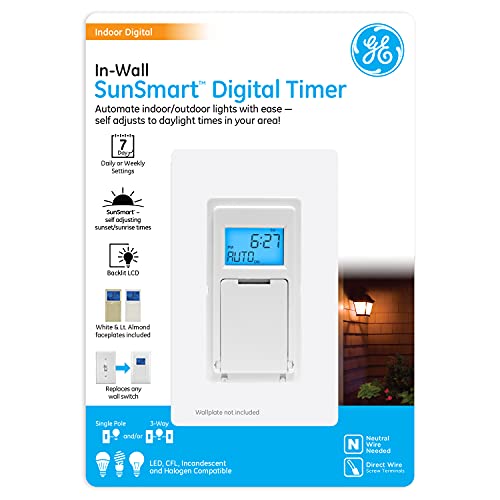
The GE SunSmart timer is designed to adapt to changing daylight hours with built-in sunrise and sunset presets. It supports weekly programming with up to seven ON/OFF programs, making it suitable for varied routines across days. A random security feature alters settings by up to 30 minutes to create a lived-in appearance, enhancing home security while you’re away. This model replaces single-pole or three-way switches with a neutral wire and can control LED, CFL, incandescent, and other fixtures. Its versatility makes it a solid choice for kitchens, living rooms, and hallways where light timing matters.
BN-LINK 7 Day Programmable In-Wall Timer

The BN-LINK timer offers blue backlighting for easy visibility and up to 18 ON/OFF programs within a 7-day schedule. It supports both single pole and 3-way setups with neutral wire required. Daylight Saving Time functionality minimizes manual adjustments, and a built-in rechargeable battery helps preserve settings during outages. The device supports AUTO (timed on/off) and MANUAL modes, enabling seamless control of lights, fans, and other powered devices. A randomized vacation mode adds an occupancy effect while you’re away, contributing to security and convenience.
Honeywell Home RPLS730B1000 7-Day Timer
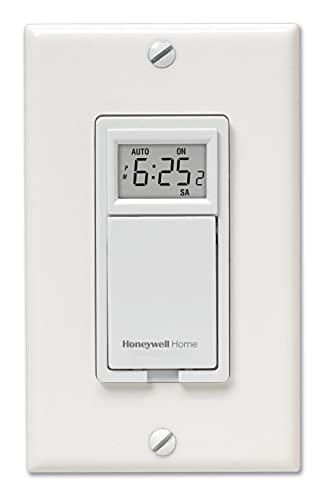
This Honeywell model focuses on predictable weekly scheduling to automate lighting and motorized devices, helping reduce energy usage while maintaining convenience. It accepts high wattage loads suitable for fans and other appliances, with separate control per circuit in many installations. The timer supports multiple devices per installation, enabling synchronized schedules for ceilings fans, bathroom exhaust, or lights. By standardizing on a 7-day framework, it suits homes needing consistent daily routines without frequent adjustments.
Leviton VPT24-1PZ Decora Programmable Timer
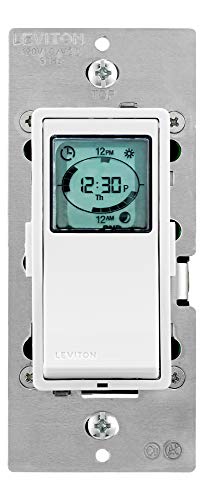
The Leviton VPT24-1PZ combines a programmable timer with an astronomical clock that adjusts to sunrise and sunset times by location. It can schedule up to 49 ON/OFF events and offers random re-scheduling to simulate occupancy for security. The user can set multiple daily or weekly routines, including weekend variations, to fit lifestyle needs. It is compatible with single-pole and 3-way installations and accepts a neutral wire to support more load types. This makes it ideal for entryway lights, exterior fixtures, and living areas with specific lighting patterns.
ENERLITES No Neutral 7-Day Timer HET01-C-J-W

The ENERGYLITES HET01-C-J-W provides 7-day programming with 18 ON/OFF timer options and a no-neutral design option for easier wiring in certain configurations. This model is suited for indoor lights, fans, and small motors without requiring neutral wiring, simplifying installation in older homes. It supports automatic scheduling to turn devices on and off according to a preset timetable, while the manual override function allows quick local control. The timer’s simplicity and practical scheduling make it a practical add-on for energy management and security timing in living rooms and hallways.
Buying Guide: Key Purchase Considerations
- Wiring requirements: Neutral wire availability affects compatibility; some models work without neutral, others require it for full functionality.
- Programming flexibility: Consider the number of on/off events you need per week, and whether you want daily, weekday/weekend, or astronomical scheduling.
- Security features: Randomized on/off timing can create an occupied look when you are away, deterring intruders.
- Load compatibility: Check maximum wattage or horsepower ratings to ensure the timer can handle your lights, fans, or motors without overloading.
- Mounting and compatibility: Ensure the timer supports single-pole or 3-way setups if you have multi-switch configurations; verify the wall plate compatibility if aesthetics matter.
- Power reliability: Models with back-up batteries or memory retention help preserve your settings during outages.
- Outdoor vs. indoor use: Some timers are designed for outdoor exposure; verify enclosure ratings or installable locations for weather resistance.
- Ease of installation: Shallow wall-box design and clear wiring instructions reduce the time and complexity of replacement.
In sum, the five reviewed timer switches cater to a range of needs—from simple daily automation to advanced weekly scheduling with astronomical corrections. When selecting, match your wiring setup, desired scheduling depth, and security considerations with the device’s features to optimize both energy savings and everyday convenience.