
Choosing the right soundproofing for tile installations helps reduce foot traffic noise, echoes, and dampened vibration in homes and workspaces. This guide compares top underlayment membranes and related acoustic panels that pair well with tile floors, focusing on durability, waterproofing, crack isolation, and ease of installation. Each product below features practical benefits for bathrooms, kitchens, and shower areas, plus suitability for high-humidity environments.
| Product | Primary Benefit | Key Use Case |
|---|---|---|
| MAXWAVE 17″ x 150′ Underlayment | Waterproof, high-density PE film with reinforcement | Tile floors and shower/wet areas |
| Bardalas Uncoupling Membrane Roll | Crack isolation and substrate stress relief | Concrete or wood subfloors for tile |
| SUPERSEAL Tile Subfloor Underlayment | Anti-fracture and crack isolation | Ceramic and stone tile installations |
| QEP Roll Cork Underlayment & Roberts Tape | Cork underlayment with moisture resistance and seam joining | Tile subfloors with moisture considerations |
| SHJADE Acoustic Panel Tiles | Self-adhesive, high-density soundproofing panels | Interior walls and spaces requiring noise reduction |
Note: All prices and availability are subject to change. This guide focuses on performance characteristics, not promotional offers.
MAXWAVE 17″ x 150′ Waterproof Underlayment

MAXWAVE’s underlayment is a 20 mil thick, high-density polyethylene (HDPE) film designed for under-tile applications in damp environments. The membrane is reinforced with non-woven polypropylene on both sides and a continuous filament exterior, boosting wear resistance and flexibility. This product functions as a robust waterproof layer and vapor retarder, helping to minimize moisture migration in wet rooms and steam spaces. The 17-inch width and 150-foot length allow for quick trimming and installation across larger areas, and it can be cut with ordinary scissors or a knife for precise coverage. Suitable for tile floors, shower walls, and saunas, this underlayment aims to prevent cracks and dampness while maintaining tile longevity.
Performance overview:
– Water and moisture protection: 0.51 mm thickness provides a strong barrier.
– Structural support: reinforced HDPE with exterior fibers for durability.
– Versatility: broad use from bathrooms to steam rooms and saunas.
– Installation notes: easily cut to fit irregular layouts; compatible with standard tile installation workflows.
Art3d Acoustic Drop Ceiling Tiles 2x2ft 12-Pack

Art3d acoustic ceiling tiles focus on reducing sound reverberation, using a perforated structure paired with an acoustic felt layer to significantly lower noise levels. While designed for ceilings and walls rather than directly under tile, these panels can complement a tile installation by improving room acoustics adjacent to the tiled area. The tiles offer decorative appeal in addition to functional sound reduction, and installation is straightforward for grid systems or wall mounting on wooden frames.
Key points:
– Acoustic performance: improved sound absorption reduces reflections.
– Aesthetic compatibility: white tiles blend with contemporary interiors.
– Installability: designed for standard ceiling grids or wall mounting.
Bardalas Uncoupling Waterproofing Membrane Roll
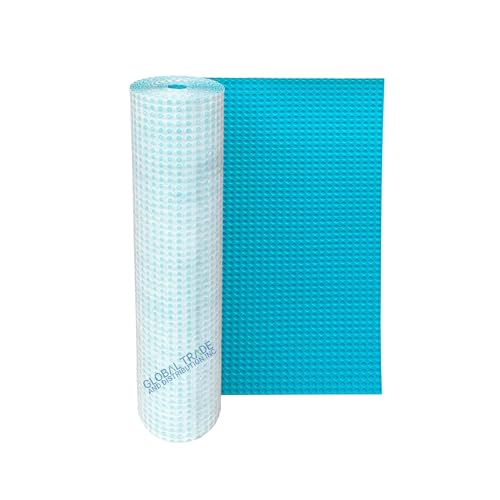
Bardalas offers a roll-style uncoupling membrane, providing proven crack isolation for tile on concrete or wood substrates. With dimensions of 3.3 feet by 32.8 feet and a thickness of 1/8 inch, this membrane distributes stresses away from tile, reducing the risk of cracking caused by substrate movement. The large roll size makes it suitable for DIY projects and larger installations, while its uncoupling properties help absorb substrate movement without compromising tile adhesion. This product is particularly valuable for bathrooms and other moisture-prone areas where tile integrity is paramount.
Highlights:
– Crack isolation: isolates tile from substrate-induced stresses (up to about 1/8 inch).
– Substrate versatility: suitable for concrete and wood bases.
– Coverage: ample length for typical residential bathrooms and kitchens.
SUPERSEAL Tile Subfloor Underlayment

SUPERSEAL’s underlayment roll emphasizes anti-fracture and crack-isolation properties, designed to minimize tile damage from substrate movement. It’s described as suitable for ceramic and stone tile installations, and can be used in kitchens, bathrooms, showers, and other tile-covered areas. It also notes compatibility with various substrates, making it a flexible choice for DIY homeowners and professionals aiming to safeguard tile integrity while offering some sound-dampening benefits through its mat-like structure.
Core considerations:
– Crack-isolation performance aligns with ANSI A118.12 standards.
– Multi-surface applicability reduces install complexity.
– Versatility for tile types including ceramic, porcelain, and natural stone.
Sonic Acoustics 12 Pack Hexagon Acoustic Panels

Sonic Acoustics panels provide a high-density sound-absorbing solution suitable for interior walls and spaces where reducing echo and noise is essential. Each tile is constructed from dense polyester fiber, delivering robust sound insulation with improved NRC and absorption coefficients. These self-contained panels are designed for easy retrofitting, though they do not serve as tile underlayment themselves. They pair well with tiled floors by reducing overall room noise and improving perceived acoustics in living rooms, studios, or home theaters adjacent to tiled areas.
Key attributes:
– Acoustic performance: high-density panels with strong absorption.
– Aesthetic versatility: hexagonal shape doubles as decor.
– Installation: adhesive backing alternatives or mounting options (adhesives not included).
SHJADE Acoustic Panel Self-Adhesive

SHJADE’s self-adhesive acoustic panels are designed for quick installation on walls, offering high-density polyester fiber for effective sound dampening. The beveled-edge, square panel design adds a decorative touch while providing reliable noise reduction. They’re suitable for living spaces, offices, and studios, especially when a fast, adhesive-based installation is preferred. The product emphasizes safety with flame retardant and non-toxic materials, with a focus on ease of use and long-lasting color stability.
Practical considerations:
– Adhesive-backed: simple installation without additional hardware.
– Aesthetic flexibility: beveled-edge panels create a modern look.
– Safety: flame retardant and durable material composition.
TroyStudio Thickened Acoustic Panels

TroyStudio presents thickened felt acoustic panels designed for sound dampening in studios, offices, and home theaters. Each panel uses a dense polyester fiber composition to absorb room noise, reduce reverberation, and lower echo levels. NRC and absorption performance indicate robust sound control, while the thick texture provides a degree of wall protection and visual warmth. These panels are suited to spaces where tile is present nearby but not directly used as underlayment, contributing to a quieter overall environment around tiled areas.
Highlights:
– High-density felt: strong noise absorption.
– Aesthetic warmth: natural-looking felt matte finish.
– Versatility: suitable for studios, classrooms, and homes.
Buying Guide: Key Purchase Considerations For Tile Soundproofing
- Underlayment vs. surface soundproofing: Underlayment membranes such as MAXWAVE, Bardalas, and SUPERSEAL protect tile substrates and help prevent cracks, while surface panels (SHJADE, Sonic Acoustics, TroyStudio) improve room acoustics but do not replace underlayment.
- Moisture and humidity tolerance: In bathrooms and showers, prioritize waterproof or moisture-resistant membranes (MAXWAVE, Bardalas) to minimize mold risks and ensure tile longevity.
- Crack isolation standards: For load-bearing or movement-prone substrates, choose products with proven crack-isolation performance (ANSI A118.12 compatibility for some membranes).
- Installation considerations: Self-adhesive panel products are easier for DIY projects; membrane rolls require cutting, seaming, and possibly additional primers or fasteners per manufacturer instructions.
- Substrate compatibility: Confirm the product works with wood and concrete substrates if your tile job involves multiple substrate types.
- Humidity and steam suitability: For wet zones, select membranes designed for vapor retardation and robust water resistance to reduce dampness and associated issues.
- Long-term durability: Consider the membrane thickness, reinforcement layers, and core material to balance moisture protection with flexibility, especially in larger or irregular installations.
- Aesthetic impact: Acoustic panels add decorative value; ensure color and texture match interior design goals if visible in the room.
- Cost and coverage: Compare per-square-foot costs and roll lengths to estimate project budgets, factoring in waste from trimming and cuts.
The right combination depends on the room, tile type, and layout. For bathrooms and wet areas, a high-performance underlayment like MAXWAVE or Bardalas is often prioritized for crack isolation and moisture control. In living areas adjacent to tile, adding acoustic panels such as SHJADE or Sonic Acoustics can enhance perceived quietness without affecting tile performance.