
Forced air kerosene heaters offer powerful, portable heating for garages, workshops, barns, and outdoor job sites. This guide highlights five top models that balance high BTU output, fuel flexibility, and safety features, helping you choose the right heater for mid- to large-size spaces while keeping energy use in check. Below you’ll find quick-product highlights and a buyer’s guide to compare options side by side.
Summary of chosen products:
| Product | BTU (heating power) | Fuel options | Notable features |
|---|---|---|---|
| VEVOR Kerosene Forced Air Heater | 215,000 | Kerosene, diesel | Thermostat, fuel gauge, dual filters, large tank |
| Mr. Heater 185,000 BTU | 185,000 | Kerosene, diesel, fuel oil, Jet A | Multi-fuel, built-in thermostat, diagnostics |
| Dyna-Glo Delux KFA80DGD | 80,000 | Kerosene | Comfort control thermostat |
| InoKraft Maxheat MH125 | 125,000 | Propane | Auto ON/OFF control, wide heating reach |
| PioneerWorks 80,000 BTU | 80,000 | Kerosene, diesel, home heating oil, jet fuel | Long runtime, portable for job sites |
VEVOR Kerosene Forced Air Heater — 215,000 BTU

The VEVOR model delivers high-capacity heat designed for expansive workspaces. It provides up to 215,000 BTUs and can warm areas up to roughly 44,496.6 cubic feet (1260 m3), making it suitable for large shops, barns, or industrial tasks. A thermostatic control helps maintain the preferred temperature, while a room temperature display supports precise comfort management. Built-in overheat protection adds a safety layer, turning off the unit when temperatures rise too high. Dual-fuel capability supports kerosene and diesel, but one fuel type should be used at a time. A fuel gauge and pressure gauge assist with fuel monitoring and system checks, and dual filters help reduce smoke and odor.
Mr. Heater 185,000 BTU Forced Air Kerosene Heater

This multi-fuel heater covers larger work areas with 185,000 BTUs and compatibility with kerosene, diesel #1 and #2, fuel oil #1 and #2, or Jet A (JP8). It’s designed for versatility in various environments, including construction sites and large garages. A built-in thermostat and LED diagnostics support easy monitoring and maintenance, helping operators optimize performance and energy use. This model is well-suited for users who need robust heat output across different fuel options while maintaining control and observability.
Dyna-Glo Delux KFA80DGD 80,000 BTU

The Dyna-Glo Delux KFA80DGD provides 80,000 BTUs, suitable for spaces up to about 1,900 square feet. The Comfort Control Thermostat allows more precise temperature management, enabling fuel savings while maintaining comfortable warmth for prolonged periods. Like other kerosene units, this model supports steady heat delivery in workshops and garages, with straightforward controls and reliable operation for daily use.
Dyna-Glo KFA50DGD 50,000 BTU

The Dyna-Glo KFA50DGD offers a more portable option with 50,000 BTUs, heating spaces up to around 1,200 square feet. It includes an easy-lift carrying handle for quick transport between job sites or garages. This makes it a practical choice for users who need reliable warmth for mid-sized spaces without the largest footprint or power requirements.
Dyna Glo Delux KFA135DGD 95,000 or 135,000 BTU
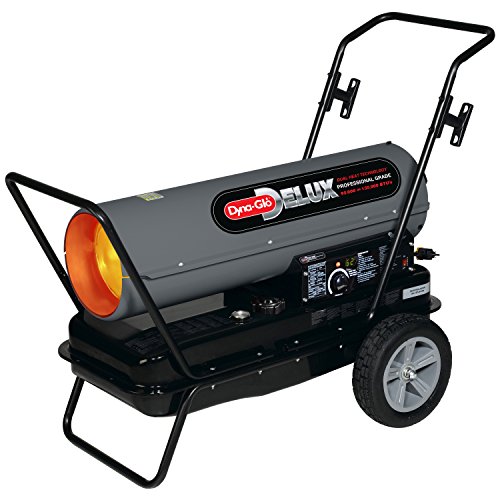
This Dyna-Glo model offers dual heat settings of 95,000 or 135,000 BTU for larger spaces, targeting up to 3,200 square feet. Dual heat technology provides flexibility for varying needs and fuel availability, balancing power and efficiency in larger shops or barns where extended operation is common.
PioneerWorks 80,000 BTU Diesel/Kerosene
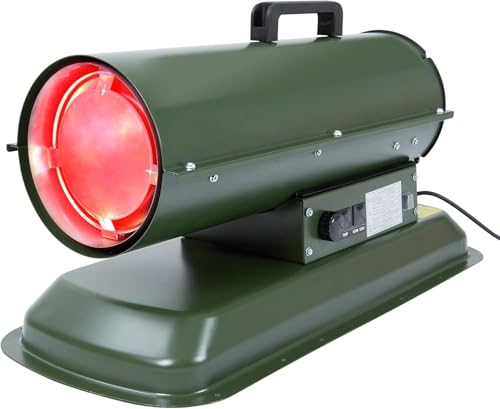
The PioneerWorks unit delivers up to 80,000 BTUs for spaces up to about 2,000 square feet, with multiple fuel options including kerosene, diesel, home heating oil, and jet fuel (avoid gasoline). It’s designed for long runtimes—up to 9.5 hours on a full tank, with a 4.76-gallon capacity. The portable design suits outdoor sites and garages where dependable heat is essential for extended periods, especially in cooler seasons.
Buying Guide: Key Considerations For Forced Air Kerosene Heaters
- Heat output (BTU): Match BTU to space size. Larger spaces require higher BTUs, but oversizing can waste fuel.
- Fuel type and availability: Many units support kerosene, diesel, or other fuels. Confirm compatibility and local fuel availability before purchase.
- Fuel efficiency and controls: Look for thermostats, temperature displays, and auto shutoff features to balance comfort and energy use.
- Safety features: Overheat protection, oxygen depletion sensors (where applicable), and durable housing protect users in workshop environments.
- Tank capacity and runtime: Bigger tanks extend runtime between refuels, essential for remote job sites or garages without easy access to fuel.
- Portability and setup: Wheels, handles, and compact form factors help move heaters between spaces and accommodate different job sites.
- Maintenance and filtration: Dual fuel filters and air filtration reduce smoke and odors, while gauge readings support proactive maintenance.
- Noise and angle options: Some units offer adjustable heat angles and quieter operation, improving workplace comfort and safety.
- Regulatory considerations: Check local ventilation requirements and ensure proper ventilation when using kerosene heaters indoors.
When choosing among these models, consider the space you intend to heat, the fuel logistics in your area, and how you plan to use the heater—whether for a fixed shop, a mobile job site, or a combination. Each model listed above has strengths in heating power, fuel flexibility, or runtime that can align with different practical needs.