
When choosing a battery-powered generator to run a refrigerator, you want a reliable, high-capacity power source with steady inverter output, fast charging, and long-term battery health. This guide evaluates top models that balance fridge compatibility, safety, and portability. Each option is suited for home backup, camping, RV living, or emergency outages, ensuring your perishables stay cold without fumes or noise.
| Product | Brand | Capacity (Wh) | AC Output (W) |
|---|---|---|---|
| Jackery Explorer 1000 v2 Portable Power Station | Jackery | 1070 | 1500 |
| Jackery Solar Generator 1000 v2 with 200W Solar Panel | Jackery | 1070 | 1500 |
| EF ECOFLOW Delta 2 | EF ECOFLOW | 1024 | 1800 |
| Jackery HomePower 3000 | Jackery | 3072 | 3600 |
| OUPES Mega 1 Portable Power Station | OUPES | 1024 | 2000 |
Jackery Explorer 1000 v2 Portable Power Station

The Explorer 1000 v2 uses a 1,070Wh LiFePO4 battery, delivering up to 1,500W of continuous AC power with a 3,000W surge capacity. Its light 23.8 lb frame and foldable handle support portability for home backup, road trips, or emergency readiness. It supports fast charging with a one-hour fast-charge mode via the Jackery App, while built-in ChargeShield 2.0 provides safer, smarter charging and battery management. The long lifespan is enhanced by the durable LFP chemistry, retaining a large portion of capacity after thousands of cycles.
Why it suits a refrigerator: the 1,070Wh capacity is enough to run a typical household fridge for several hours during a power outage, especially if you optimize door openings and load. Its stable sine-wave output ensures sensitive electronics operate reliably, and the device’s compact design makes it easy to store when not in use.
Jackery Solar Generator 1000 v2 with 200W Solar Panel

This model mirrors the Explorer 1000 v2 in capacity and power output, pairing it with a solar panel for standalone charging. With a 1,070Wh LiFePO4 battery and 1,500W continuous AC output, it’s capable of sustaining a refrigerator during most outages when solar input is available. The same 10-year battery lifespan and 4,000+ charge cycles apply, ensuring long-term reliability for off-grid living or outdoor adventures.
Key fridge considerations: solar-assisted charging can help extend runtime if you have consistent sun. The panel’s portability supports camping or RV use, though rooftop or shade conditions will influence charging speed. The unit remains quiet and emission-free—an advantage for indoor use or urban settings.
EF ECOFLOW Delta 2

The Delta 2 delivers 1,024Wh of LiFePO4 capacity and 1,800W continuous AC output, with an expandable system up to 3kWh when paired with extra packs. Claimed 0-80% charging in about 50 minutes and 0-100% in 80 minutes via AC input supports rapid recharging after outages. It prioritizes versatility with 15 outlets and robust electrical protection, enabling you to power most home appliances, including refrigerators, without fumes or noise.
Fridge compatibility notes: the Delta 2’s high surge capacity supports peak refrigerator startup loads, particularly for larger or older models. The LiFePO4 chemistry provides slow capacity fade, contributing to long-term reliability. Consider backup solar or grid charging to maintain continuous cooling during extended outages.
Jackery HomePower 3000 Portable Power Station

The HomePower 3000 combines a large 3,072Wh LiFePO4 battery with 3,600W continuous output (7,200W surge). It’s designed for robust home backup, STEM-quiet operation, and extended outages. Its performance supports fridges, routers, lights, and small essential appliances through longer-duration events. A built-in UPS feature switches loads in under 20 milliseconds, maintaining critical devices during outages.
Why it matters for refrigerators: with the substantial capacity and fast-switching UPS, this unit can sustain cooling through hours or days of outages, depending on energy draw and fridge size. It’s well-suited for homes or cabins that require reliable off-grid power with a single, centralized backup system.
OUPES Mega 1 Portable Power Station
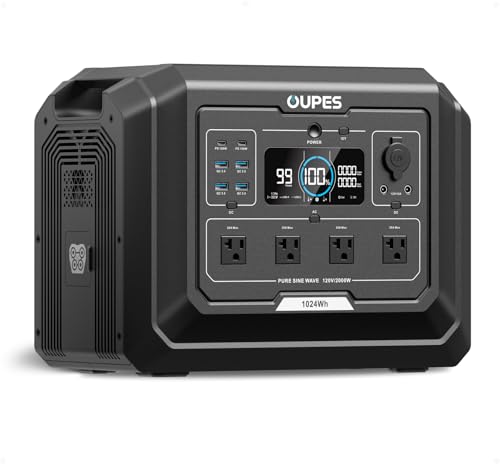
The Mega 1 offers 1,024Wh, expandable to up to 5,120Wh with an extra battery option. It delivers a strong 2,000W continuous AC output (4,500W peak), enough to run a refrigerator along with other essentials. Dual charging speeds include 1,400W fast charging for 0-80% in about 36 minutes, supporting rapid returns to operation after outages. Its expandable capacity makes it a flexible choice for larger refrigerators or longer outage scenarios.
Practical fridge guidance: the expandable capacity helps future-proof for larger coolers or multi-door refrigerators. The fast-charging capability reduces downtime between outages, and the higher peak power accommodates compressor startup surges. As always, monitor energy use to avoid overloading extended runs.
Buying Guide: Key Purchase Considerations And Comparisons
What to look for in a fridge-ready battery generator
Capacity and inverter size are critical. A higher capacity (in Wh) and continuous AC output ensure your fridge stays cold during longer outages. For most compact homes and RV setups, 1,000–2,000Wh with 1,200–2,000W continuous output suffices for several hours to a full day, depending on fridge size and usage patterns.
Battery chemistry and longevity
LiFePO4 (LFP) chemistry offers longer lifespan and better thermal stability than standard Li-ion, often delivering 4,000+ cycles with minimal capacity loss. This makes units like the Explorer 1000 v2 and Delta 2 suitable for regular use and extended outages without frequent replacements.
Portability vs. capacity
Smaller units are easier to move and store, but may run out quickly. Larger models provide more runtime but add weight. If you need fridge operation during multi-day outages, prioritize higher capacity and consider a system with UPS features to protect critical devices during power transitions.
Charging options and speed
Fast charging and solar optionality reduce downtime. Look for devices with 0-80% in under an hour, or 80% in under an hour, and the ability to recharge from solar panels to maintain operation in off-grid scenarios. A mix of AC, car, and solar charging expands usability across settings.
Safety, protection, and monitoring
Surge protection, short-circuit protection, and intelligent battery management are essential. Apps or displays that monitor state of charge, temperature, and charging status help optimize performance and battery health over time.
Reliability in real-world use
For refrigerators, a stable sine-wave output and sufficient surge capacity matter more than the mere watt rating. Look for models with proven track records, durable build, and long warranties to mitigate failure risk during critical outages.