
Creative projects often need compact, dependable power sources. These mini solar panels are ideal for small crafts, educational kits, model building, and DIY displays. This guide highlights five practical options, detailing what each panel can power, ease of use, and durability considerations. Whether you’re wiring tiny solar toys or charging small devices, these compact panels make solar energy accessible for hands-on projects and learning experiences.
| Product | Brand | Power | Size |
|---|---|---|---|
| AOSHIKE Mini Panels (10 Pack) | AOSHIKE | 5V 30mA | 2.08″ x 1.18″ |
| Retisee Mini Panels (30 Pcs) | Retisee | 5V 30mA | ~1.18″ x 2.09″ |
| Aocoray Mini 5V 6W Panel | Aocoray | 5V 6W | ~4.5″ x 3″ |
| Tellegloww Mini Panels (10 Pcs) | Tellegloww | 5V 100mA | ~3.15″ x 3.15″ |
| HISUEKIG 3Pcs Mini Panels | HISUEKIG | 6V 1W | ~2.6″ x 4.5″ |
AOSHIKE 10Pcs Mini Solar Panels
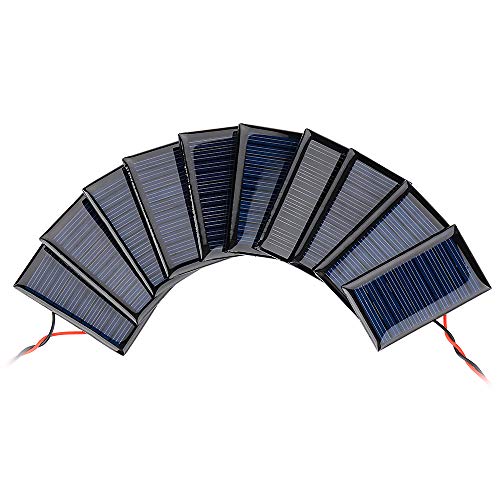
AOSHIKE offers a set of ten small polycrystalline solar panels designed for DIY projects and toy builds. Each panel provides about 5V at 30mA, with a compact footprint suitable for miniature models, solar-powered displays, or light-up crafts. The package is oriented toward hands-on experimentation, enabling quick prototyping and shared use among learners. The panels are described as functional in full sun, with voltages exceeding 5V under ideal light conditions. The included batch makes it convenient to test parallel or series connections across multiple projects.
Retisee 30 Pcs Mini Solar Cells

Retisee supplies a bulk pack of 30 miniature solar panels, each around 1.18 x 2.09 inches, delivering 5V at 30mA. The kit emphasizes durability with a glass fiber backing and waterproof, chemical-resistant construction. Wires come pre-soldered on each cell, streamlining connections for DIY projects, educational kits, or replacement components for small devices. The wide quantity makes it ideal for sharing across classrooms or workshop cohorts, and the modular nature supports flexible configurations for charging small gadgets or lighting experiments.
Aocoray Mini 5V 6W Panel
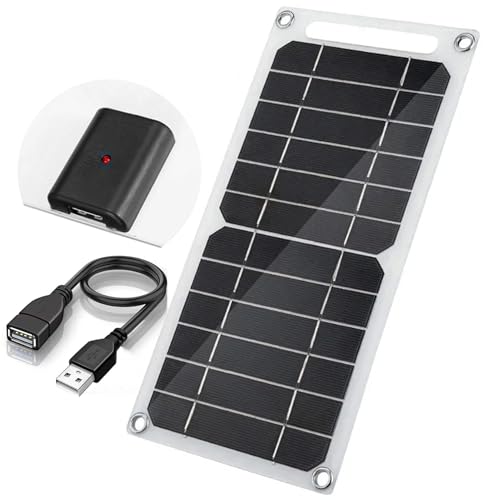
Aocoray’s 5V 6W micro solar panel is designed for portable charging tasks and small USB-powered devices. It features a 55-inch cable for flexible placement, with emphasis on compatibility for mobile charging, small USB fans, night lights, and compact lanterns. The panel highlights higher efficiency with crystalline silicon material, aiming for reliable daytime energy without ongoing maintenance. Built to withstand outdoor use, the unit’s durable construction supports repeated outdoor deployments for camping, emergency kits, or garden projects.
Tellegloww 0.5W Mini Solar Panels

Tellegloww provides a bulk set of 10 flexible mini panels, each rated at 0.5W and 5V with a 100mA output. The panels measure about 3.15 x 3.15 inches and include two welded wires for straightforward connections. The kit supports parallel or series configurations to scale voltage or current for small projects, making it suitable for light chargers, flashlights, or DIY solar epoxy cell experiments. The emphasis is on ease of use and quick assembly for educational or hobbyist applications.
HISUEKIG 3Pcs Mini Solar Panels

HISUEKIG offers a trio of small panels that are pitched for science projects, lawn or landscape lighting, and portable experiments. Each panel carries a 6V rating with approximately 1W output, and a 30 cm cable is included for easy installation. The description emphasizes durability in outdoor conditions and suitability for weak-light scenarios, making these panels useful for incremental solar builds, experimental kits, and small charging projects where space is a premium.
Buying Guide: Key Considerations For Mini Solar Panels
- Power needs: Mini panels generally deliver low wattage. Define your project’s required voltage and current, then choose a panel or combination that meets that target. Parallel connections increase current; series connections increase voltage.
- Size and footprint: Craft projects demand compact dimensions. Compare panel dimensions to ensure fit within enclosures, model bases, or display cases. Smaller panels are easier to mount but may require more units for higher power.
- Wiring and connections: Panels with pre-soldered wires or built-in connectors speed up assembly. Look for dual tabs or pigtails that simplify chaining multiple panels without extra soldering.
- Durability: Outdoor-oriented mini panels should be UV-resistant, weatherproof, and backed by a robust frame. If the project will be exposed to snow, wind, or moisture, prioritize panels with proven weather resistance.
- Material and efficiency: Polycrystalline panels are common for mini kits and offer decent efficiency at a low cost. For higher efficiency in very small spaces, consider panels marketed as higher efficiency crystalline silicon, while weighing the price.
- Installation flexibility: A long cable and mounting options help you position panels for optimal sun exposure. Consider whether you’ll need to move panels seasonally or shelter them during storage.
- Educational value: For classroom use, bulk packs provide value for demonstrations and experiments. Look for sets that are easy to connect in various configurations to illustrate electrical concepts.
- Applications: Use-cases include powering small LEDs, charging tiny batteries, experimental solar toys, or light displays. Ensure the panel’s voltage and current align with your intended devices.
Across these options, users gain access to compact, scalable solar power suitable for crafts, STEM kits, and hobby projects. When selecting, consider how many units you need, how you’ll configure them, and the environmental conditions under which they will operate. These mini panels are designed to complement learning and creative building, enabling hands-on exploration of solar energy in the American home or classroom.