
Choosing a reliable mobile EV charger means prioritizing speed, compatibility, safety, and portability. This guide highlights five top options that balance fast Level 2 charging with convenient travel features, so you can keep your electric vehicle powered whether you’re at home, visiting friends, or on a road trip. Explore each product’s key capabilities, how they fit common American electrical setups, and practical tips to choose the right unit for your vehicle and lifestyle.
| Product | Brand | Charge Rate | Cable Length | |
|---|---|---|---|---|
| Raylix 32A Level 2 EV Charger | Raylix | 32A (7.68kW) | 21 ft | NEMA 14-50 |
| 2025 New Portable Level 2 EV Charger | Tyocle | 40A (9.6kW) | 23 ft | NEMA 14-50P |
| SEGUMA Level 1/2 EV Charger | SEGUMA | 16A/24A | 25 ft | NACS/NEMA adapters |
| NexCyber Level 2 EV Charger | NexCyber | 40A–48A (configurable) | 25 ft | NEMA 14-50P / hardwire |
| ChargePoint HomeFlex Level 2 EV Charger | ChargePoint | Up to 50A (configurable) | — | Hardwired |
Raylix 32A Level 2 EV Charger
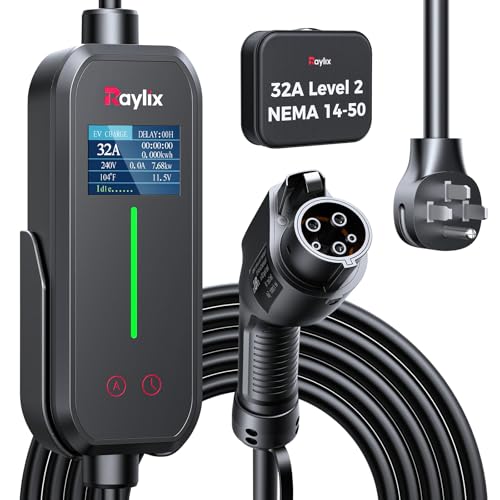
The Raylix charger is a compact Level 2 option designed for North American homes with a dedicated 240V circuit. It delivers up to 32A (7.68kW) for faster charging and includes a 21-foot cable for flexible placement. A built-in display provides real-time status and current settings, reducing reliance on vehicle dashboards or apps. Note that it requires a 240V/40A circuit and a 4-prong NEMA 14-50 outlet, and it is not compatible with other outlet types. This model is aimed at users seeking speed without sacrificing portability.
2025 New Portable Level 2 EV Charger

The Tyocle portable Level 2 charger provides a robust 40A/240V capability, delivering up to 9.6kW. It emphasizes speed with a 23-foot cable for flexibility in varied parking situations. Eight-stage smart current control lets you tune the charging rate (8A–40A) and includes a delay charging feature to take advantage of off-peak electricity rates. A J1772 connector supports most non-Tesla EVs, and note that a J1772 to Tesla adapter is required for Tesla compatibility. This unit suits drivers who want strong performance with adaptable scheduling.
SEGUMA Level 1/2 EV Charger

SEGUMA’s charger is designed for flexibility with Level 1 and Level 2 capabilities. It includes a dual-plug setup: a NEMA 6-20 plug for 240V Level 2 charging (16A) and a NEMA 5-15 adapter for Level 1 charging (120V). The unit supports Tesla vehicles via a NACS connector and features a wireless door control for the charging port, simplifying adjacent tasks. It’s particularly useful for Tesla owners seeking a portable solution that covers everyday home charging and occasional on-the-road needs.
NexCyber Level 2 EV Charger

NexCyber’s Level 2 EV charger brings configurability and safety certifications into one package. It supports up to 40A when using a NEMA 14-50P outlet and up to 48A when hardwired, making it adaptable to different home electrical setups. It’s designed for a broad range of non-Tesla EVs (J1772 connector) with adapter recommendations for Tesla. The unit is ETL and FCC certified, emphasizing safety, reliability, and a 3-year warranty. Installation is recommended by a professional to ensure safe operation and optimal performance.
ChargePoint HomeFlex Level 2 EV Charger

ChargePoint’s HomeFlex is a widely adopted Level 2 charger designed for home use with smart capabilities. It emphasizes networked charging, app-based control, scheduling, and reminders, along with access to ChargePoint’s extensive North American charging network for roaming. The unit is configurable up to 50A and is typically hardwired; some features require WiFi for full functionality. It’s positioned as a future-friendly solution that integrates with smart home ecosystems and offers a robust ecosystem for ongoing charging management.
Buying Guide: Key Purchase Considerations
- Electrical compatibility: Ensure the charger supports your home’s electrical service (120V, 240V) and available circuit amperage. Check whether a dedicated circuit is required and if a service upgrade is needed for higher current.
- Outlet vs. hardwired: Some units use NEMA outlets (like 14-50P) with plug-in cords, while others are hardwired. Consider whether you prefer plug-in convenience or a permanently installed solution for aesthetics and reliability.
- Charging speed and range: Higher amperage generally delivers faster charging (14–50P up to 40A/48A). Match the charger’s capability to your vehicle’s acceptance and daily driving needs to optimize charging time.
- Connector compatibility: Non-Tesla EVs typically use J1772; Teslas may require adapters unless the charger explicitly supports NACS. Verify compatibility with your EV model before purchase.
- Portability vs. permanence: Portable chargers are ideal for travel and emergency use, while hardwired stations offer permanent, consistent home charging with potential smart features.
- Smart features: App control, energy scheduling, and network access can simplify charging and help manage electricity costs. Confirm WiFi or cellular requirements if you need remote monitoring.
- Safety and certifications: Look for ETL, UL, FCC, and other recognized safety certifications. A reputable warranty and customer support are also important for long-term reliability.
- Cable length and storage: Longer cables provide flexibility but may affect portability. Ensure the provided cable length fits your typical parking scenarios and storage options.
- Future-proofing: If you plan to upgrade your EV or home system, consider chargers with higher amperage ceilings and expandable firmware features to extend the device’s useful life.
When selecting a mobile EV charger, balance charging speed, electrical requirements, and the environments in which you’ll use it. For frequent travelers or multi-car households, a portable unit with ample cable length and robust safety features offers practical versatility. For homeowners seeking integrated control, a smart charger with app connectivity and network roaming can enhance daily charging efficiency and long-term cost savings.