
Finding a generator that reliably powers an RV’s 30-amp setup requires balancing running watts, fuel type, noise, and convenience. The following selections cover dual-fuel and gas options, RV-ready outlets, CO sensors, and quiet operation to keep campfires and conversations uninterrupted. This guide highlights five generators that align with a 30A RV system and broad American use cases, from frequent campers to weekend warriors.
| Product | Brand | Type | Key Features |
|---|---|---|---|
| Westinghouse 6500 Watt Dual Fuel | Westinghouse | Dual Fuel Portable | 30A RV outlet, CO sensor, transfer switch ready, wheel kit |
| WEN 4800-Watt Portable Inverter | WEN | Inverter | RV-Ready, quiet operation, USB outlets, clean power |
| Westinghouse 4650 Peak Watt | Westinghouse | Gas Portable | 30A RV outlet, CO sensor, multiple outlets |
| Westinghouse 2550 Peak Watt Inverter | Westinghouse | Compact Inverter | RV-Ready 30A outlet, ultra-quiet, economy mode |
| WEN 3600-Watt Dual Fuel | WEN | Dual Fuel Inverter | RV-Ready, quiet with fuel shut-off, CO watchdog |
Note: Each product is selected for its ability to deliver 30A RV service, stability for sensitive electronics, and a balance between portability and runtime. The table provides a snapshot to compare core attributes across models.
Westinghouse 6500 Watt Dual Fuel: Versatile RV Power
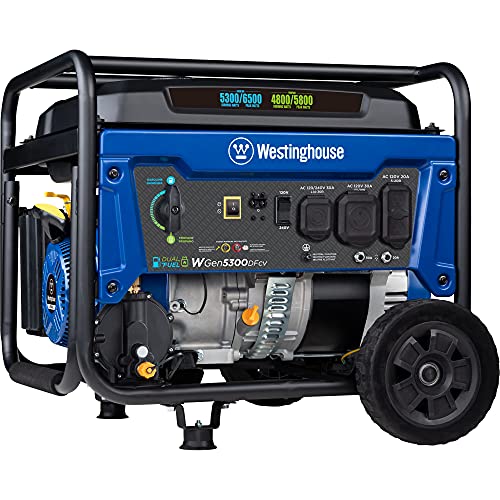
The Westinghouse 6500 Watt Dual Fuel generator offers gasoline and propane options for flexible fuel sourcing. With 5300 running watts and 6500 peak watts on gasoline, and 4800 running watts with 5800 peak on propane, it supports a 30A RV receptacle and a transfer switch-ready L14-30R outlet. A 4.7-gallon tank provides run times up to approximately 14.5 hours at a suitable load. The unit ships with essential accessories including oil, a funnel, hose, toolkit, wheel kit, and a user’s manual. Its 30A RV-ready TT-30R outlet and safety features make it a strong all-around choice for weekend trips or full-time RV living.
Pros and Considerations:
– Pro: Dual-fuel flexibility extends usable hours away from stations.
– Pro: Transfer switch readiness eases integration with home backup systems.
– Con: Higher initial cost compared to smaller portable units.
– Con: Heavier than compact inverter options, requiring decent handling.
WEN 4800-Watt Portable Inverter: Quiet Power

The WEN 4800-Watt Portable Inverter is designed for RVs with an RV-ready output profile and quiet operation. Its 224cc engine delivers up to 4800 surge watts and 4000 rated watts, while providing clean power safe for sensitive electronics. A compact 1.9-gallon fuel tank yields up to about 7 hours of runtime under half-load, making it practical for shorter trips or daytime use at camp. The unit emphasizes portability, reduced noise, and reliable performance for modern RV setups that require stable AC power without a noise nuisance.
Pros and Considerations:
– Pro: Clean power ideal for electronics and charging devices.
– Pro: Lightweight for an inverter in its class.
– Con: Lower runtime compared to larger portable units on a single tank.
– Con: Not ideal for full-home backup scenarios; best for RV use and campsites.
Westinghouse 4650 Peak Watt: RV-Ready Reliability
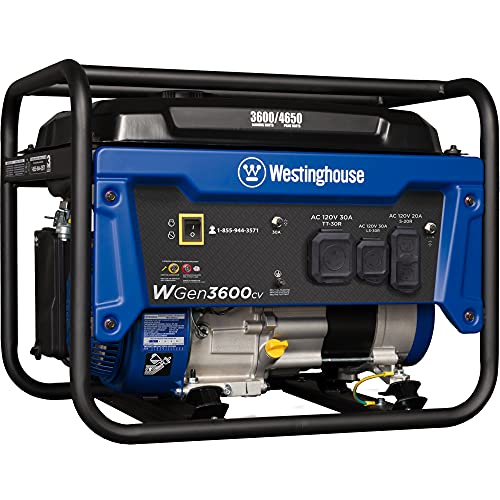
The Westinghouse 4650 Peak Watt generator is built for RV use with a 30A RV-ready TT-30R receptacle alongside two 5–20R duplex outlets and a L5-30R 30A socket. A 4-gallon fuel tank with a fuel gauge supports lengthy runtimes, and rubber outlet covers add outdoor safety. Recoil starting keeps things simple, and a CO sensor helps monitor indoor air quality when used in sheltered outdoor spaces. This model is well-suited for campers needing steady power for lighting, appliances, and electronics during trips with moderate electricity demand.
Pros and Considerations:
– Pro: Multiple outlets provide flexibility for different appliances.
– Pro: CO sensor contributes to safer operation in enclosed outdoor setups.
– Con: Gas-powered, requires regular maintenance and refueling.
– Con: Output rating is strong but not as high as larger dual-fuel models.
Westinghouse 2550 Peak Watt Inverter: Lightweight and Quiet

This compact Westinghouse inverter offers 2550 peak watts and 1900 rated watts with a low THD profile, making it suitable for sensitive electronics. It weighs just over 42 pounds and includes a single RV-ready TT-30R outlet along with two standard 120V outlets and USB ports. Its economy mode helps stretch fuel efficiency, and it supports parallel operation for extended power when paired with a compatible unit. The unit is ideal for small RVs, emergencies, or minimalist camping where quiet operation and portability are priorities.
Pros and Considerations:
– Pro: Extremely quiet operation and fuel-efficient design.
– Pro: Parallel capability adds scalability with compatible units.
– Con: Limited peak wattage compared to larger generators.
– Con: Not ideal for high-wattage appliances at extended runtimes.
Westinghouse 2550 Peak Watt (Blue) Inverter

This variant mirrors the 2550 peak watt design with a bright finish and the same essential RV-ready 30A TT-30R outlet plus two 120V outlets and USB ports. It emphasizes quiet, fuel-efficient operation and a compact form factor for easy transport and storage. For RV owners who value low noise and decent runtime, this inverter provides a solid balance of portability and capability, especially in urban or crowded campsite environments where noise considerations matter.
WEN GNA030: 30A RV Ready Adapter Option
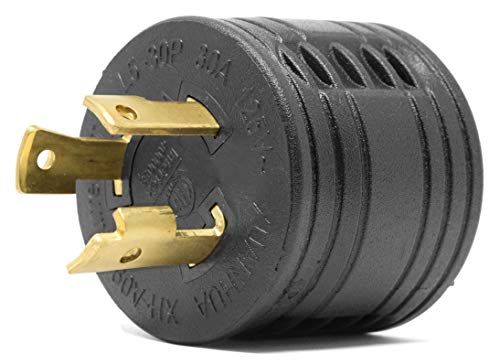
The WEN GNA030 adapter converts a 30-amp NEMA L5-30P twist-lock plug to an RV-ready TT-30R outlet. This compact accessory helps integrate a generator with a 30A RV circuit by enabling a ready inverter or generator to feed TT-30R connections. It is a practical compatibility piece when combining multiple power sources or upgrading an RV’s electrical setup without replacing existing outlets. This accessory is lightweight and ETL-certified for safe operation, though it is not a standalone power generator itself.
Buying Guide: Key Purchase Considerations
- Power output and outlets: Ensure the generator delivers at least the continuous wattage needed for your RV, plus a buffer for starting surges of appliances. Look for 30A RV outlets (TT-30R) and additional 120V outlets if you plan to run lights, a fridge, or a small air conditioner.
- Fuel type and runtime: Dual-fuel models offer flexibility between gasoline and propane, while inverter generators typically provide better fuel efficiency and cleaner power. Consider average campsite fuel access and desired runtime between refuels.
- Noise and portability: Quiet operation improves campground experience and neighbor relations. Weight and wheel kits affect how easily the unit is moved and stored.
- Safety features: CO sensors, automatic shutoff, and rubber outlet covers enhance safety during outdoor use and in semi-enclosed spaces.
- Maintenance and durability: Look for easy-start care, readily available replacement parts, and included essentials like oil, funnels, or tool kits. A manufacturer with solid support can reduce downtime.
- Parallel capability: If you anticipate higher power needs, consider units that support parallel operation to scale wattage for seasonal peak loads.
- Portability versus power balance: Large, high-watt models deliver longer runtimes but are heavier; compact units are easier to haul but may require more frequent refueling.
When selecting a generator for RV use, align your choice with your typical trip profile: weekend getaways, full-time RV living, or seasonal travels. For frequent dry-camping with essential appliances, a dual-fuel or inverter generator with a true 30A RV outlet and solid runtime offers the best balance of reliability and convenience. Always verify outlet types, fuel availability, and maintenance requirements before purchase to ensure the generator meets your specific RV power needs.