
When outages strike, a reliable generator kit can be the difference between comfort and disruption. This guide highlights five top options that suit household power needs—from portable dual-fuel generators with wheel kits to through-wall transfer kits and home backup power stations. Each pick balances ease of use, safety, and compatibility with common home electrical layouts. Read on to compare features, installation tips, and how to choose a kit that best fits your home’s power demands.
| Product | Brand | Key Feature | Approx. Compatibility |
|---|---|---|---|
| WEN 4,750-Watt Dual Fuel Portable Generator | WEN | Gas/Propane; 120V/240V; Electric start | Home backup, transfer switch readiness |
| Tellegloww 30A Through-Wall Generator Kit | Tellegloww | ETL-listed inlet box; 6x 5-15R outlets | Emergency power to multiple circuits |
| LiftCharger 50A Generator Hook-Up Kit | LiftCharger | Interlock compatible with Square D Homeline | Whole-house or multi-circuit support |
| LiftCharger 30A Generator Hook-Up Kit | LiftCharger | 30A interlock; 15 ft cord | Targeted circuit power during outages |
| EF ECOFLOW Delta Pro 3600Wh Kit | EF ECOFLOW | Large-capacity power station; transfer switch capable | Home backup with expandable battery |
WEN 4,750-Watt Dual Fuel Portable Generator

The WEN DF475T combines gasoline and propane options, giving flexibility during fuel shortages or price spikes. It provides 4750 surge watts and 3800 running watts on gasoline, with 4350 surge and 3500 running watts on propane. A simple dial switch shifts between fuels, and a 224cc four-stroke OHV engine powers the unit with electric start for quick activation. It supports 120V and 240V outputs, making it suitable for transfer switches and backup power for essential appliances.
Safety and convenience are aided by wheel kit compatibility and a design that accommodates common household loads. For those prioritizing a reliable, easy-to-use generator with multiple voltage outputs, the WEN DF475T is a strong entry in a home power kit lineup. Its dual-fuel capability helps ensure you’re prepared for varied fuel availability without sacrificing performance.
Tellegloww 30A Through-Wall Generator Kit
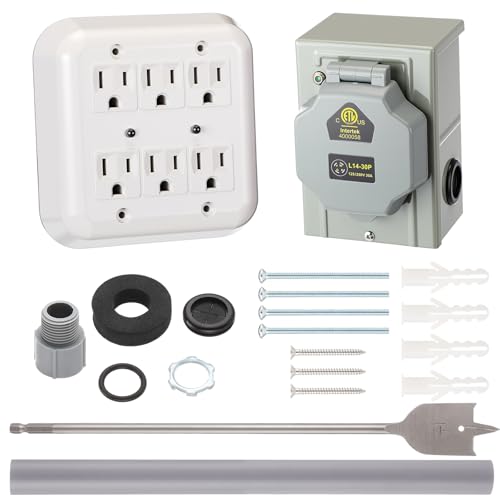
This kit is designed for direct household integration with a pre-drilled power inlet box compatible with NEMA L14-30P plugs and six 5-15R outlets. It provides 125V outputs via 5-20R/15R connectors for powering multiple devices while a robust 30A inlet box supports a reliable transfer to a manual switching system during outages. The unit features rust-resistant coating and ample wiring space to promote tidy connections and long service life, making it a practical choice for emergency power to essential household circuits.
With ETL listing and a focus on straightforward wiring, Tellegloww aims to simplify home hookup without requiring specialized tools. This kit suits homes seeking a balance between a secure transfer approach and flexible outlet distribution, particularly for powering heaters, tools, or appliances during emergencies.
LiftCharger 50A Generator Hook-Up Kit

This 50A kit is designed for safe house hook-ups with a focus on compatibility with Square D Homeline load centers (150-225 Amp). It includes a generator cord, power inlet box, interlock kit, and circuit breaker. The interlock prevents backfeeding, protecting utility workers and ensuring safe operation during outages. It supports portable generators delivering 9000-15000 watts, enabling selective power distribution across circuits rather than energizing the entire home.
The kit emphasizes code-compliant components and straightforward installation, offering a robust solution for homeowners seeking reliable, controlled power restoration. For houses with larger loads or multiple critical circuits, the 50A option provides an ample margin to cover essential devices while maintaining safe operation.
LiftCharger 30A Generator Hook-Up Kit

This 30A option is tailored for generators in the 4000-8500 Watt range, offering 3500-7500 running watts. It includes a 15 ft generator cord and a pre-drilled NEMA interlock compatible with Square D Homeline load centers. The kit emphasizes ease of installation and compatibility with common residential panels, providing a practical solution for limited-power outages or partial-home backup. The interlock design reduces backfeeding risk while enabling selective circuit energization during outages.
For smaller homes or apartments with limited load needs, the 30A LiftCharger kit provides a cost-effective route to essential circuits, such as refrigeration, lighting, and some heating elements, without overloading the transfer setup. Its straightforward assembly and ETL listing add to its appeal for do-it-yourself installers seeking dependable power during emergencies.
EF ECOFLOW Delta Pro 3600Wh Home Backup Kit

The EF ECOFLOW Delta Pro provides a large 3600Wh capacity with expandable capabilities when combined with extra batteries or generators. This home backup power station supports a robust 3600W AC output and can be paired with a transfer switch kit for seamless house power during outages. While not a traditional gas or propane generator, Delta Pro delivers quiet, scalable energy storage and quick recharging, making it a strong option for modern homes seeking an autonomous backup power solution with transfer-switch integration.
Key considerations for Delta Pro include capacity growth, recharging versatility (solar or grid), and compatibility with your existing electrical panel. It offers a clean, modular approach to home backup that can reduce reliance on fuel logistics during extended outages. For homes prioritizing quiet operation, instant startup, and expandability, this kit presents a contemporary alternative to traditional portable generators.
Buying Guide: Key Purchase Considerations
Purpose and load assessment: List essential circuits and devices you want powered during an outage. This helps you choose the appropriate kit size (30A vs 50A for interlocks, or a high-capacity home battery system like Delta Pro).
Transfer approach: Decide between a manual interlock system, transfer switch, or a through-wall inlet kit. Interlock solutions are generally simpler for limited circuits, while transfer switches offer precise circuit control for larger homes.
Electrical compatibility: Check your load center type (e.g., Square D Homeline) and panel rating. Ensure the kit’s connectors, cords, and inlet boxes match your panel to prevent backfeeding and code violations.
Fuel strategy and maintenance: If selecting a fuel-powered generator, compare gasoline vs propane options. Dual-fuel units provide flexibility during supply shortages, but propane storage and maintenance considerations differ from gasoline.
Expansion and accessories: Consider future needs, such as additional outlets, longer cords, or battery add-ons. For battery-based systems, verify recharge methods (grid, solar) and upgrade paths.
Safety and compliance: Confirm ETL or UL listings for all components. Ensure proper ventilation, proper grounding, and adherence to local electrical codes when installing any home backup system.
Cost of ownership: Beyond upfront price, account for fuel costs, maintenance intervals, and potential upgrades or battery replacements over time. A higher upfront investment can yield longer-term reliability and peace of mind.