
Consumers seeking top-tier, technology-driven solar solutions can consider panels that blend advanced cell design with anti-shading tech and portable versatility. This guide highlights five high-tech options from Renogy and SOKIOVOLA, each engineered to maximize efficiency, durability, and adaptability for RVs, boats, off-grid cabins, and emergency power. Read on to compare performance features, install considerations, and how to pick the right system for your energy goals.
Summary Table of Selected Products
| Product | Type | Key Tech | Output | Best For |
|---|---|---|---|---|
| Renogy 400W ShadowFlux Anti-Shading | Fixed Panel | ShadowFlux Anti-Shading; N-Type 16BB | 400 W | Rooftop RVs and Marine |
| Renogy 200W ShadowFlux Anti-Shading | Fixed Panel | ShadowFlux Anti-Shading; N-Type 16BB | 200 W | Compact Off-Grid Installations |
| Renogy 200W Portable Solar Panel | Foldable Panel | 16BB N-Type; 25% efficiency | 200 W | Camping, Emergencies, Travel Packs |
| Renogy 200W N-Type 24V Panel | Fixed Panel | 24V System; 16BB N-Type | 200 W | Class B Vans and Tiny Homes |
| SOKIOVOLA 200W Portable Solar Panel | Foldable Panel | 16BB N-Type; IP68 | 200 W | Outdoor Trips and Remote Offices |
Renogy 400W ShadowFlux Anti-Shading Panel

Renogy’s 400W ShadowFlux panel centers on anti-shading technology designed to maximize output even when partial shading occurs from trees, buildings, or rooftop obstructions. The N-Type 16BB cells deliver up to 25% efficiency, reducing hot spots and micro-cracks for longer life. A compact, lightweight form factor trims size by about 7% compared with standard PERC panels, making it well-suited for rooftop installations on RVs, boats, and compact off-grid scenarios. This panel emphasizes reliability in constrained spaces and variable sun conditions.
Renogy 200W ShadowFlux Anti-Shading Panel

The 200W ShadowFlux panel extends the same anti-shading and 16BB N-Type technology to a smaller footprint. Its 25% efficiency helps maximize energy capture in restricted spaces like rooftop decks or small camper setups. The panel’s 7% smaller and 10% lighter profile aids easier handling during installation while maintaining robust performance for off-grid charging and battery systems.
Renogy 200W Portable Foldable Solar Panel

This foldable panel uses industry-leading 25% efficiency with 16BB N-Type cells. Its portable design weighs around 13.89 pounds, features a compact backpack-friendly footprint, and includes a magnetic closure for quick setup. It supports multi-device charging via USB-C PD, USB-A, and traditional MC4 outputs, making it versatile for charging power stations, laptops, and mobile devices when off-grid or during emergencies.
Renogy 200W N-Type 24V Panel

Ideal for compact Class B vans, this 24V panel retains 25% cell efficiency with 16BB N-Type cells. The smaller, lighter frame helps conserve roof space while enabling flexible system design for 12V and 24V battery setups. The panel is designed to minimize current loss and sustain higher output in mixed sun conditions, enhancing overall off-grid performance in vans, RVs, and marine applications.
SOKIOVOLA 200W Portable Solar Panel
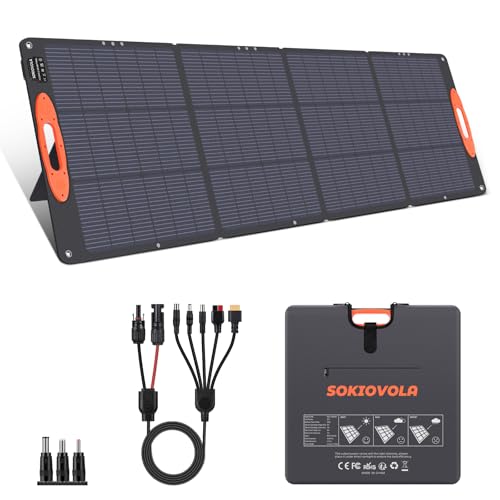
Featuring IP68 waterproofing and foldable design, the SOKIOVOLA 200W panel uses high-quality A+ grade monocrystalline cells achieving up to 25% efficiency. Its portability suits outdoor trips, RVing, and remote work setups. The foldable form and rugged ETFE coating support long-term outdoor use, with reliable performance in harsh weather conditions and through repeated cycling.
Buying Guide: Key Purchase Considerations
- Panel Type and Application: Fixed panels are ideal for rooftops on RVs, boats, or cabins where permanent placement is available. Foldable/portable panels suit travelers, campers, and emergency kits, offering easy transport and quick deployment.
- Cell Technology and Efficiency: Panels with N-Type 16BB cells typically reach high efficiencies (around 25%). This translates to more energy under the same sun exposure and better resistance to microcracks and shading-related losses.
- Anti-Shading Features: ShadowFlux-style anti-shading reduces hot spots in partial shade and improves overall reliability in dynamic environments like rooftops near trees or partial obstructions.
- Voltage Configuration: 12V vs. 24V systems impact wiring, battery compatibility, and charge controller requirements. Higher voltage panels often deliver better efficiency in longer cable runs and larger arrays.
- Portability and Weight: For portable use, consider weight, foldability, and handle design. Lighter panels with compact forms ease transport and storage during travel or camping.
- Durability and Protection: IP ratings (IP65, IP68) indicate weather resistance. ETFE coatings and rugged housings extend lifespan in outdoor use and harsh environments.
- System Compatibility: Check compatibility with power stations, inverters, and battery chemistries (lead-acid, LiFePO4, etc.). Some panels offer USB-C PD or USB-A charging alongside MC4 outputs for flexible charging options.
- Warranty and Support: Longer warranties and accessible customer support reflect manufacturer confidence and provide assurance for off-grid investments.
- Installation Considerations: Rooftop mounting requires structural assessment and proper tilt positioning; portable kits benefit from reliable carrying handles, protective cases, and secure attachments.
Across these options, the common thread is high efficiency paired with robust shading resilience and versatile form factors. For RVs and marine setups, fixed ShadowFlux panels deliver steady, high-output performance in variable sunlight, while portable foldable models offer flexible energy capture for camping, emergencies, or transient living spaces. When selecting a system, align panel type, voltage, and mounting durability with your typical use case, climate, and available installation space to maximize long-term energy returns.