
Protecting your internet-connected devices during power outages is essential for uninterrupted communication, streaming, and work. The following battery backup units (UPS) are designed to keep modems, routers, NAS, and other critical equipment online when the lights go out. Each option supports multiple outlets, surge protection, and varying run times to match different setups. This guide highlights five top choices and explains key considerations to help you pick the right UPS for internet reliability.
| Product | Brand | Capacity | Outlets | Special Features |
|---|---|---|---|---|
| BE600M1 Back-UPS | APC | 600VA / 330W | 5 battery backup, 2 surge-only | USB charger port; compact and affordable |
| BX1500M | APC | 1500VA / 900W | 10 outlets (5 backup, 5 surge) | Long runtime; data line protection |
| BE850G2 Back-UPS | APC | 850VA / 450W | 9 outlets (6 backup, 3 surge) | Two USB ports; broad protection |
| CP1500PFCLCD | CyberPower | 1500VA / 1000W | 12 outlets (6 backup, 6 surge) | PFC sinewave output; LCD status |
| Amazon Basics 1500VA | Amazon Basics | 1500VA / 900W | 10 outlets (5 backup, 5 surge) | Line-interactive; basic protection |
Note: The table provides a quick comparison of key specs. For detailed features and usage scenarios, read the full sections below.
APC BE600M1 Back-UPS: Compact Power Backup
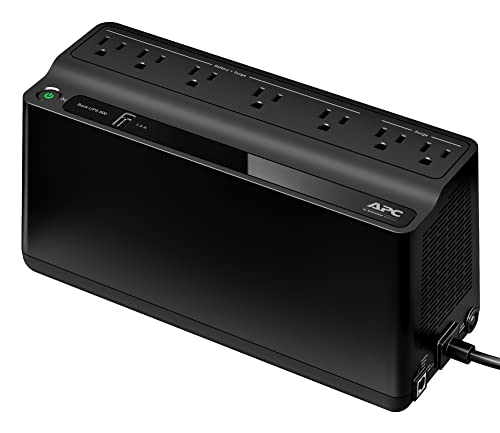
The BE600M1 provides essential battery backup with 600VA / 330W capacity. It features five outlets that deliver battery-backed power and surge protection, plus two outlets with surge protection only. A built-in USB charger port adds convenient charging for phones and small devices. This compact unit is suitable for a small home network setup that includes a modem, router, and a few peripherals, keeping critical online services online during outages.
APC BE425M: Lightweight Internet Backup

With 425VA / 225W capacity and six outlets (four battery backup & surge protection; two surge-only), the BE425M is a compact option for smaller networks or single-device protection. A five-foot cord and wall-mountable design provide placement flexibility. Note that the battery is not user-replaceable (service-replaceable by a technician). This unit can protect essential internet infrastructure in small-to-medium environments without occupying much space.
APC BX1500M: High-Capacity Internet Backbone

The BX1500M offers 1500VA / 900W for larger setups, including a PC with multiple monitors and networking gear. It provides ten outlets—five with battery backup and five with surge protection—and 1 GB network dataline protection. The unit ships with a six-foot power cord and right-angle plug. PowerChute software allows UPS management on Windows systems, helping to safeguard computer work during outages and fluctuations.
APC BE850G2: Expanded Internet Reliability

The BE850G2 delivers 850VA / 450W of battery backup with nine outlets, including six backup outlets and three surge-only outlets. Two USB charging ports are included for mobile devices. This model balances higher backup capacity with a modest footprint, suitable for a small home office or a router-plus-modem setup with additional peripherals needing protection.
CyberPower CP1500PFCLCD: Sinewave Power for Active Systems

The CP1500PFCLCD delivers 1500VA / 1000W with PFC sinewave output, making it ideal for active power supplies and systems that demand clean power. It offers 12 outlets (six battery backup & surge protected; six surge protected), plus a color LCD panel that displays real-time battery and power status. It includes USB ports for mobile charging, and its AVR (automatic voltage regulation) helps stabilize voltage to connected devices during brownouts.
Buying Guide: Key Considerations for Internet-Focused UPS Purchases
When selecting a UPS for internet reliability, consider the following factors to match your needs:
- Backup duration vs. load: Estimate the total wattage of your router, modem, NAS, and a few peripherals. A higher VA/W rating generally yields longer runtime; prioritize models with sufficient battery capacity to maintain essential devices during typical outages.
- Outlet configuration: For internet setups, you’ll want a mix of battery-backed outlets for the modem, router, and networking gear, plus surge-only outlets for printers or non-critical devices. More backup outlets increase resilience during multi-device outages.
- Power quality: Sinewave or pure sinewave outputs (especially at higher wattage) protect sensitive electronics and network gear. Line-interactive designs are common for home use and handle short-term fluctuations well.
- Connectivity and management: USB ports for charging, and software support for monitoring battery health and automatic shutdowns, can simplify management and prevent data loss during outages.
- Serviceability and battery life: Some units allow user-replaceable batteries or service replaceability. For longer lifespans, LiFePO4-based models offer extended cycles but may come at a higher upfront cost.
- Form factor and placement: Wall-mountable or compact designs fit tight home office spaces, while larger towers support more outlets and higher power requirements.
- Warranty and support: A solid warranty and accessible customer support are important for critical internet setups where downtime has tangible impacts.
In practice, for a small home network with a single router and modem, a compact 600VA unit (like BE600M1) can suffice. For larger setups with multiple devices or a home office with several networked components, higher-capacity options such as 1500VA units provide longer runtime and more backed-up outlets. Where audio/video equipment and PCs are part of the same system, a sinewave or AVR-equipped model will deliver cleaner power and better protection for sensitive electronics.