
Choosing the best saw blade for trim work is essential for clean, precise cuts in woodworking and tree trimming. This guide reviews top-quality blades suitable for various trimming needs, including pruning saw blades, finishing blades, and reciprocating saw blades. Below is a summary table of the selected saw blades, detailing brands and key features for a quick comparison.
| Product | Brand | Key Features |
|---|---|---|
| EZARC Japanese Teeth Reciprocating Saw Blade 15 Inch | EZARC | Arc edge design, 6TPI, triple-ground teeth, long-lasting |
| Universal Type Pole Pruner Saw Blade Replacement 15.5 Inch | ALL THAT GARDEN | Universal design, extremely hard steel, whetstone-sharpened teeth |
| WEN 10-Inch 80-Tooth Carbide-Tipped Ultra-Fine Finish Saw Blade | WEN | 80 teeth, carbide-tipped, ultra-thin kerf, precise woodworking cuts |
| Fiskars Pole Saw Blade Replacement 15″ Woodzig Tooth Design | Fiskars | Chainsaw-style teeth, pull stroke cutting, fits multiple pruner models |
| SEDY 12-Inch Wood Pruning Reciprocating Saw Blades 5 Pack | SEDY | High-speed carbon steel, 5TPI, designed for fast rough cutting |
EZARC Japanese Teeth Reciprocating Saw Blade 15 Inch

The EZARC 15-inch reciprocating saw blade features an innovative arc edge design paired with an aggressive Japanese tooth profile (6 teeth per inch) which enhances cutting power for trimming branches and wood. Its triple-ground offset teeth provide three cutting angles that reduce friction, ensuring smooth, controlled cuts especially on larger limbs. The fleam ground teeth and deep gullets enable fast, clean cuts with an extended lifespan, estimated to be three times longer than standard blades. This blade is ideal for both pruning and wood cutting, offering durability and efficiency for outdoor trimming projects.
Universal Type Pole Pruner Saw Blade Replacement 15.5 Inch
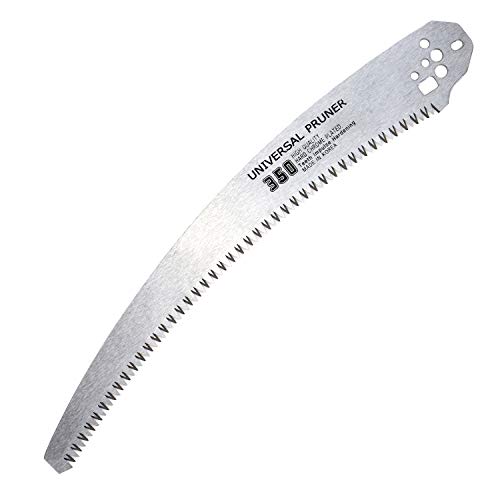
This 15.5-inch universal replacement blade by ALL THAT GARDEN fits many brand pole pruners, provided the mounting holes align correctly. Its steel has an exceptional hardness rating (HV ≈ 950–1,000) making it abrasion resistant and powerful. Uniquely sharpened by whetstone instead of traditional filing, its teeth maintain superior sharpness like a high-quality knife and benefit from impulse hardening which extends blade life. This razor-sharp curved blade ensures efficient and precise pruning cuts for various tree trimming applications.
WEN 10-Inch 80-Tooth Carbide-Tipped Ultra-Fine Finish Saw Blade

The WEN 10-inch saw blade is designed for fine woodworking projects requiring clean and precise trimming cuts. It features 80 carbide-tipped teeth that deliver ultra-fine finishes on hardwoods, softwoods, and plywood. The 1/10-inch thin kerf reduces material waste and minimizes strain on saw motors, making it compatible with miter saws and table saws. Rated for speeds up to 6000 RPM, this blade offers smooth, clean crosscuts essential for detailed trim work and cabinetry where finish quality is a priority.
Fiskars Pole Saw Blade Replacement 15″ Woodzig Tooth Design

The Fiskars 15-inch replacement blade fits Fiskars pruning saw and pole pruner models, extending the tool’s efficiency. Its distinctive Woodzig chainsaw-style tooth design cuts on the pull stroke, which is ideal for slicing through thick branches with less effort. This blade provides controlled, powerful cuts that maintain sharpness even after heavy use. It supports various Fiskars models ensuring compatibility across a range of tree pruning equipment, suitable for both casual and professional outdoor trimming.
SEDY 12-Inch Wood Pruning Reciprocating Saw Blades, 5 Pack

The SEDY 12-inch pruning saw blades come in a pack of five, making them a practical choice for frequent users. With 5 teeth per inch and high-speed carbon steel construction, these blades emphasize durability and fast cutting speed. Their advanced alloys and optimized tooth design enhance smooth cutting motion, suited for rough outdoor pruning of wood and branches. These blades excel in reciprocating saws where quick removal and efficient rough cuts are required, providing value and effectiveness for various trimming tasks.
Buying Guide for Saw Blades Used in Trim Work
Blade Type and Tooth Design
The choice between reciprocating saw blades, miter saw blades, and pole pruner blades depends on the specific trimming project. Reciprocating blades with arc edge or fleam ground teeth deliver fast cutting on branches. Ultra-fine finish blades with high tooth counts (like 80T) provide clean, precise cuts ideal for woodworking trim. Chainsaw-style Woodzig teeth are better for thicker branches requiring powerful pull-stroke cutting.
Material and Durability
Hardened carbon steel and carbide-tipped teeth are most common for durability. Hardened steel blades resist abrasion and bending, while carbide tips extend the blade life and maintain sharpness. Choosing a blade made of quality materials ensures long-term performance and reduces replacement frequency.
Blade Size and Compatibility
Matching the blade size (length and diameter) and mounting hole configuration to your saw or pruner model is crucial for safety and performance. Universal blades offer flexibility but always verify hole alignment and arbor size. For handheld pruning saws and pole pruners, length varies typically between 12 and 15.5 inches. Miter and table saw blades commonly range from 6 1/2 to 10 inches or more.
Tooth Per Inch (TPI) Considerations
Lower TPI (4-6) options, such as 5TPI or 6TPI, are better suited for faster, rougher cuts on thicker branches and wood. Higher TPI blades, like the 80T WEN blade, offer smoother, finer cuts favored in finish carpentry. Selecting TPI depends on the balance between speed and cut quality required for your project.
Cut Type and Application
Identify whether your task requires crosscuts, rip cuts, or pruning cuts. Some blades emphasize fast cutting on green wood and pruning (reciprocating blades with specialized teeth), while others are engineered for fine joinery and trim finishing. Carbide-tipped blades excel in cutting varied materials including plywood and plastics, while carbon steel blades are ideal for wood and branches.
Ergonomics and Handling
If using handheld saws or pruners, consider the blade’s handling characteristics and the cutting action it supports (pull stroke vs. push stroke). Comfortable grip tools paired with sharp blades reduce fatigue and improve cutting precision.