
When it comes to cutting steel with a miter saw, selecting the right blade is essential for precision, durability, and safety. These blades differ from typical wood-cutting variants by featuring hardened tooth tips, special materials, and designs that reduce heat and wear. Below is a concise comparison table summarizing top steel cutting blades that work seamlessly with miter saws, helping you make an informed decision quickly.
| Product | Brand | Diameter & Teeth | Arbor Size | Material | Key Feature |
|---|---|---|---|---|---|
| JINSINA 10″ Miter Table Saw Blade | JINSINA | 10″ / 60 Teeth | 5/8″ | Tungsten Carbide Tips | ATB Tip Design for Smoother Cuts |
| Diablo Steel Demon Cermet II Blade | Diablo by Freud | 10″ / 60 Teeth | 1″ | Cermet Teeth | Up to 25X Longer Life, Cooler Cuts |
| TWIN-TOWN 10-Inch 52 Teeth Dry Cut Blade | TWIN-TOWN | 10″ / 52 Teeth | 1″ | Cermet Composite | Laser Cut Stabilizer Vents, Low Vibration |
| TOMAX 12 Inch 60 Tooth Steel Blade | TOMAX | 12″ / 60 Teeth | 1″ | Cermet Carbide | Industrial Level Durability & Heat Tolerance |
| FOXBC 10 Inch Metal Steel Cutting Blade | FOXBC | 10″ / 52 Teeth | 1″ with 5/8″ Bushing | Cermet Carbide | Optimized Design for Precise, Low-Deflection Cuts |
JINSINA 10″ Miter Table Saw Blade With 60 Teeth
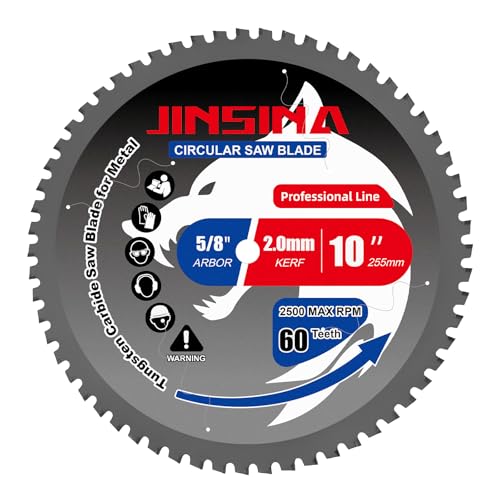
The JINSINA 10″ miter saw blade features a tungsten carbide tipped design with 60 teeth and a 5/8″ arbor, making it ideal for cutting a variety of metals, including iron, steel, aluminum, and stainless steel. It operates smoothly up to 2500 RPM, compatible with most miter, slide, stationary, and portable table saws. The blade’s ATB (Alternate Top Bevel) tip design reduces cutting resistance by slicing alternately like small knives, which not only lowers the load on your equipment but also promotes smoother, more efficient metal cutting. Additionally, the premium carbide tips ensure excellent wear resistance, prolonging blade life compared to standard saw blades. This blade balances precision and durability for moderate to heavy-duty metal cutting tasks.
Diablo Steel Demon Cermet II 10″ Metal Cutting Blade

This 10” blade by Diablo, part of Freud’s line, is engineered with cermet tips, a composite of ceramic and metal for superior toughness and heat tolerance. The 60 TCG (Triple Chip Grind) teeth produce burr-free, precise cuts while keeping the blade up to 50X cooler than traditional grinding discs. This feature prevents metal warping and discoloration during cutting. Rated for a max of 1800 RPM, this blade is durable and outlasts standard grinding discs by up to 25 times. It also enables up to 10X faster cuts, enhancing productivity in professional metal fabrication and construction jobs.
TWIN-TOWN 10-Inch 52 Teeth Dry Cut Cermet Saw Blade

TWIN-TOWN’s 10-inch metal cutting blade uses the latest generation of cermet composite material for cutting mild steel profiles, pipes, tube, angle iron, and steel studs. Its 52 teeth combined with laser-cut stabilizer vents significantly reduce noise, vibration, and overheating, which helps maintain blade stability during prolonged use. The blade’s design minimizes warping potential while keeping the cutting action smoother. The 1-inch arbor fits most miter saws for metal cutting, making this an excellent choice for users needing a balance of durability, noise control, and precise cuts.
TOMAX 12 Inch 60 Tooth Industrial Metal Saw Blade
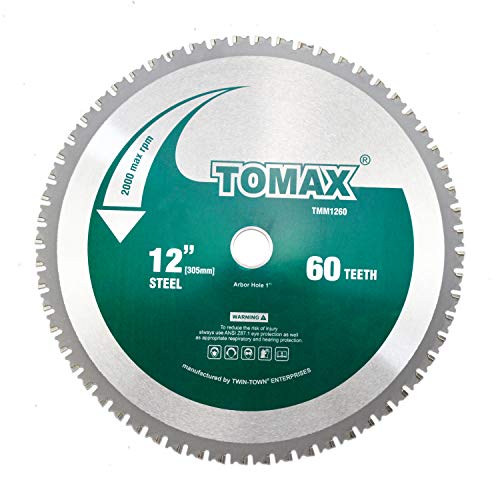
The TOMAX 12-inch blade is built with cermet teeth, delivering superior durability compared to abrasive discs. It is engineered to cut a wide range of mild steel materials including pipes, angle iron, steel studs, and solid bars. The blade’s high heat tolerance keeps the cutting process cooler, improving blade life and cutting accuracy. This industrial-level blade fits a 1-inch arbor and is suitable for heavy-duty and extended metal cutting projects where consistent performance is needed.
FOXBC 10 Inch Metal Steel Cutting Blade, 52 Teeth

FOXBC’s 10-inch blade comes with 52 carbide teeth and a versatile 1-inch arbor, including a 5/8-inch bushing for compatibility with various miter saws. It is optimized for cutting studs, tubes, plates, bars, and conduits, especially suited for materials with wall thicknesses between 1/8 inch and 1 inch. Designed to reduce blade wandering and deflection, this blade offers precise, clean cuts that minimize the need for rework. It supports up to 3000 RPM, allowing for high-speed cutting while retaining control and cutting quality.
Buying Guide: How to Choose the Best Steel Cutting Blade for Your Miter Saw
Blade Material and Tooth Composition
Tungsten Carbide tipped blades are known for their hardness and wear resistance, suitable for general metal cutting. Cermet blades, a composite of ceramic and metal, offer higher heat tolerance, enhanced durability, and cooler cuts, which translates to longer blade life and more precise cuts. Choose cermet blades for heavy, continuous use on harder metals.
Diameter and Arbor Compatibility
Select a blade diameter matching your miter saw specifications—most common sizes for steel cutting range from 10 to 12 inches. The arbor size must fit your saw’s spindle securely, typically 5/8″ or 1″. Some blades include bushings for flexible compatibility.
Teeth Design, Count, and Hook Angle
A higher number of teeth generally yields smoother and more precise cuts but may reduce cutting speed. Styles such as Alternate Top Bevel (ATB) and Triple Chip Grind (TCG) are preferred for metal cutting to reduce resistance and prevent chipping. The hook angle influences feed rate—0° hook angle blades reduce the chance of kickback and jamming when cutting metals.
RPM Rating and Saw Compatibility
Verify your miter saw’s maximum RPM rating and ensure the blade’s rated RPM exceeds or matches it for safe operation. Blades designed for metal cutting usually have lower maximum RPMs than woodworking blades.
Heat Dissipation Features
Blades with laser-cut stabilizer vents or special tooth coatings manage heat better, reducing metal discoloration and blade warping. Cooling features extend blade life and improve cut quality, especially important for prolonged metal cutting tasks.
Intended Metal Types and Thicknesses
Consider the materials you plan to cut—mild steel, stainless steel, aluminum, or iron. Some blades handle thin gauge sheet metal better, while others are optimized for solid bars or tubing. Ensure the blade matches your primary metal cutting needs for optimal performance.