
When shopping for a woodworking table saw, buyers want power, portability, and precision without overpaying. This guide highlights five well-suited options across jobsite, compact, and versatile table saw styles. It targets hobbyists, DIY hobbyists upgrading from a handheld saw, and small-shop professionals who need reliable cuts. Each option is evaluated for what type of buyer it serves best, along with practical tradeoffs to consider.
Summary at a glance:
| Product | Best For | Key Strength | Limitations |
|---|---|---|---|
| Skil TS6307-00 (15A, Folding Stand) | Portable jobsite users | Folding stand and parallel blade alignment | Compact depth of cut varies by blade |
| Skil TS6308-00 (8-1/4″ compact) | Travel-ready projects | Small footprint with solid fence rail system | Lower rip capacity than full-size models |
| EliteEdge Table Saw (10″ 15A) | Budget-friendly versatile shop saw | Bevel and cross-cut features with dust port | Basic frame; may lack heavy-duty resaw features |
| Boaeatu 10″ Portable | All-around DIY wood/plexi/metal light cutting | Rack-and-pinion bevel, adjustable height | May require extra accessories for large jobs |
| EVOLUTION R10TS | Pro-grade precision with dado capacity | Zero-clearance throat plate and dado option | Higher price point; heavier |
Skil 15 Amp 10 Inch Portable Jobsite Table Saw with Folding Stand

This model uses a 15-amp motor with a folding stand for quick portability. It features rack and pinion fence rails to keep the fence parallel to the blade, enabling fast, accurate cuts. A folding stand lets users set up on a jobsite and fold away after use. The blade alignment can be micro-adjusted to ensure parallelism with the fence and miter slot, improving repeatability for repetitive cuts.
Best for: Contractors or woodworkers needing a portable, ready-to-use saw on-site. Better for: quick setup and transport to different job locations. Avoid if: you require large sheet-material ripping beyond the stand’s reach.
Skil 15 Amp 8-1/4″ Compact Portable Jobsite Table Saw

This compact unit provides a robust fence system and expansive rip capacity for its size. With a 2-1/2-inch maximum depth of cut at 0 degrees and a parallel fence layout, it emphasizes efficient cutting in tight spaces. The rack-and-pinion fence rails allow quick adjustments while maintaining accuracy. It’s a practical choice for small shops or truck-bed setups where space matters most.
Best for: Small workshops or mobile operators who need a balance of cut depth and portability. Better for: projects that involve sheet materials or thinner stock. Limit: It has a smaller footprint and reduced maximum depth-of-cut compared with full-size 10″ saws.
Table Saw 10 Inch EliteEdge With Stand

EliteEdge’s 10-inch table saw focuses on cross-cut and bevel versatility, offering 0-45° bevel cuts and a 74mm crosscut depth. It includes a stand and a dust-collection-capable rear port, plus side storage for wrenches and push sticks. A robust blade guard enhances safety, and a rack-and-pinion bevel control helps achieve repeatable angles.
Best for: DIY builders needing a solid all-around saw with bevy of adjustability. Better for: tasks requiring precise bevel changes and efficient dust management. Limitation: It may not deliver heavy-duty ripping on large sheet stock at once.
Table Saw For Jobsite SierraSquad 8-Inch Portable
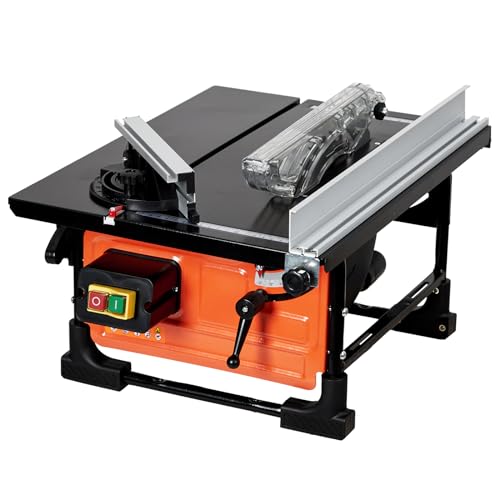
This 8-inch jobsite saw emphasizes portability with a compact footprint and a 6.7-amp copper motor that drives a 24T blade. It includes a sliding miter gauge and a transparent blade guard for visibility and safety. It is designed for lightweight projects and quick setup, with a focus on simple, clean cuts and straightforward operation.
Best for: Hobbyists and light-duty projects needing a small, reliable unit. Better for: on-the-go projects or limited-space workshops. Limitation: Lower motor power means slower cuts on dense hardwoods or thicker stock.
VGJ Woodworking Table Saw With Dust Port
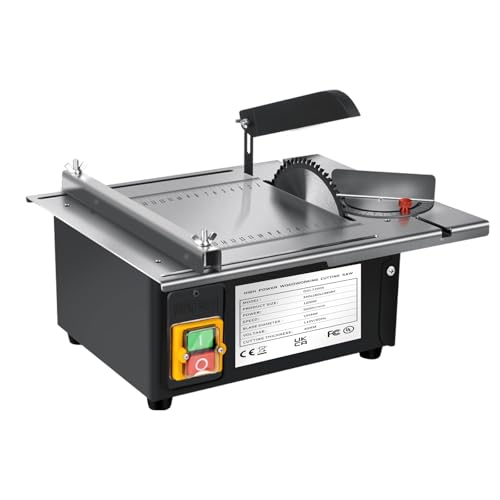
VGJ’s portable saw emphasizes versatility and a power-rich 1200W motor at 5000 rpm. It supports a 90° crosscut and has a dust-collection port to help maintain a cleaner workspace. The compact, sturdy tabletop and miter gauge compatibility offer utility for a wide range of woodworking tasks, from small DIY pieces to longer boards.
Best for: DIY enthusiasts and small shops seeking a versatile, power-efficient portable option. Better for: projects where dust control and stable cutting surface matter. Limitation: As a mini portable, it may not replace a full-size cabinet saw for heavy-duty production tasks.
DEWALT 10-Inch Table Saw With Foldable Rolling Stand
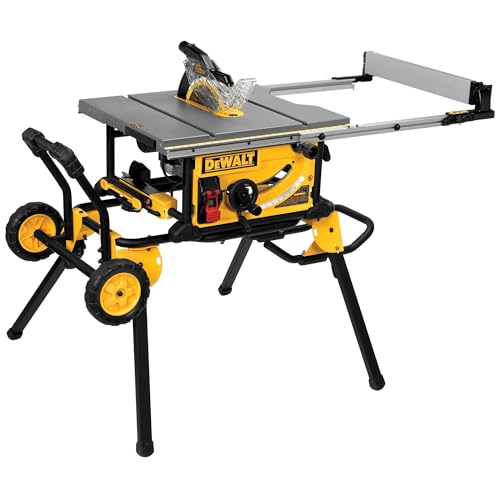
DEWALT offers a foldable rolling stand and a rack-and-pinion fence system to facilitate quick, precise fence adjustments. The 32-1/2″ rip capacity enables cutting larger materials including wide shelves and trim. This setup is ideal for workshop environments that require mobility between projects or work areas.
Best for: Professionals who need a durable, transportable table saw with a generous rip capacity. Better for: larger sheet-material work. Limitation: Assembly and weight may be a consideration for smaller spaces or frequent transport.
Buying Guide: Key Purchase Considerations
- Power and speed: Look for a motor around 15 amps for versatile hardwood cutting, and ensure speed remains steady under load to prevent bogging down on dense material.
- Portability vs. capacity: Choose folding stands or compact formats for portability, but confirm rip capacity and blade size meet your typical projects.
- Fence accuracy: Rack-and-pinion fences help keep the fence parallel to the blade, improving accuracy for repeated cuts and sheet-material work.
- Bevel and cross-cut capabilities: A 0–45° bevel range and 0–90° cross-cut capability are standard; ensure the bevel adjustment is easy to lock in and repeatable.
- Dust management: A built-in dust port or attachment support helps maintain a clean workspace and prolong blade life.
- Safety features: Clear blade guards, push sticks, and easily accessible power switches reduce the risk of injury during operation.
- Compatibility: If you already own jigs, dado stacks, or sleds, verify compatibility with your chosen saw’s throat plate and fence system.
Practical buyer tips
- For frequent site work, prioritize portability with a folding stand and quick fence alignment to save setup time.
- If you routinely cut full sheets, look for larger rip capacities and stable stands to minimize stock handling time.
- For hobby projects, a lighter, budget-friendly model with adequate safety features is often sufficient and easy to store.
Frequently Asked Questions
- How do I know if a table saw is portable enough for a jobsite? Answer: Check the weight, foldable or wheeled stand, and ease of setup in typical working spaces.
- What is the difference between a cabinet saw and a benchtop/table saw? Answer: Cabinet saws are heavier and more powerful with larger dust-collection systems, while benchtop/table saws prioritize portability and lighter weight.
- Why is a rack-and-pinion fence important? Answer: It provides precise, repeatable fence adjustments with less play, improving cut accuracy over time.
- Is a zero-clearance throat plate worth it? Answer: Yes, it reduces tear-out on delicate veneer and improves overall cut quality in many materials.
- What should I consider for dust collection? Answer: A built-in port and compatibility with your shop vacuum or dust collector helps maintain a clean workspace and blade longevity.
- Do I need dado capability? Answer: Dado capability is valuable for joinery and dado grooves; choose this if your projects frequently require grooving or dado cuts.