
Protect your home from outages with high-capacity solar backup generators designed for whole-house power. This guide compares top options that combine large battery capacity, rapid charging, and smart integration. Each entry highlights core specs, key features, and how it fits into a resilient home energy plan. Whether you want ultra-fast charging, modular expandability, or seamless automatic operation, these systems are built to keep essentials running when the grid goes dark.
| Product | Brand | Battery / Output | Key Benefit |
|---|---|---|---|
| EF ECOFLOW Delta Pro Ultra with Smart Home Panel 2 | EF ECOFLOW | 6144Wh battery, 7200W AC output (expandable) | Advanced home integration and scalable power |
| EF ECOFLOW 12kWh Power Station: Delta Pro Ultra | EF ECOFLOW | Up to 90kWh with extras, 7200W basic | Massive expandable capacity |
| EF ECOFLOW Solar Generator 4096Wh DELTA Pro 3 | EF ECOFLOW | 4096Wh, 7200W peak (12kW with boosts) | Flexible charging and 2-4 day backup |
| Anker SOLIX F2000 PowerHouse 767 | Anker | 2400W output, 6144Wh with options | Efficient, fast recharge and multiple ports |
| Generac Guardian 10kW Standby | Generac | 10kW with 100 Amp transfer switch | Reliable, whole-house automatic standby |
Below are five carefully chosen options that balance capacity, expandability, and real-world reliability for American homes. Each product section includes a concise summary of how it supports a whole-house backup strategy, followed by practical considerations for choosing the right system.
EF ECOFLOW Delta Pro Ultra with Smart Home Panel 2

The Delta Pro Ultra combines a 6144Wh battery with a 7200W continuous output, enabling 120V/240V operation and scalable AC power. The Smart Home Panel 2 enables prioritization of circuits to extend backup duration, while X-Fusion ensures stable 7200W output even during charging. Multiple charging methods include solar, wall outlets, vehicle chargers, and external generators, giving versatile resilience for homes with varying energy resources. Ideal for larger homes or those seeking seamless integration with home automation and prioritized circuits.
EF ECOFLOW 12kWh Delta Pro Ultra with Extra Battery

This Delta Pro Ultra configuration scales to a total of up to 90kWh with additional batteries, perfect for homes needing extended outages. The system supports up to 21.6kW AC output when three inverters are paired with the Smart Home Panel 2, and it maintains a 7200W baseline regardless of charge state. Flexible charging options—solar, AC, EV piles, and more—reduce downtime and enable long-term off-grid living if needed. This option targets households seeking maximum resilience and future-proof expansion.
EF ECOFLOW Solar Generator 4096Wh Delta Pro 3

This Delta Pro 3 model offers 4096Wh battery capacity with versatile charging methods and a 7200W baseline output. Its expandable architecture supports 2-4 days of essential home backup and can scale up to 90kWh when paired with extra batteries. The system is designed for remote monitoring via app, enabling circuit prioritization and intelligent energy management. It suits households that want a strong, flexible, and remotely controllable backup solution.
Anker SOLIX F2000 Portable Power Station
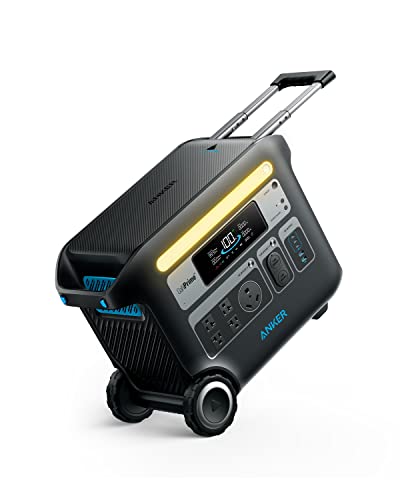
The Anker SOLIX F2000 (PowerHouse 767) offers 2400W continuous output with a 6144Wh expansion—suitable for powering multiple devices during outages. HyperFlash fast recharge enables 0–80% in about 1.4 hours, and SurgePad technology allows high-wattage devices to operate without overloading. With numerous ports, it supports simultaneous charging for many devices, making it a robust option for medium-sized homes or mobile backup scenarios where mobility is desired without sacrificing power capacity.
Generac Guardian 10kW Standby

Generac Guardian stands out for its tried-and-true standby performance with a 10kW automatic transfer switch and a dedicated remote monitoring capability via Mobile Link Wi-Fi. The 100 Amp, 16-circuit transfer switch provides substantial whole-house protection, and the system is built to endure long-term outdoor use with a durable enclosure. This option emphasizes automatic operation and reliable long-term service, making it a solid choice for homeowners who want a plug-and-forget solution that activates during an outage without manual intervention.
Buying Guide: Key Considerations for Whole-House Solar Backups
- Capacity and expandability: Assess required Wh/kWh for essential circuits and future growth. Look for modular battery systems that allow adding more storage as needed.
- Output and efficiency: Match continuous watts to your critical loads (refrigeration, HVAC, pumps, lighting). Consider peak/ surge capabilities for startup-heavy appliances.
- Charging options: Favor systems offering solar compatibility, utility-powered charging, and grid-tied or hybrid charging for faster replenishment after an outage.
- Automation and integration: For hands-off operation, choose units with automatic transfer switches or smart panels that prioritize essential circuits and communicate with home automation platforms.
- Reliability and support: Prioritize brands with strong warranty coverage, remote monitoring, and robust customer support for long-term reliability.
- Tax incentives and economics: Some systems qualify for residential clean energy credits; confirm eligibility with your utility and local tax guidelines to optimize returns.
- Portability vs. fixed installation: Decide whether you need a portable backup solution or a permanently installed standby system for seamless protection against outages.
- Safety and compliance: Ensure equipment meets relevant safety standards and that professional installation is considered where required, particularly for high-capacity systems.
When choosing a whole-house solar backup, evaluate how each option fits your home’s energy profile, climate, and typical outage duration. A scalable, automated setup that aligns with existing solar arrays and smart panels can provide reliable, hassle-free resilience, helping maintain essential comfort and safety even when the grid is down.