
Protecting a PC, peripherals, and important data from outages is essential for productivity and peace of mind. This article highlights reliable UPS battery backups that pair well with American home and office environments. We review diverse options—from compact units suitable for single‑monitor setups to higher‑capacity models designed for multi‑device configurations—so you can choose the right balance of runtime, protection, and ease of use.
| Product | Brand | Capacity | Key Benefit |
|---|---|---|---|
| BE600M1 Back-UPS | APC | 600 VA / 330 W | Compact, USB charging, solid surge protection |
| BX1500M Back-UPS | APC | 1500 VA / 900 W | Higher runtime for multi‑device setups |
| CP1500PFCLCD PFC Sinewave | CyberPower | 1500 VA / 1000 W | Pure sine wave, multiple outlets, LCD panel |
| BE425M | APC | 425 VA / 225 W | Compact, wall-mountable, easy protection |
| GOLDENMATE 1000VA LiFePO4 | GOLDENMATE | 1000 VA / 800 W | Lithium battery, long lifespan, eight outlets |
APC BE600M1 Back-UPS With USB Charger
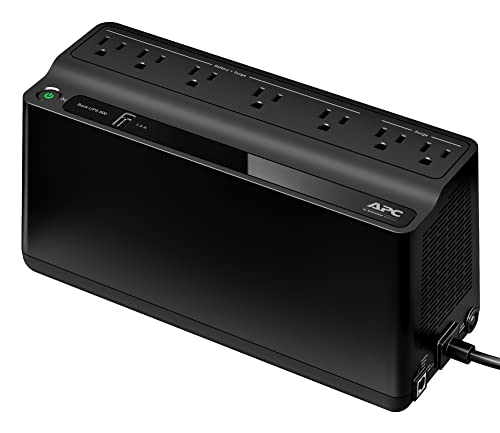
The APC BE600M1 is a compact Uninterruptible Power Supply designed for small PC setups and peripherals. It supplies 600 VA / 330 W of battery backup power across five battery-backed outlets and two surge-only outlets. A dedicated USB charger port adds convenient power for smartphones or smaller devices, while the surge protection helps guard connected equipment against surges and spikes. This unit is well-suited for single‑monitor desks, home workspaces, and dorm rooms where space is at a premium.
APC BX1500M Backup Battery Surge Protector

The APC BX1500M provides a higher capacity solution, with 1500 VA and 900 W of backup power. Designed for setups that include a PC, multiple monitors, or network gear, it features ten outlets split between battery backup and surge protection. This model supports more demanding configurations and helps maintain uptime during longer outages. It also offers an easy PowerChute management interface for Windows users, and is compatible with typical Mac energy settings through native OS tools.
CyberPower CP1500PFCLCD PFC Sinewave UPS

The CyberPower CP1500PFCLCD delivers a robust 1500 VA / 1000 W with a pure sine wave output, making it ideal for systems with active PFC power supplies and sensitive electronics. It includes 12 outlets—six battery-backed and six surge-protected—and two USB charging ports (Type-A and Type-C). A color LCD panel provides real-time status, loads, and runtime, helping users manage power effectively. This model is a versatile choice for mid‑ to high‑end workstations that require stable voltage and reliable protection.
APC BE425M Battery Backup Surge Protector

The BE425M is a compact, 425 VA / 225 W UPS option that provides essential battery backup for a modest PC setup or a home office peripheral array. It includes six outlets, with four offering battery backup and surge protection and two offering surge protection only. A short five-foot cord and a right-angle plug simplify placement under desks or mounted on a wall. Note that the battery is not user-replaceable, but service replacement is possible by a qualified technician, making it a low‑friction choice for simple protection needs.
GOLDENMATE 1000VA LiFePO4 UPS

The GOLDENMATE 1000VA LiFePO4 UPS uses a lithium iron phosphate battery for extended life, offering an estimated lifespan of over 10 years and more than 5,000 charge cycles. It features eight outlets providing both battery backup and surge protection, plus a built-in Battery Management System and an LCD display. The LiFePO4 chemistry reduces maintenance and lowers total cost of ownership compared with traditional lead-acid solutions, making it a compelling option for long‑term reliability in larger desks or small offices.
Buying Guide: Key Considerations for PC UPS Purchases
Choosing the right UPS involves balancing runtime, protection features, and system compatibility. Consider the following perspectives to ensure you select a model that fits your needs:
- Runtime and capacity: Estimate how long you need to keep critical equipment powered during an outage. For a single PC and monitor, a unit in the 600–1000 VA range may suffice; for multi‑monitor setups or home servers, higher capacities (1000–1500 VA or more) are advisable.
- Output waveform: Sensitive electronics with active PFC power supplies benefit from pure sine wave UPS outputs. If you only run basic peripherals, a simulated sine wave unit may be adequate.
- Number and type of outlets: Decide how many devices require backup power versus surge protection. Some models provide a mix of battery-backed and surge-only outlets to match device needs.
- Management features: LCD displays, software integration, and data port protections help you monitor status and gracefully shut down systems to prevent data loss.
- Battery type and lifespan: Lead‑acid units are common and affordable, but lithium iron phosphate (LiFePO4) offers longer life and lower maintenance at a higher upfront cost.
- Physical footprint and placement: Compact units fit under desks or on shelves; wall‑mountable designs save space in tight areas.
- Expandability and future proofing: For evolving setups, choose models with higher容量 and more outlets to accommodate additional peripherals over time.
- Warranty and service: Check warranty coverage and whether batteries are user‑replaceable or service‑replaceable to minimize downtime.
In practice, the best UPS choice blends the right capacity with practical features: reliable surge protection, manageable runtime, and intuitive management tools. For home offices with modest needs, compact APC models or CyberPower units with LCD readouts offer straightforward protection. For more demanding setups—multiple PCs, workstations, or network gear—higher‑capacity APC BX1500M or CyberPower CP1500PFCLCD can provide robust uptime and clearer power status visibility. Lithium options from GOLDENMATE introduce longer lifespans and lower maintenance, which may justify the higher upfront cost for long‑term use.
Remember to verify compatibility with your operating system’s power settings and any networked devices. A well‑matched UPS reduces downtime, safeguards data, and helps maintain productivity during power disruptions.