
Answering the common buyer need for easy, practical wood splitting, this guide highlights five top tools designed to split wood with less effort. These picks are suitable for homeowners, DIYers, campers, and anyone who regularly handles firewood. Each option targets a different splitting scenario—from heavy wedges designed for larger logs to drill-bit style solutions for quick kindling. Below you’ll find quick comparisons, followed by in-depth product sections and a practical buying guide to help you pick the right tool for your tasks.
| Product | Brand | Best For |
|---|---|---|
| ESTWING Sure Split Wedge | Estwing | Hefty logs, steady splits |
| SPEED FORCE Firewood Kindling Log Splitter | SPEED FORCE | Easy kindling, quick setup |
| KABIN Kindle Quick Compact Log Splitter | KABIN | Long and thick logs, safety focus |
| BAYQISI Kindling Splitter | BAYQISI | Cast iron design, portable |
| Firewood Splitter Drill Bits Set | Fracavi | Drill-assisted, variable sizes |
ESTWING Sure Split Wedge
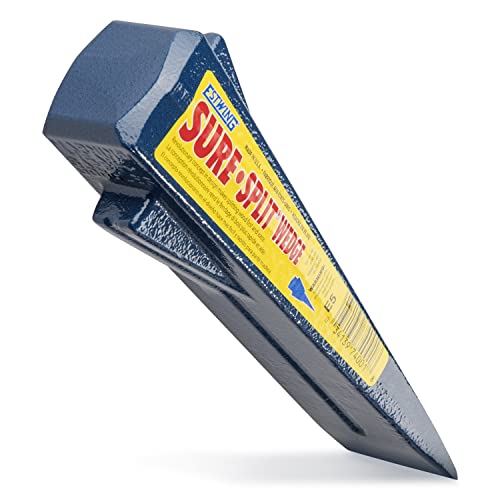
The Estwing 5-pound Sure Split Wedge is built for heavy splitting tasks. The fins on each side generate outward force as the wedge drives into wood, creating a more powerful split with every impact. A hand-sharpened edge at the base helps the wedge seat in established grooves and drive true on contact, making it a reliable choice for seasoned users. Best for homeowners who frequently tackle larger logs with a mallet or hammer, and for those who value a durable, USA-made tool. A potential limitation is that the wedge relies on a hammer or maul for operation, which may be cumbersome in tight spaces.
Who this is best for: Professionals and serious DIYers who split big rounds and want a robust, long-lasting wedge. Why selected: It combines forged steel construction with a beveled edge and side fins to maximize splitting action, reducing overall effort per log.
Caution: Use protective headgear and gloves to prevent impact injuries when driving the wedge with a sledge hammer.
SPEED FORCE Firewood Kindling Log Splitter

The SPEED FORCE kindling wedge emphasizes ease of use and stability. Constructed from nodular cast iron with an all-weather coating, it’s designed for quick, repeated splits without frequent maintenance. The base includes four holes for anchoring to a stump or surface, and the unit can be fixed with supplied screws for added stability. Best for users who want a simple, drill-free setup for quick kindling and smaller splits. A limitation is that its performance may be less ideal on very large or knotty logs.
Who this is best for: Those who prefer a simple, stable, mountable tool for fast kindling. Why selected: The emphasis on safety and stability, plus easy anchoring, makes it practical for repeated, controlled use.
Caution: Ensure proper anchoring to prevent movement during use, especially on uneven ground or soft surfaces.
KABIN Kindle Quick Compact Log Splitter

The Kindle Quick combines safety and efficiency with a design that accommodates longer and thicker logs. The extra-wide mouth supports larger pieces, and the slanted, alternating teeth help prevent jams by slicing at an angle. A bolt-hole base allows attachment to a stump or anchor, boosting stability and height for easier operation. Best for users who want a safer, more controlled alternative to an axe while handling bigger rounds. Limitation: it may require a sturdy mounting point for optimal performance.
Who this is best for: Campers, backyard woodworkers, and families seeking a safer alternative to heavy mauls for moderate logs. Why selected: Its four-direction split design and anchored base provide steadiness and consistent results on standard firewood sizes.
Caution: Fixed mounting is recommended for best results; avoid using on unstable surfaces.
BAYQISI Kindling Splitter

The BAYQISI cast-iron kindling splitter includes a 3-pound hammer for assisted splits and weighs 7.5 pounds in a 9.8-inch tall form. Its one-piece molding design minimizes welding points for durability, while a rubber sleeve on the blade improves handling safety and reduces accidental contact. Best for users who want a portable, more robust option with integrated hammer support. Limitation: heavier setup that may not suit casual, light-duty use or very small logs.
Who this is best for: Woodworkers seeking a sturdy, all-in-one splitter with a dedicated hammer. Why selected: The integrated hammer and one-piece construction provide practical reliability for frequent use.
Caution: For safety, keep hands clear of the blade edge and wear protective gear during operation.
Six-Piece Wood Splitter Drill Bits Set
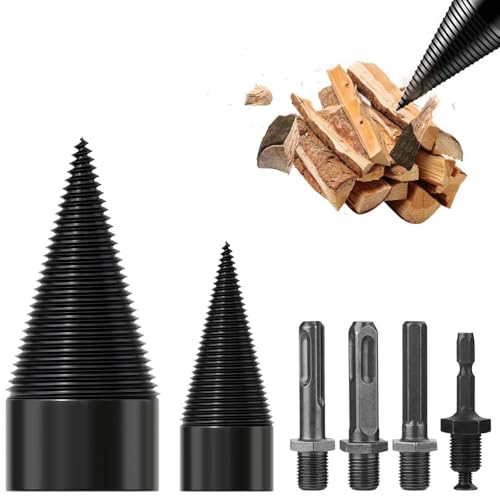
This set includes two drill bit sizes (32mm and 45mm) with four adapter heads (round, square, 3/8″ hex, 1/4″ hex). It’s designed for high compatibility with most drills, enabling a plug-and-play approach to splitting firewood of various diameters. Best for users who want a multipack solution and the flexibility to split different log sizes without buying multiple tools. Limitation: effectiveness is dependent on a compatible drill and user technique; improper use can reduce results.
Who this is best for: DIYers who already own drills and want a versatile, multi-size split option. Why selected: The duo of drill bits plus adapters covers a wide range of diameters and applications, reducing tool clutter.
Buying Guide: Practical Considerations For Wood Splitting Tools
- What log sizes will you split? Heavy wedges excel at large rounds, while drill-bit sets handle smaller pieces and kindling.
- Do you need portability or permanent mounting? A portable wedge is flexible; a fixed-base splitter offers steadiness for repeat work.
- Material and durability: Cast iron and forged steel offer longevity for regular use; consider weight for handling ease.
- Safety features: Look for non-slip bases, edge bevels, and secure mounting to minimize injury risk.
- Power source: Manual wedges require hammering; drill-bit systems rely on a power drill—ensure compatibility with your tools and space.
FAQ
- Q: Which tool is best for large, hard logs? A: Heavy-duty wedges with forged steel and wide bases are designed for larger rounds and tougher wood.
- Q: Are drill-bit splitters safer than wedges? A: Drill-bit methods reduce swinging and manual labor, but ensure drill stability and proper technique to avoid slips.
- Q: Can these tools replace a traditional axe? A: For kindling and lighter splits, drill bits and compact wedges can substitute; for large, stubborn logs, a robust wedge or maul may still be needed.
- Q: Do I need to mount wedges? A: Mounting provides stability and consistent results, especially for longer sessions or uneven ground.
- Q: Which tool is best for beginners? A: A simple, anchored splitter or a lightweight wedge with clear safety guides is ideal for new users.
- Q: Are there safety considerations with cast-iron tools? A: Cast-iron tools are durable but can be heavier; handle with care and wear protective gear.