
Choosing the right solar panel wattage per panel depends on space, system goals, and how much daily energy you need. This guide reviews five high-efficiency options, highlighting foldable, portable, and fixed-panel designs that maximize wattage per panel without sacrificing portability or durability. Each option emphasizes advanced cell technologies, shading resilience, and compatibility with common power stations and off-grid setups.
Summary Table of Chosen Products
| Product | Brand | Approx. Panel Wattage | Key Features |
|---|---|---|---|
| Renogy 200W Portable Solar Panel | Renogy | 200W | 25% efficiency, 16BB N-Type cells, lightweight foldable design |
| Renogy 400W ShadowFlux (2×200W) | Renogy | 400W total (two 200W panels) | Anti-shading ShadowFlux, 25% efficiency, compact |
| DOKIO 800W (2×400W) | DOKIO | 800W | 12/24V bank compatibility, long MC4 leads, outdoor-ready |
| Callsun 400W (2×200W) | Callsun | 400W total | N-Type 16BB cells, bifacial option, shading-tolerant |
| Renogy 400W Portable Solar Panel Blanket | Renogy | 400W | 25% efficiency, 16-fold lightweight blanket, versatile mounting |
Below are five product-focused sections. Each highlights why the panel’s wattage per panel matters and how its design supports reliable power in camping, RVing, or off-grid scenarios.
Renogy 200W Portable Solar Panel

The Renogy 200W Portable Solar Panel uses 16BB N-Type cell technology to reach around 25% efficiency, improving power generation in limited spaces or cloudy conditions. Its foldable, lightweight design—about 13.89 pounds—facilitates easy transport and storage, making it ideal for RVs, camping, and off-grid setups. The panel includes MC4 output for charging portable power stations or 12V battery systems and offers USB-C PD and USB-A outputs for direct device charging. This versatility supports charging smartphones, laptops, and cameras while maintaining steady energy supply during outdoor trips.
Renogy 400W ShadowFlux Anti-Shading Solar Panel (2×200W)

This 400W package leverages Renogy’s ShadowFlux anti-shading technology, reducing power loss when one panel area is shaded by trees or structures. Its N-Type 16BB cells deliver up to 25% efficiency, minimizing hot spots and micro-cracks for longer panel life. The design is notably compact for a two-panel setup, strengthening space efficiency on rooftops or within vehicle storage. Ideal for RVs and marine applications, the system maintains performance under partial shading while supporting reliable charging to power stations and 12V systems in variable sunlight.
DOKIO 800W (2×400W) Mono Solar Panels

The DOKIO 800W kit comprises two 400W panels designed for 12/24V banks, with 3 m MC4 leads per panel for longer runs to a controller or battery system. The tempered glass and aluminum frame deliver outdoor durability, and the kit supports parallel operation for stable output in off-grid environments. With extended leads and robust construction, this solution suits backyard sheds, cabins, or off-grid vehicles needing substantial daily energy with minimal joints and quick setup.
Callsun N-Type 400W (2×200W) Solar Panels

Callsun’s 400W set uses N-Type 16BB cells with bifacial capability to harvest additional rear-side light, boosting total energy output by up to 30% under optimal conditions. The dual-panel configuration increases total wattage per installation while maintaining shading resilience through TwinCell anti-shade technology. These panels are well-suited for RVs, boats, and home rooftop arrays where space efficiency and higher daily yields are priorities, especially in reflective environments like snow or light-colored roofs.
Renogy 400W Portable Solar Panel Blanket
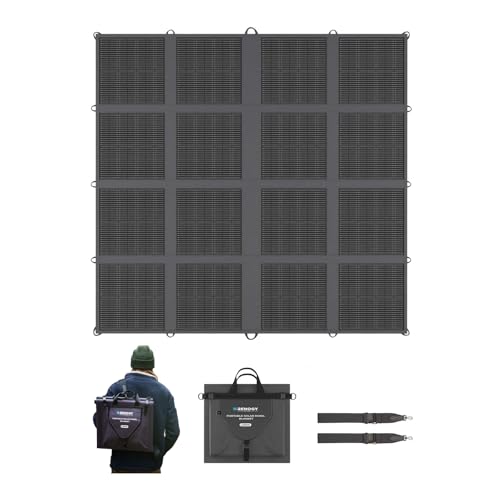
This 400W Renogy solar blanket combines a 16-fold, ultralight design with 25% efficiency thanks to 16BB N-Type technology. It folds to a backpack-friendly size, enabling versatile deployment—across a windshield, on the ground, or suspended between racks. The blanket approach supports rapid setup for camping, RV trips, or emergency backup, delivering full 400W output regardless of installation style. It’s particularly appealing for users who prioritize compact storage without sacrificing power in off-grid scenarios.
Buying Guide: Key Purchase Considerations
When selecting solar panels based on watts per panel, consider efficiency, cell technology, and mounting options. N-Type cells often provide higher efficiency and better performance in shading than traditional P-type cells. Bilateral (bifacial) panels can increase output in sunlit environments with reflective surfaces. For portable use, foldable or blanket formats save space but still deliver solid wattage. A robust frame, weather resistance, and compatible connectors are essential for long-term reliability in off-grid settings.
Other important factors include:
- System voltage compatibility: Ensure panels match your battery bank (12V, 24V, or higher).
- Shading tolerance: Shading-aware designs like ShadowFlux or TwinCell help maintain output in real-world conditions.
- Portability vs. fixed installs: Portable options maximize flexibility but may offer lower continuous output than fixed rooftop arrays.
- Durability and weather rating: Look for IP ratings, tempered glass, and corrosion-resistant frames for outdoor use.
- Cable length and connectors: Longer MC4 leads reduce the need for additional extensions, minimizing losses and joints.
In sum, higher-wattage panels per unit can reduce the total number of panels needed for a given energy target, while advanced cell technology and shading resistance improve daily energy production. Depending on space, mobility needs, and intended use—RV camping, off-grid cabins, or remote workstations—these options offer a range of wattage-per-panel choices with practical benefits for American outdoor lifestyles.