
For shed power, selecting a reliable solar panel setup matters. This guide highlights five well‑matched options that suit off‑grid use, RV or cabin sheds, and backup power needs. Each pick combines efficiency, durability, and ease of installation to help you compare kits and panels that fit typical shed environments. Read on for concise product overviews, practical considerations, and a buying guide to finalize your choice.
| Product | Brand | Link |
|---|---|---|
| ECO-WORTHY 200W Solar Panel Kit | ECO-WORTHY | Amazon |
| ECO-WORTHY 400W Solar Panels | ECO-WORTHY | Amazon |
| Renogy 200W Starter Kit | Renogy | Amazon |
| ECO-WORTHY 100W Solar Panel Kit | ECO-WORTHY | Amazon |
| APILAB Solar Shed Light | APILAB | Amazon |
ECO-WORTHY 200W Solar Panel Kit

The ECO-WORTHY 200W kit uses high-efficiency monocrystalline panels with a robust 30A PWM charge controller suitable for RVs, campers, and off‑grid sheds. Daily output of about 800Wh under four peak sun hours makes it a practical choice for cabin sheds, boats, and remote outbuildings. The durable aluminum frame resists corrosion, and the IP65 junction box protects wiring in exposed environments. Wind and snow loads are handled up to 2400Pa and 5400Pa, respectively, for long‑term performance.
ECO-WORTHY 400W Solar Panels

This 400W panel setup includes four 100W monocrystalline modules designed for off‑grid PV systems. With 23% efficiency via PERC technology, it delivers up to around 1600Wh daily in favorable conditions. Pre‑installed bypass diodes reduce power drop from shading, and the system features IP65 rated junction boxes, a corrosion‑resistant aluminum frame, weatherproof components, and a 25‑year durability expectation. The panels are built to withstand wind and snow loads common in sheds and outdoor installations.
Renogy 200W Starter Kit

The Renogy 200W Starter Kit combines a 200W monocrystalline solar panel with a 30A PWM charge controller. It’s designed to deliver about 1000Wh per day under five peak sun hours and features a heat‑dissipating back sheet for reliable performance in varied climates. The kit emphasizes solid construction with durable encapsulation and a multi‑layer lamination system to protect cells. The Wanderer PWM controller supports several battery types, including sealed, gel, flooded, and lithium, with four‑stage charging for efficient battery care.
ECO-WORTHY 100W Solar Panel Kit

This compact 100W solar panel kit offers a practical option for smaller sheds or occasional power needs. It includes a 30A PWM controller, mounting hardware, and tray cable. The 100W mono panel uses an aluminum frame designed for decades of use and can withstand strong weather conditions. With an IP65 rated junction box and 23% cell efficiency, it provides reliable daily output, especially in shaded or partially sunny sites typical of shed rooftops or lean‑tos.
APILAB Solar Shed Light
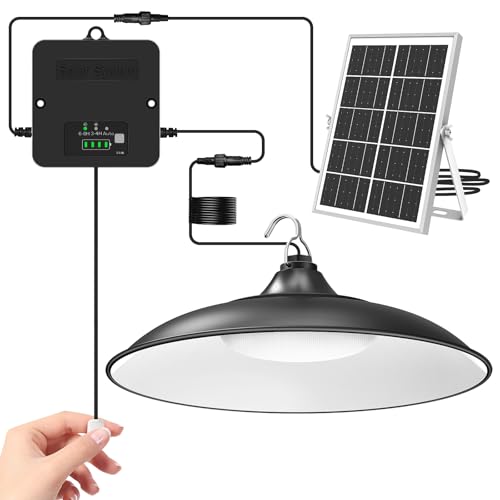
While primarily a lighting solution, the APILAB solar shed light is relevant for shed upgrades powered by solar. It features a 6000mAh battery and three lighting modes, plus a pull string for easy operation without a remote. The large solar panel provides daytime charging, supporting both indoor and outdoor sheds. Its IP65 rating ensures weather resistance for partially sheltered areas and garages. This option complements solar panel systems by delivering efficient, motion‑light coverage where outlets are sparse.
Buying Guide: Key Considerations For Shed Solar Upgrades
- Power needs and daily usage: Estimate wattage of essential devices (lights, small tools, chargers) and translate into daily amp‑hour requirements. Choose a kit that delivers sufficient Wh per day under typical sun hours in your location.
- Panel type and efficiency: Monocrystalline panels offer higher efficiency and space efficiency, useful for compact shed roofs. PERC technology can boost output in low‑light conditions, improving reliability in winter or cloudy days.
- Charge controller type: PWM controllers are affordable and adequate for smaller systems, while MPPT controllers optimize energy harvest in variable conditions. For larger shed setups, MPPT can improve performance in mixed weather.
- Durability and weather resistance: Look for corrosion‑resistant frames, IP65 or higher junction boxes, and tested wind/snow load tolerances to ensure long‑term performance in outdoor sheds.
- System expandability: If you anticipate future growth, pick modular kits that allow adding panels or upgrading controllers without reworking existing wiring.
- Installation considerations: Roof space, tilt angle, and shading influence output. Consider mounting hardware, cabling length, and safety features for DIY installation or professional setup.
- Battery compatibility: Ensure the controller supports the battery type you plan to use (sealed, gel, flooded, or lithium). Battery size should align with your daily energy target and depth‑of‑discharge preferences.
- Reliability and warranties: Check panel and controller warranties, as well as reputational reliability for replacement parts and support in your region.