
For recreational vehicles, reliable solar power means longer trips off-grid with fewer compromises. The following five solar panel kits combine high efficiency, portability, and durable construction to keep RV systems charged on sunny days and cloudy ones alike. This guide highlights key features to consider, including efficiency, weight, durability, and compatibility with common RV power stations and 12V systems.
| Product | Brand | Key Benefit |
|---|---|---|
| ECO-WORTHY 200W Panel Kit | ECO-WORTHY | |
| Renogy 200W IP65 Foldable Panel | Renogy | |
| Renogy 100W Flexible Panel | Renogy | |
| SOKIOVOLA 200W Portable Panel | SOKIOVOLA | |
| Ecosonique 200W Portable Panel | Ecosonique Technology |
ECO-WORTHY 200W Panel Kit With PWM Controller

The ECO-WORTHY 200W kit delivers robust off-grid performance for RVs and campers. It uses high-efficiency monocrystalline solar cells, offering up to 21.5% higher efficiency in suitable light. The kit includes a 30A PWM charge controller and a durable aluminum frame designed to withstand wind and snow loads, making it a practical choice for variable camping sites. With an IP65 junction box, this panel is protected against dust and water exposure typical in RV environments.
Renogy 200W Portable IP65 Foldable Solar Panel

Renogy’s 200W foldable solar panel emphasizes efficiency and portability. Featuring 16BB N-Type cells, it achieves up to 25% efficiency, enabling faster energy generation in limited space or under overcast conditions. Weighing about 13.89 pounds, it folds to compact dimensions for easy storage in RV compartments. The design supports charging multiple devices via USB-C PD and USB-A ports, and it can connect to MC4 outputs to charge power stations or 12V battery systems for RV use.
Renogy 100W Flexible Solar Panel
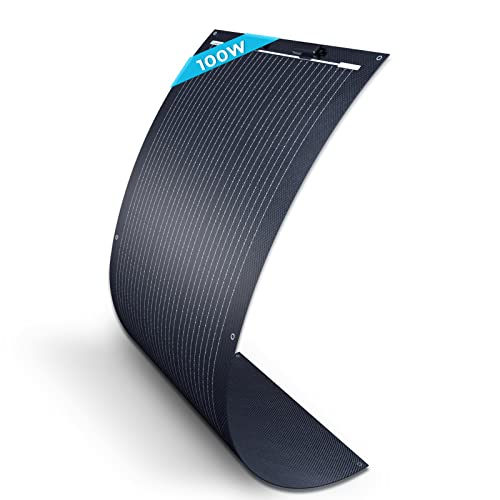
Renogy’s 100W flexible panel is designed for curved RV surfaces and tight spaces. It uses half-cut PERC technology to improve light capture and efficiency, delivering roughly 22% typical efficiency in practice. The panel is lightweight—about one-third the weight of rigid panels—and installs on irregular surfaces with a low-profile, glare-free appearance, making it suitable for roof curvature, boat decks, or van conversions.
SOKIOVOLA 200W Foldable Portable Panel
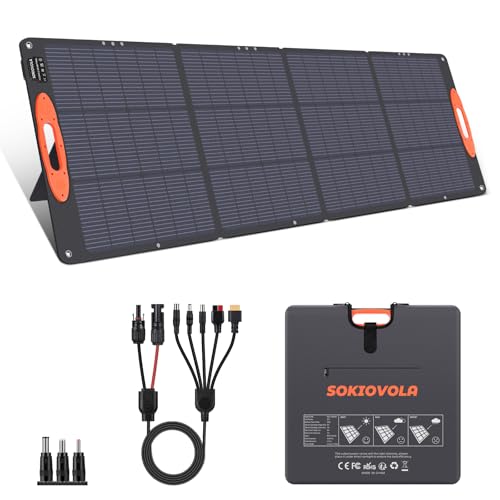
This 200W foldable panel by SOKIOVOLA emphasizes portability and rugged durability. It folds to a compact size with a magnetic handle for convenient carrying and includes multiple mounting holes to secure it on an RV. With a conversion efficiency around 25% and IP68 waterproofing, the panel is designed to withstand outdoor use and provide reliable charging for RV batteries and power stations during trips.
Ecosonique 200W Portable Panel With Kickstand

The Ecosonique 200W panel focuses on portability with a lightweight 6-fold design, tipping the scales at about 10.6 pounds. It folds down to a compact 18″ x 16.3″ footprint and includes kickstands to optimize sun exposure. It supports multiple output options, including USB-C PD3.0 and USB-A QC3.0, enabling direct charging for laptops and devices in addition to charging power stations via MC4 outputs. Efficiency reaches up to 23.5%, helping RV users maximize sunny travel days.
Buying Guide: What To Consider When Choosing RV Solar Panels
When selecting solar panels for an RV, several factors determine long-term value and performance. These considerations help balance efficiency, durability, and ease of use with the specific needs of the vehicle and traveler.
- Panel Type and Efficiency: Monocrystalline cells generally offer higher efficiency and better performance in limited space, while flexible panels excel on curved or irregular surfaces. Aim for 20–25% efficiency for portable kits, higher if space is constrained.
- Durability and Weather Resistance: RV use entails exposure to wind, rain, snow, and road debris. Look for IP ratings (IP65 or higher), durable frames, and ETFE coatings for long-lasting performance.
- Weight and Portability: If you frequently move panels between vehicles or store them in tight compartments, lightweight foldable or flexible panels are advantageous.
- Mounting and Compatibility: Consider mounting options and cable types. Panels with MC4 outputs and standard connectors simplify integration with RV batteries, power stations, and inverters.
- Charge Controller Type: PWM controllers are common and affordable, but MPPT controllers offer higher efficiency, especially in partial shading or variable conditions. Some kits include integrated MPPT controllers for better performance.
- Output Options: USB-C PD and USB-A outputs add versatility for charging portable devices directly. For large energy needs, ensure compatibility with your power station or 12V battery bank.
- Durability on the Road: Look for corrosion-resistant frames, strong junction boxes, and protective coatings to withstand long-term usage on moving vehicles.
- Warranty and Support: A solid warranty and accessible customer support reduce risk in case of performance issues or defects during travel.
- System Sizing: Estimate daily energy consumption (in watt-hours) and compare it to expected solar production under typical travel conditions. Over-sizing a panel set can reduce reliance on generator use or shore power.
Overall, the five selected products offer a balance of efficiency, portability, and rugged construction suitable for RV travelers. Depending on your roof space, power needs, and intended travel style, you can mix and match panels with MPPT controllers and compatible power stations to maintain battery health and keep devices ready for every adventure.