
Farm operations demand dependable, scalable solar solutions that withstand outdoor conditions and provide steady energy. The following five panels are selected for farm use, blending efficiency, shading resilience, and durable construction. This guide helps compare options for irrigation systems, cold storage, and remote facilities, ensuring sustained power even under variable sunlight.
Summary Table
| Product | Brand | Key Feature |
|---|---|---|
| Renogy ShadowFlux 400W (2-Pack) | Renogy | Anti-shading technology, 25% efficiency, compact |
| ECO-WORTHY 400W Panels (4x100W) | ECO-WORTHY | Low-light performance, IP65 junction box, 25-year durability |
| Renogy 200W 24V Solar Panel | Renogy | Advanced encapsulation, high wind/snow tolerance |
| Callsun N-Type 400W (2x200W) | Callsun | Bifacial potential, 16BB/25% efficiency, anti-shade design |
| Rvpozwer 400W Solar Panel (4x100W) | Rvpozwer | 25% N-Type, robust 18BB design, durable frame |
Renogy ShadowFlux 400W Panels (2-Pack)

This pair deploys ShadowFlux Anti-Shading Technology to sustain power when shading from trees, buildings, or vegetation occurs near farm installations. The 400W module uses N-Type cells with 16BB busbars, achieving up to 25% efficiency while reducing hot spots and micro-cracks for longer durability. Its compact footprint is 7% smaller and 10% more compact than typical PERC panels, a benefit for rooftop or limited-space farm sites. The design supports reliable energy output across variable farm layouts and weather conditions.
ECO-WORTHY 400W Panels (4x100W)

A 4-piece 100W setup designed for off-grid and farm applications, offering strong performance in low-light conditions. Each panel arrives with pre-installed bypass diodes in an IP65-rated junction box to minimize shade-related power drops. The 23% efficiency (23% matched in the spec) benefits daily farm output, especially in partially shaded fields. The system is built to endure high winds and heavy snow, backed by a 25-year durability emphasis and corrosion-resistant framing.
Renogy 200W Solar Panel 24V

Renogy’s 200W panel targets reliability for RVs, farms, and off-grid sites. It includes multi-layer encapsulation for longevity and EL-tested cells that reduce hot-spot formation. The IP65-rated junction box, corrosion-resistant aluminum frame, and 2400Pa wind and snow load tolerance support farm deployments exposed to outdoors. The panel’s versatility extends to ground mounts, on-grid, and off-grid inverter setups, offering a solid balance of efficiency and durability for farm energy needs.
Callsun N-Type 400W Two-Pack

This set uses N-Type 16BB high-efficiency cells with bifacial potential and anti-shade technology. Each 200W unit can deliver up to 25% efficiency, with a design that captures additional rear-side light to boost overall output. The twin-module layout improves shading tolerance by up to 50% compared to single-panel configurations, providing more dependable energy for farm operations when trees or structures partially shade the installation.
Rvpozwer 400W Solar Panel System
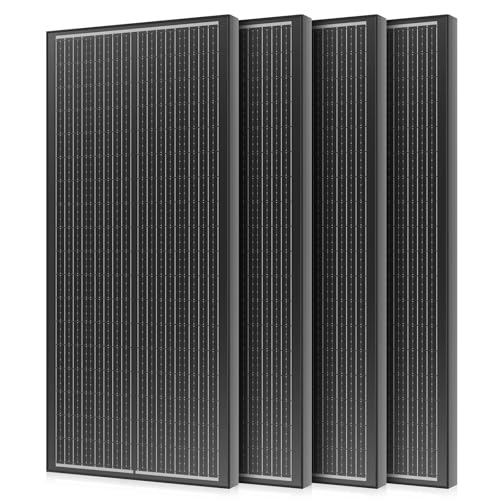
Rvpozwer’s 400W configuration uses 18BB back design with 25% efficiency in N-Type cells and a robust frame built to endure farm environments. The system often comes in a multi-panel array (4x100W) suitable for rooftop farms or field installations. Its corrosion-resistant hardware, tempered glass, and IP68 readiness support long-term outdoor use, with the potential to deliver consistent energy for irrigation pumps or cold storage during prolonged sun exposure.
Buying Guide: Key Considerations For Farm Solar Installations
When selecting solar panels for farm use, consider capacity, shading resilience, and durability against weather. A few angles to weigh:
- Shading tolerance: Anti-shading and bifacial designs help farms with nearby trees, buildings, or equipment that cast shadows on panels.
- Efficiency vs. surface area: Higher efficiency panels produce more power per square foot, beneficial for limited rooftops or compact barns.
- Durability: Look for high wind and snow load ratings, corrosion resistance, and robust frames suitable for rural settings.
- Durability of components: IP-rated junction boxes, EL-tested cells, and reliable bypass diodes reduce performance loss due to shade and aging.
- System type: Decide between fixed rooftop arrays, portable setups for temporary deployments, or ground-mounted arrays for larger farms.
- Maintenance and longevity: Panels with long warranties (20–25 years) and proven field performance help minimize total cost of ownership.
- Electrical integration: Ensure compatibility with inverters, charge controllers, and battery banks used in farm operations.
The right combination balances upfront costs with long-term reliability for irrigation, cooling, and storage. For farms needing flexibility, a mix of higher-efficiency and shading-tolerant modules can stabilize output across seasons and varying sun exposure. Always verify mounting hardware compatibility and local weather considerations before installation.