
When you need a compact, serrated edge for precise slicing, peeling, or trimming, a small serrated knife is ideal. This guide highlights five top picks that appeal to home cooks, hobbyists, and professionals seeking accuracy, control, and durability in a compact blade. Each product section explains who it’s best for, why it was selected, and any notable limitations.
| Product | Best For | Why It Stands Out |
|---|---|---|
| Victorinox 3.25 Inch Swiss Classic Paring Knife | Garnishing, peeling, and precise prep | Short blade, ergonomic handle, reliable Swiss design |
| OXO Good Grips 5-in Serrated Utility Knife | Tomatoes and citrus without crushing | Soft grip, durable stainless blade, balanced feel |
| Omesata Tomato Knife | Tomato-centric slicing | Ultra sharp serrated edge for clean cuts |
| Cutluxe Serrated Kitchen Utility Knife – 5″ | Versatile kitchen use | Full tang, ergonomic pakkawood handle, razor edge |
| MATTSTONE HILL 4.7″ Serrated Knife | Small multipurpose prep | Forged stainless steel, comfortable grip |
Victorinox 3.25 Inch Swiss Classic Paring Knife

Best for: cooks who want a compact tool for garnishing, peeling, or precision tasks. The blade’s short length supports accuracy in small prep jobs, while the contoured Fibrox-inspired handle ensures a secure grip even when wet.
Why selected: This multipurpose serrated paring knife excels in tasks requiring fine control, such as mincing and slicing delicate fruits. The ergonomic handle promotes comfortable use during extended prep sessions.
Limitation: The 3.25-inch blade is extremely small for larger tasks, so it’s not ideal for heavy cutting or breaking down larger produce.
HENCKELS Statement Razor-Sharp 5-inch Serrated Utility Knife

Best for: households needing a versatile small knife for tomatoes and soft-skinned produce. Its German engineering emphasizes durability and edge retention for daily kitchen use.
Why selected: The razor-sharp edge supports precise cuts with minimal effort, and the knife’s design aims for longevity. It’s a solid all-around choice for those who want a small serrated option with a robust build.
Limitation: At 5 inches, it’s larger than a traditional paring knife and may feel heavier for very intricate tasks.
OXO Good Grips 5-in Serrated Utility Knife

Best for: home cooks who want reliable performance for cutting tomatoes, citrus, and other delicate foods without crushing them. The soft, comfortable handle adds confidence during longer prep sessions.
Why selected: The serrated blade promotes clean cuts on soft interiors while the stainless steel resists corrosion. It’s a widely compatible, practical choice in a kitchen with varied tasks.
Limitation: The 5-inch blade may be too long for some paring tasks and may feel bulky in very tight spaces.
Omesata Tomato Knife

Best for: cooks who frequently slice tomatoes and other soft-skinned fruits. The high-quality stainless steel ensures clean, straight cuts with less effort.
Why selected: The precision serrated blade is designed to handle fruit and vegetable skins without tearing, making it a standout for tomato-centric prep. It offers predictable, repeatable results.
Limitation: It’s specialized for tomatoes and similar produce; for broader kitchen tasks, a more versatile utility knife may be preferred.
Cutluxe Serrated Kitchen Utility Knife – 5″
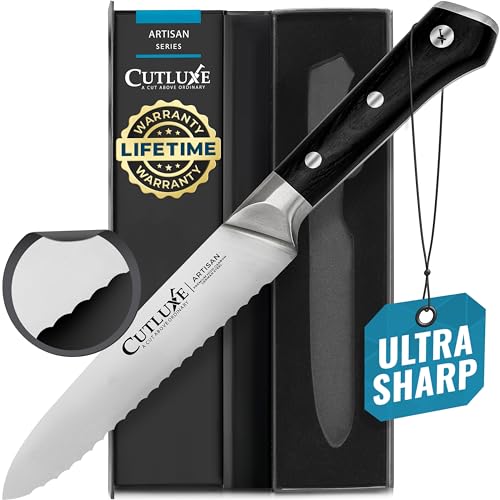
Best for: busy kitchens needing a multipurpose serrated knife for vegetables, fruits, bread, and light meat tasks. The full tang and pakkawood handle provide stability and comfort.
Why selected: This knife emphasizes a razor-sharp edge and robust build, making it suitable for routine slicing where a sharp, repeatable cut matters. It pairs a premium feel with practical performance.
Limitation: The blade length and style may be heavier than ultra-light, ultra-compact paring options; best used where control is prioritized over extreme compactness.
MATTSTONE HILL 4.7″ Serrated Knife

Best for: households needing a compact, multipurpose knife for small vegetables, fruits, and bread. The forged construction adds toughness and a clean blade-to-handle transition.
Why selected: The 4.7-inch blade offers a balance between precision and reach for small kitchen prep tasks, while the ergonomic handle supports comfortable use. It’s a strong mid-point for users who want more than a paring knife without going large.
Limitation: Some users may prefer a shorter paring blade for ultra-fine work, while others may want a longer utility blade for bigger tasks.
Buying Guide: Small Serrated Knife Essentials
- Blade size and task fit: For delicate produce and precise cuts, a blade under 5 inches is typically best. For broader slicing tasks, a 5-inch option can be a better balance.
- Edge type and maintenance: Serrated edges stay sharper longer than plain edges but can be harder to sharpen. Consider if you want a knife that’s easy to maintain or one you’re comfortable sharpening.
- Handle ergonomics: Look for a handle that fits your grip. Soft-grip, non-slip materials help with control, especially when hands are wet or greasy.
- Material and durability: Stainless steel blades resist rust and stains and are easier to care for. Full tang construction offers better balance and sturdiness.
- Intended tasks: Tomatoes and soft fruits benefit from serrations; bread and tougher skins may require slightly stiffer blades. A versatile option may cover a wider range of daily needs.
FAQ
- What is the main advantage of a small serrated knife?
– It provides precise cuts on soft produce, garnishes, and delicate foods without crushing them, while remaining easy to maneuver in tight spaces. - Is a serrated knife better than a straight-edge for tomatoes?
– Yes, serrated blades grip the skin and cut through the flesh cleanly, reducing tearing. - How should I care for a serrated knife?
– Hand wash when possible, dry promptly, and sharpen with a suited tool or professional service to maintain edge retention. - What should I consider when choosing between 4.7″ and 5″ serrated knives?
– Consider kitchen size, typical prep tasks, and whether you value reach (5″) over precision and control (4.7″). - Can a serrated knife replace a paring knife?
– For very fine, intricate tasks, a true paring knife (without serration) may perform better, but a serrated option can handle some tasks with less crush.