
Finding the right sliding miter saw helps ensure precise angles, clean crosscuts, and smooth finishes. This guide highlights five strong options that cover compact, powerful, and feature-rich choices for hobbyists and professionals alike. The top picks are chosen for different needs: compact space, heavy-duty use, dust control, ambidextrous operation, and multi-material cutting. The goal is to match each buyer type with a saw that delivers dependable performance and clear cut lines.
| Product | Best For | Key Benefit |
|---|---|---|
| SKIL 10″ Dual Bevel Sliding Compound Miter Saw MS6305-00 | Budget-conscious workshop owners | High RPM and dual bevel for versatile cuts |
| DEWALT DWS780 | Professional woodworkers | XPS LED shadow line for precise cut line visibility |
| DEWALT DWS779 | Pro projects with dust control | Tall fences and high crosscut capacity |
| BOSCH GCM12SD | Users needing glide and precision | Constant bevel detents and integrated dust management |
| DOVAMAN 12-Inch Dual-Bevel | Ambidextrous and multi-material tasks | Laser guide and extended cutting capacity |
SKIL 10″ Dual Bevel Sliding Compound Miter Saw MS6305-00
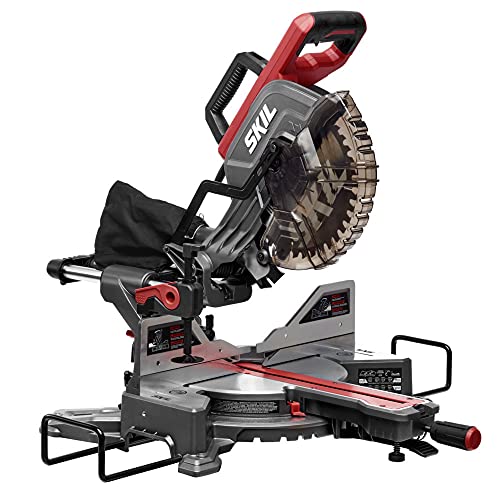
Best for budget-friendly workshops needing reliable basic capability. The SKIL MS6305-00 features a robust 15-amp motor delivering 4,800 RPM for fast, clean cuts. Its dual bevel allows 0°, 45°, and 48° positions for left and right miter cuts, expanding angle options without rotating the workpiece excessively. The LED shadow line helps visualize the cut line with greater accuracy than some laser guides. This saw is well suited for trim work, cabinetry, and general woodworking where solid performance at a lower price point matters. A potential limitation is the absence of a full dust collection system in some setups.
DEWALT DWS780 12-Inch Double Bevel Sliding Compound Miter Saw

Best for professionals needing precise alignment and visibility. The DWS780’s XPS LED Shadow Line projects the cut line for accurate positioning. It provides a robust 12-inch capacity with dual bevel, enabling complex cuts with lamination and crown molding on larger pieces. The model includes a blade wrench, material clamp, and dust bag, aiding setup and dust management. The enhanced visibility and stability suit frequent crosscuts and bevel work in woodworking shops. A limit is the larger footprint compared to compact units.
DEWALT DWS779 12-Inch Double Bevel Sliding Miter Saw

Best for projects requiring high crosscut capacity and efficient debris control. The DWS779 features a powerful 15-amp motor at 3,800 RPM and tall sliding fences that support crown molding up to 7-1/2 inches nested. It includes a dust collection system that captures a substantial amount of dust, improving a cleaner workspace. Choose this if you frequently cut crown and base molding with limited bench space relative to larger professional units. A caveat: more complex dust collection may require proper setup for optimal performance.
BOSCH GCM12SD 12 In. Dual-Bevel Glide Sliding Miter Saw

Best for precision and glide-quality enthusiasts. The Bosch GCM12SD uses a glide system with bevel detents at 0, 33.9, 45 left/right, ensuring repeatable angles. It combines pre-aligned fences with a soft-grip handle and an integrated dust chute compatible with vacuum adapters, improving comfort and cleanup. This saw suits serious woodworkers who value consistent alignment and a smoother glide. A limitation is its higher price point compared to entry-level models.
DOVAMAN 12-Inch Dual-Bevel Miter Saw

Best for ambidextrous operation and multi-material capability. The DOVAMAN 12-Inch Dual-Bevel features a laser guide and a 9-position base for common angles, plus a dual-bevel 0–45° capability. A 15-amp motor runs up to 3,800 RPM, providing solid performance for wood and certain plastics. The 4.2 x 13 inch cutting capacity suits moderate framing and trim tasks. The ambidextrous design helps both left- and right-handed users. A potential limitation is the need to temper expectations on metal cutting compared with dedicated metal saws.
Buying Guide
What matters most for sliding miter saw selection?
Power, capacity, and bevel range determine how many jobs a saw can handle. A 15-amp motor with 3,800–4,800 RPM covers most wood tasks. Bevel and miter ranges affect how you can angle cuts without repositioning material. A larger crosscut capacity and tall fences help with crown molding. Look for integrated dust management to maintain a cleaner workspace.
Which features improve accuracy?
- LED shadow lines or laser guides for precise cut alignment.
- Pre-aligned fences and squarelock designs to hold material squarely.
- Sturdy slide rails to ensure smooth, repeatable cuts.
Consider space and setup
Compact rail systems minimize bench-to-wall footprint, useful in small workshops. Glides with minimal lateral slop improve accuracy in tight spaces. A robust dust collection system helps keep tools and workpieces clean between cuts.
Ambidextrous and multi-material options
Ambidextrous saws suit left- and right-handed users better and can improve workflow. If you cut a mix of wood, PVC, and light metals, look for dual-speed settings or multi-material blades that handle different materials efficiently.
Quick decision checklist
- Primary material: wood, plastic, or light metal?
- Workspace size: compact rail vs. full glide?
- Need for dust control: standard bag vs. integrated system?
- Bevel and miter range required for typical projects?
Frequently Asked Questions
- What is a sliding miter saw best used for?
It excels at crosscuts and angled cuts in boards, trim, and molding with the ability to slide material through the blade for longer pieces.
- How does dual bevel help?
Dual bevel allows cutting angles on both left and right without flipping the workpiece, saving time on repetitive angles.
- Is dust collection essential?
It improves cleanup and can help with visibility during precision cuts, especially in dusty environments.
- What should I consider for crown molding?
Bevel capacity and tall fences to support nested crowns are critical.
- Are laser guides or shadow lines more accurate?
Both aim to align the blade with the cut line; LED shadow lines are often easier to view in bright conditions.
- Can I cut metal with a sliding miter saw?
Some models support light metal cutting with appropriate blades; verify blade compatibility and speed before use.