
The best scroll saw blades for American woodworkers vary by blade end type, tooth count, and material. This guide highlights five top options ideal for hobbyists and professionals tackling fine curves, intricate patterns, and soft to hard woods. Each blade type is chosen for reliable cutting, durability, and compatibility with common scroll saw brands. Read on to match the right blade to your project needs and avoid common tradeoffs like dulling or binding.
| Product | Best For | Tooth Count | |
|---|---|---|---|
| FOXBC 5-Inch Scroll Saw Blade Pin End Replacement | Long-lasting sessions with pin-end machines | Pin End | Varies by pack |
| Flying Dutchman Ultra Reverse Five Dozen Pinless | Precision curves and sharper edges | Pinless | 5″ |
| YullSorom 5-Inch Scroll Saw Blade Pin End 48Pack | Balanced performance for wood and soft metals | Pin End | Various |
| FOXBC 5 Inch Plain End Scroll Saw Blade Set | Versatile set for mixed materials | Plain End | 28, 12, 10 TPI |
| Flying Dutchman Heavy Duty Five Dozen Pinless | Heavy-duty projects with smooth cuts | Pinless | 5″ |
Key considerations: blade length (5 inches is common for compact saws), end type (pin vs plain), and tooth configuration (TPI). Higher TPI yields smoother cuts on thin materials; lower TPI cuts faster in thicker stock. Durability depends on steel quality and manufacturing. The selections below are organized to help you compare best-for use cases, durability, and potential limitations.
FOXBC 5-Inch Pin End Replacement Pack

The FOXBC 5-Inch Pin End Pack is designed for compatibility with Wen, Dremel, Craftsman, Penn State, Delta, Ryobi, and other 15″ and 16″ scroll saws. Made from corrosion-resistant SK5 Japanese carbon steel for strength and longevity, these blades promote precise sawing of soft or hard wood, plastic, copper, and other soft metals. Best for serious hobbyists or professionals who need durable, easy-to-install blades. A limitation is that pin-end blades require compatible clamps and may be less flexible for very intricate internal cuts.
Flying Dutchman Ultra Reverse Pinless Pack
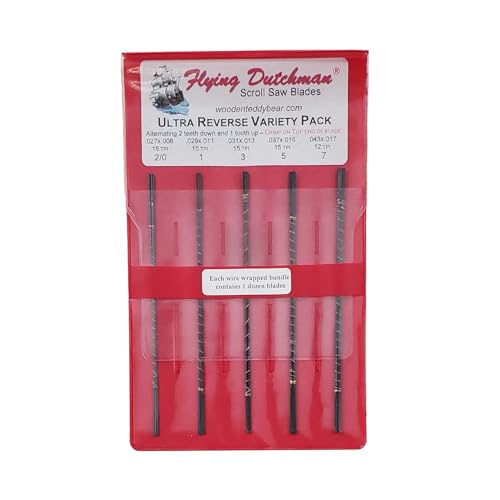
This 5″ pinless blade set features milled blades for a sharper cutting edge and is manufactured in Germany with high-quality hardened steel. It’s best for users seeking smooth, precise curves and fewer blade changes during detailed work. It may be less suitable for very narrow or enclosed cuts where pin-end blades fit better into your saw’s clamp.
YullSorom 5-Inch Pin End 48Pack

YullSorom blades use manganese steel for toughness and oxidation resistance, suitable for precise sawing of hard or soft wood, plastic, copper, and other soft metals. Easy installation and durable performance are emphasized. Best for woodworkers who value a balanced, all-purpose blade, with a note that some packs may present mixed tooth configurations requiring careful selection for specific tasks.
FOXBC 5 Inch Plain End Blade Set
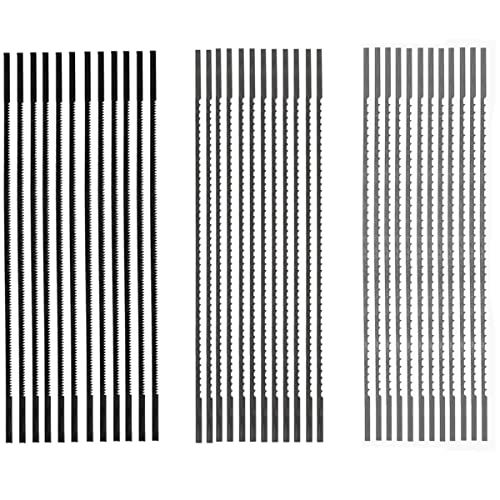
This set includes 28 TPI, 12 TPI, and 10 TPI blades, ideal for professionals who need quick transitions between cutting tasks on mixed materials. Plain-end blades work with a wide range of saws, offering compatibility and straightforward install. Best for versatile projects, but users should be mindful of blade stability in very fine, intricate cuts where pin-end blades may excel.
Flying Dutchman Heavy Duty Pinless Pack
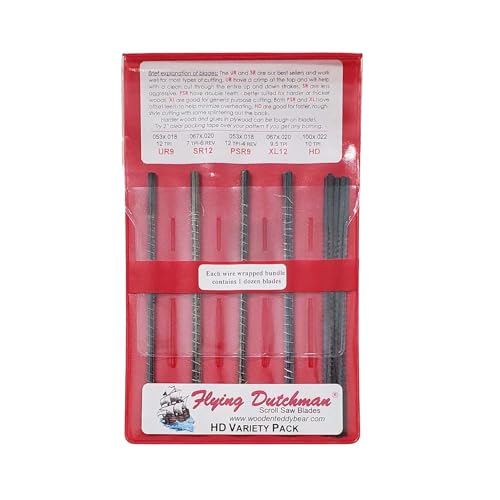
Designed for heavy-duty projects, this 5″ pinless bundle uses milled blades to deliver sharper cutting edges and long-lasting performance. Manufactured in Germany with hardened steel, these blades suit tougher materials and larger patterns. Choose this if your work involves thick stock or repeated, aggressive cuts; avoid if you primarily cut very thin materials where finer blades are preferable.
Flying Dutchman Ultra Reverse #5 Six Dozen Pinless

Another option from Flying Dutchman, this pack emphasizes ultra-reverse geometry to improve control on tight curves. It’s best for intricate fretwork and small patterns. It’s pinless, which can be advantageous for consistent tension; however, pinless blades require compatible saw mounts and may not fit every saw model.
Flying Dutchman Spiral Five Dozen Pinless
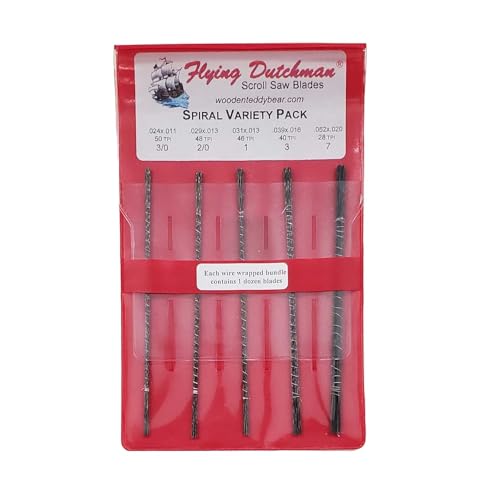
Spiral blades provide multi-directional cutting action and can help prevent binding in complex shapes. Pinless construction keeps tension even across blades. Best for detailed designs with curves, but spiral blades may wear differently than straight blades and require adaptation in feed rate and technique.
Buying Guide
Blade compatibility: Check your scroll saw’s end type (pin vs plain) and blade length to match the pack. Pinless blades work well for freehand curves; pin-end blades are typically easier to install on many older machines.
Material and durability: Look for high-quality steel (e.g., German hardened steel or SK5) for longer life and sharper edges. Consider manganese steel for added toughness if you work with harder woods or metals.
Tooth configuration: Higher TPI yields smoother edges in thin materials; lower TPI cuts faster in thicker stock. For intricate patterns, finer teeth are advantageous; for thick stock or quick-rips, coarser teeth perform better.
Application focus: If your projects involve frequent curved cuts, pinless and spiral blades can minimize binding. For saws with traditional clamps, pin-end blades may be easier to install and adjust.
Cost vs. value: A mixed pack can cover a broad range of tasks, reducing the need to buy multiple blade types separately. Prioritize blades known for consistent sharpness and durability over a single-use option.
FAQ
- What is the difference between pin end and plain end blades? Pin end blades have a small pin that fits into the saw’s clamp, offering quick installation. Plain end blades require clamping and may require a shim or adapter on some saws.
- Are milled blades better than standard blades? Milled blades can offer sharper edges and longer life, especially for repetitive curves and detailed work. They may be preferred for precision tasks.
- Which blade type is best for curves? Pinless and spiral blades are often best for intricate curves due to improved cutting action and reduced binding in tight turns.
- Can I use 5-inch blades on any scroll saw? Many compact saws support 5-inch blades, but always confirm the blade length and mounting compatibility with your specific model.
- How do I choose the right TPI? For thin stock and fine detail, choose higher TPI. For thicker stock or rough work, lower TPI cuts faster and more aggressively.
- Should I buy a mixed pack or individual blades? Mixed packs offer versatility for varied tasks and reduce downtime from blade changes; individual blades may optimize performance for a specific material or cut.